Guides
Cold plunge vs ice bath
The words are used interchangeably. The difference that matters is whether the temperature is controlled or estimated.
By Scooter M. · Published · Last updated
How we are paid: the buy links on this page are affiliate links. If you buy through one, we earn a commission from the retailer at no extra cost to you. It does not change what we rank or what we tell you to skip - the full FTC disclosure is here.
| # | Product | Rated draw | Best for | Score | Price |
|---|---|---|---|---|---|
| 1 | 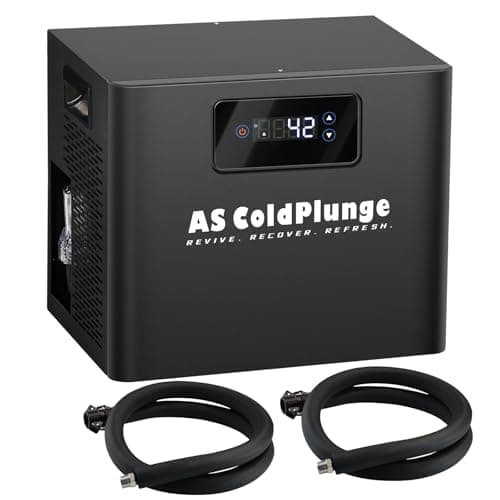 AS ColdPlunge 1/3 HP Cold Plunge Chiller 600 W, a 42 F floor, a reusable metal filter instead of cartridges, and a submersible pump in the box so it works with a bathtub that has no ports. | 600 W | Best for a bathtub | 7.7 | $399.00 - Amazon |
| 2 | 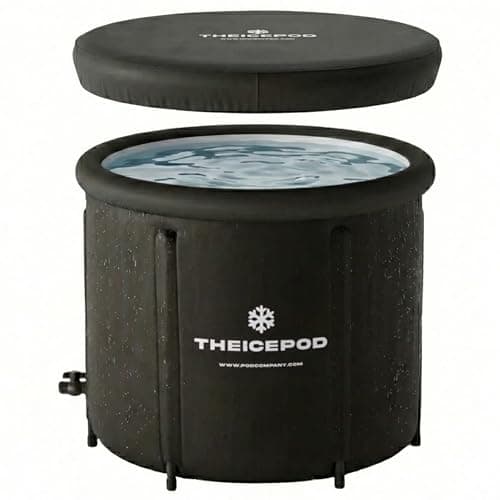 The Pod Company Standard Ice Bath Tub, 84 Gallon Eighty-four gallons with five-layer insulated walls and a built-in side drain, which is the smallest sensible volume for full immersion and cheap to keep cold as a result. | Not published | Smallest full-depth soak | 5.9 | $53.99 - Amazon |
| 3 | 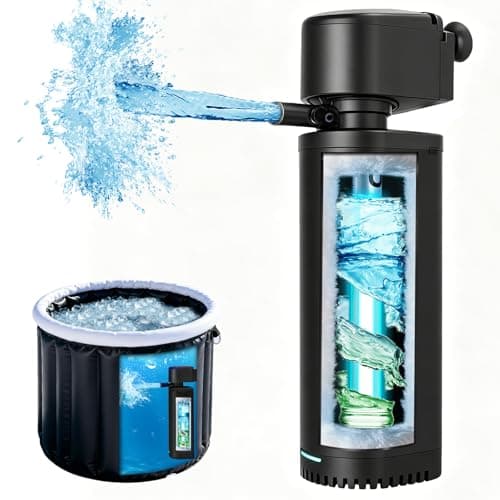 TARARIUM 500 GPH Cold Plunge Filter with UV Sanitation A 500 GPH submersible pump and filter with a UV stage, rated for tubs from 100 to 1,000 gallons, for anyone running ice rather than a chiller. | Not published | Filtration without a chiller | 1.0 | $58.99 - Amazon |
The honest answer
What each term usually implies
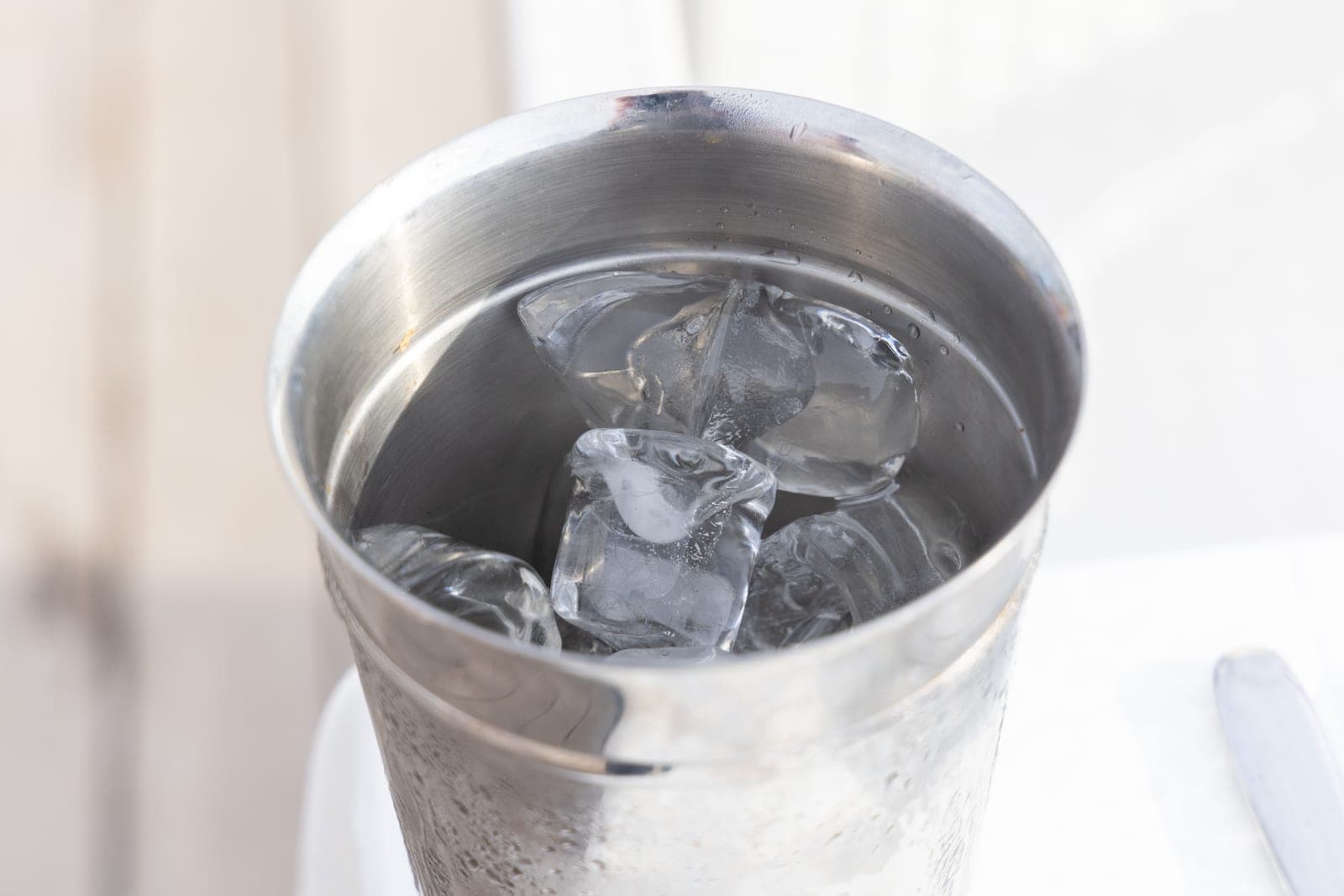
That is convention rather than definition. Plenty of people call a chilled tub an ice bath and a bathtub full of ice a cold plunge, and nobody is wrong.
Why temperature control is the real difference
If you want to know what you are doing - whether you are progressing, whether a change made any difference, whether you are anywhere near the temperatures the research uses - you need the same temperature twice.
An ice bath drifts. It starts wherever the ice took it and warms throughout the session, and the rate depends on your room and your tub. So the honest description of an ice-bath session is “somewhere between cold and quite cold, for a few minutes”.
That matters if you are trying to hit a target. The published dosing work we cite on the temperature page ranks specific bands - 11 to 15 C for soreness, 5 to 10 C for other markers - and you cannot aim at a band you cannot measure.
Cost, both ways
A chiller costs a few hundred dollars up front and 3.5 to 22 cents an hour at full draw. Ice costs nothing up front and something every single session, plus the errand.
We do not publish a national ice price because there is not one worth publishing - bagged ice varies by hundreds of percent between a supermarket and a convenience store, and the quantity depends on inputs we cannot know. The break-even formula, so you can work it out with your own numbers, is in chiller versus ice.
What both share
The water problem. Whether you chill it or ice it, a body of standing water receiving skin oils several times a week goes cloudy without filtration and treatment. Chillers include filtration; ice setups need a standalone pump and filter to get the same effect, and that is the most commonly missed purchase in an ice-only setup. It is covered in cold plunge maintenance.
Which to start with
Ice, in your own bathtub, three times. It costs almost nothing and it answers the only question that matters, which is whether you will keep doing this. If the answer is yes, buy the tub first and the chiller second, and make sure the tub has real ports so the upgrade does not mean buying it twice - the inflatable roundup covers which ones do.
Every pick, in full
Each write-up below shows the score broken into its six components, the specs the listing actually publishes, and the running-cost arithmetic where a wattage exists to compute it from.
#1 - Best for a bathtub
AS ColdPlunge 1/3 HP Cold Plunge Chiller
600 W, a 42 F floor, a reusable metal filter instead of cartridges, and a submersible pump in the box so it works with a bathtub that has no ports.
| Small-space fit | 12 / 20 |
|---|---|
| Electrical fit | 20 / 20 |
| Cost to run | 16 / 20 |
| Key-number disclosure | 12 / 15 |
| Spec completeness | 11 / 15 |
| Warranty | 6 / 10 |
| Total | 77 / 100 |
| Rated watts | 600 Seller’s listing, read 2026-09-07 |
|---|---|
| Water capacity | 79 Seller’s listing, read 2026-09-07 |
| Dimensions | 11.8 x 14.9 x 12.6 in Seller’s listing, read 2026-09-07 |
| Weight | 35 lb Seller’s listing, read 2026-09-07 |
| Cooling floor | 42 Fno cooling rate published Seller’s listing, read 2026-09-07 |
| Material | Not published Not published |
| Warranty (months) | 12 Seller’s listing, read 2026-09-07 |
| Rated draw | 600 W |
|---|---|
| Cost per hour at full draw | 11.0 cents |
| Upper bound, running continuously | $80.29 per month |
A chiller cycles. It draws its rated power while the compressor runs and almost nothing while it does not, and how often it runs depends on ambient temperature, insulation, lid use and setpoint. We do not measure duty cycle, so we publish the two figures that need no assumption and no figure in between. Computed at 18.34 cents per kWh (June 2026). The method.
The submersible pump is what makes this the bathtub answer. A chiller normally needs a tub with inlet and outlet ports; a bathtub has neither. Dropping a pump into the water and running two hoses over the rim is inelegant and it works, and it is the cheapest route to a cold plunge for anyone who cannot give up floor space for a tub at all.
Six hundred watts is eleven cents an hour at full draw, comfortably mid-range here. The 79-gallon rating is a good match for a standard bathtub, which holds somewhere between 40 and 80 gallons at plunge depth.
The reusable metal mesh filter rather than disposable cartridges is a genuine running-cost detail that gets ignored because it is not electricity. Cartridge filters are a recurring purchase; a rinsable metal screen is not, and over a year that difference is larger than the difference in power draw between two chillers.
An availability note, because we said we would keep it current: this listing went to "Currently unavailable" on 2026-09-09 and we routed its buy link to a search rather than to a product nobody could add to a cart. Re-checked on 2026-09-12, it is back in stock with a buy-box offer, so the link points at the listing again.
Buy it if
Anyone plunging in an existing bathtub rather than buying a tub.
Skip it if
Your tub is over 79 gallons.
#2 - Smallest full-depth soak
The Pod Company Standard Ice Bath Tub, 84 Gallon
Eighty-four gallons with five-layer insulated walls and a built-in side drain, which is the smallest sensible volume for full immersion and cheap to keep cold as a result.
| Small-space fit | 8 / 20 |
|---|---|
| Electrical fit | 20 / 20 |
| Cost to run | 20 / 20 |
| Key-number disclosure | 5 / 15 |
| Spec completeness | 6 / 15 |
| Warranty | 0 / 10 |
| Total | 59 / 100 |
| Rated watts | Not published Not published |
|---|---|
| Water capacity | 84 Seller’s listing, read 2026-10-10 |
| Dimensions | Not published Not published |
| Weight | Not published Not published |
| Cooling floor | Claim, no figure “CHILLER COMPATIBLE (CONVERSION KIT SOLD SEPARATELY) - Cold plunge tub is compatible with water chillers using The Pod Company Conversion Kit” |
| Material | Five-layer insulated walls Seller’s listing, read 2026-10-10 |
| Warranty (months) | Not published Not published |
No electrical load. This draws no power of its own. The running cost of a plunge lives in the chiller, or in the bag of ice.
Volume is the variable nobody thinks about until the first electricity bill or the third bag of ice. Chilling 84 gallons takes roughly a third less energy than chilling 129, and about 60 percent less than 216, for the same temperature drop. If you plunge alone and you are under about six foot two, the extra volume in a bigger tub is water you are paying to keep cold for no benefit.
The side drain with a three-foot hose is the other quiet advantage. Emptying a full tub by tipping it is a two-person job and a wet floor; emptying it through a hose into a drain is not.
The catch is in capitals in the listing itself: chiller compatibility requires a conversion kit sold separately. That is more honest than the listings that imply ports are included, but it is a second purchase, and you should price it before deciding this is the cheap option.
Buy it if
A solo plunger who wants the smallest volume that still covers their shoulders.
Skip it if
You are tall, you plunge with someone else, or you want chiller ports without a second purchase.
#3 - Filtration without a chiller
TARARIUM 500 GPH Cold Plunge Filter with UV Sanitation
A 500 GPH submersible pump and filter with a UV stage, rated for tubs from 100 to 1,000 gallons, for anyone running ice rather than a chiller.
| Small-space fit | 8 / 20 |
|---|---|
| Electrical fit | 0 / 20 |
| Cost to run | 0 / 20 |
| Key-number disclosure | 0 / 15 |
| Spec completeness | 2 / 15 |
| Warranty | 0 / 10 |
| Total | 10 / 100 |
| Rated watts | Not published Not published |
|---|---|
| Maximum temperature | Not published Not published |
| Dimensions | Not published Not published |
| Weight | Not published Not published |
| Timer | Not published Not published |
| Cooling floor | Not the relevant number for this category |
| Material | Not published Not published |
| Warranty (months) | Not published Not published |
No running cost can be computed. The listing does not publish a rated wattage, so there is no honest way to tell you what a session costs. We will not estimate one. How we compute running costs
Chillers come with filtration built in. Ice does not, which leaves ice-only plungers with the same water quality problem and none of the equipment, and it is why a standalone filter belongs in this category rather than being an afterthought.
Five hundred gallons per hour turns over a 100-gallon tub five times an hour, which is well above what a plunge needs, and the listing describes a UV stage alongside the membrane filter - ultraviolet handles the biological load that a mechanical filter cannot touch. Running it for an hour after each session is enough to keep water clear for weeks.
The listing also recommends replacing the filter cotton every two weeks, which is the recurring cost to budget for, and notes an adjustable air valve for oxygenation. The wattage is not published, so we cannot give you a running cost - but a submersible pump in this class is a small load, tens of watts rather than hundreds, and it runs for an hour rather than continuously.
Buy it if
An ice-only plunger whose water is going cloudy between refills.
Skip it if
Your chiller already includes filtration. Most in this roundup do.
Questions people actually ask
What is the difference between a cold plunge and an ice bath?
In common usage, almost nothing - the terms are interchangeable. In practice, cold plunge usually implies a purpose-built tub held at a set temperature by a chiller, while ice bath implies water cooled by adding ice. The physiologically relevant difference is not the name, it is whether the temperature is controlled or estimated.
Is a cold plunge better than an ice bath?
The water does not know how it got cold. What a chiller-controlled plunge gives you is consistency - the same temperature every session, which is the only way to know what you are actually doing. An ice bath at an unknown temperature is a perfectly good cold immersion and a bad experiment.
How much ice do you need for an ice bath?
It depends on your starting water temperature, your target, the volume and the insulation, so no honest universal figure exists. What is predictable is that warmer tap water, a warmer room and an uninsulated tub all multiply it - which is why a clamped insulated lid does more for your ice bill than anything else you can buy.
Can you use a bathtub as an ice bath?
Yes, and it is the cheapest legitimate way to start. A standard bathtub holds 40 to 80 gallons at plunge depth, cold tap water in winter is often already under 60 F, and a couple of bags of ice takes it lower. It costs nothing to try and it answers the only question that matters before you buy anything.
Sources
- Wang H, Wang L, Pan Y. Impact of different doses of cold water immersion (duration and temperature variations) on recovery from acute exercise-induced muscle damage: a network meta-analysis. Frontiers in Physiology, 2025 - Ranked 10-15 min at 11-15 C best for soreness, and 10-15 min at 5-10 C best for biochemical markers and neuromuscular function.