Guides
What home recovery gear actually costs to run
The complete cross-category dataset: every published wattage on this site, converted to cents per session and dollars per month, with the method shown.
By Scooter M. · Published · Last updated
How we are paid: the buy links on this page are affiliate links. If you buy through one, we earn a commission from the retailer at no extra cost to you. It does not change what we rank or what we tell you to skip - the full FTC disclosure is here.

| # | Product | Rated watts | Best for | Score | Price |
|---|---|---|---|---|---|
| 1 | 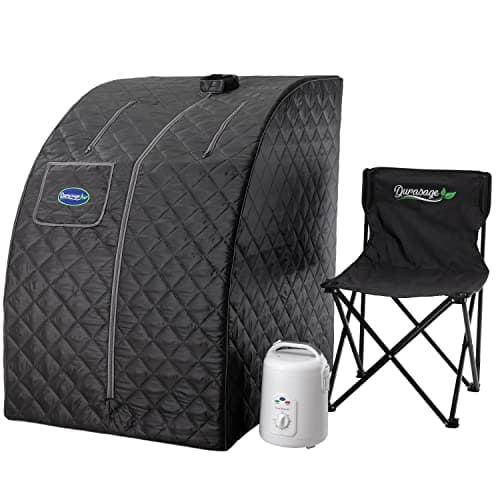 Durasage Lightweight Portable Personal Steam Sauna Spa An 800 W steam generator is the lowest published draw of any powered sauna here, which makes it the cheapest per session and the least likely to bother a shared circuit. | 800 W | Cheapest to run | 6.6 | $114.75 - Amazon |
| 2 | 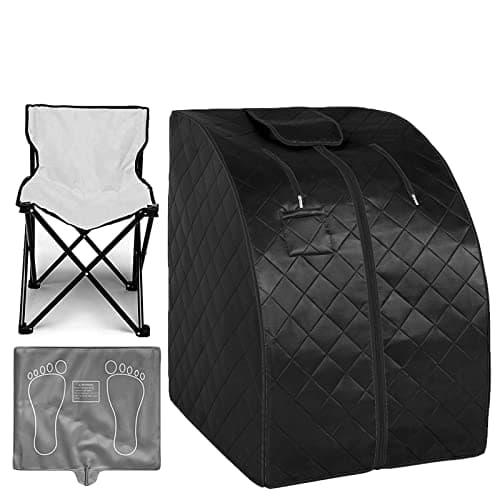 ZONEMEL Portable Infrared Sauna, 1 Person 1,050 W across three carbon panels plus a heated foot pad, with the wattage, the temperature ceiling and the timer all published - unusual for an infrared tent. | 1050 W | Best infrared for a standard outlet | 6.4 | $179.99 - Amazon |
| 3 | 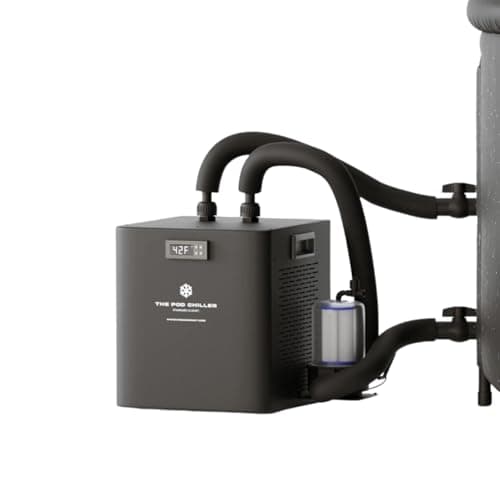 The Pod Company Standard Water Chiller, 1/3 HP 280 watts, a published 41 F floor and a 20-micron filter. It is less than half the draw of every other chiller here, and the listing volunteers the comparison. | 280 W | Cheapest to run | 7.2 | $569.00 - Amazon |
| 4 | 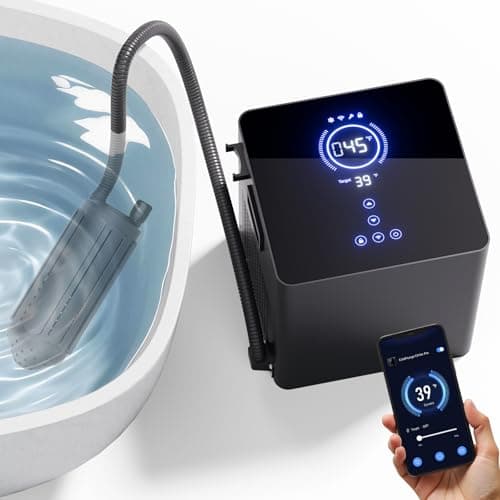 PlungeFit Cold Plunge Chiller Pro, 1/2 HP Drop-In A drop-in unit that cools directly in the water with no hoses or circulation loop, rated to 39 F for tubs up to 150 gallons at 1,200 W. | 1200 W | No plumbing at all | 6.4 | $549.00 - Amazon |
The whole dataset in one place
Why this page exists
Across eleven competitor pages read during this site’s research phase, there were eight passing mentions of kilowatt-hours or running cost and not one published figure or method. For a category where a unit draws 1,000 to 2,500 W and the buyer is spending four figures, that is a real gap, and it is one that closes with arithmetic rather than equipment.
The heat side
The cold side
The method, in full
There are two formulas on this site and they are different for a reason.
Resistive heating - blankets, saunas, tents. The element runs at full power until setpoint, then cycles, so rated watts times time is an upper bound rather than a measurement:
energy per session (kWh) = watts x (minutes / 60) / 1000
cost per session ($)    = energy per session x rate per kWh
cost per month ($)      = cost per session x sessions per week x 4.33
Refrigeration - chillers. Real consumption depends on duty cycle, which depends on ambient temperature, insulation, lid use and setpoint. We do not measure duty cycle, so we publish only the two figures that need no assumption:
cost per hour at full draw ($) = (rated watts / 1000) x rate per kWh
continuous upper bound ($/mo)  = cost per hour x 24 x 30.4
The rate, and its source
Every figure on this site uses 18.34 cents per kWh: the U.S. Total, Residential average for June 2026, from the U.S. Energy Information Administration’s Electric Power Monthly, Table 5.6.A. We re-fetched it on 2026-09-07. The same figure a year earlier, for June 2025, was 17.47 cents.
It is a national average and it hides a spread of roughly three to one between the cheapest and most expensive states. Take the rate off your own bill and put it into the formulas above - it is one multiplication and it will beat any national figure.
What this dataset does not tell you
- Duty cycle. Not measured, so every heat figure is a maximum and every chiller figure is an hourly rate rather than a monthly prediction.
- Sauna blanket wattage. Not published by anyone, so not computable.
- Your ice cost. Varies by hundreds of percent by source, so we give you a break-even formula instead - chiller versus ice.
- Three chillers’ draw, which their sellers do not publish. Those score zero on the cost component and the score says why.
The full scoring method that these figures feed into is on the methodology page.
Every pick, in full
Each write-up below shows the score broken into its six components, the specs the listing actually publishes, and the running-cost arithmetic where a wattage exists to compute it from.
#1 - Cheapest to run
Durasage Lightweight Portable Personal Steam Sauna Spa
An 800 W steam generator is the lowest published draw of any powered sauna here, which makes it the cheapest per session and the least likely to bother a shared circuit.
| Small-space fit | 17 / 20 |
|---|---|
| Electrical fit | 20 / 20 |
| Cost to run | 20 / 20 |
| Key-number disclosure | 0 / 15 |
| Spec completeness | 9 / 15 |
| Warranty | 0 / 10 |
| Total | 66 / 100 |
| Rated watts | 800 Seller’s product title, read 2026-09-07 |
|---|---|
| Maximum temperature | Not published Not published |
| Dimensions | Packs to 28.6 x 12.3 x 8.4 in Seller’s listing, read 2026-09-07 |
| Weight | 15.8 lb Seller’s listing, read 2026-09-07 |
| Timer | 60-minute adjustable timer Seller’s listing, read 2026-09-07 |
| EMF disclosure | Not the relevant number for this category |
| Material | Heat-insulated fabric on PVC tubing Seller’s listing, read 2026-09-07 |
| Warranty (months) | Not published Not published |
| Rated draw | 800 W (6.7 A at 120 V) |
|---|---|
| Energy per 30-minute session | 0.400 kWh |
| Maximum cost per session | 7.3 cents |
| Maximum per month, 4 sessions a week | $1.27 |
| Circuit | Runs on any 15 A outlet |
These are maximums, assuming continuous draw. A resistive heater pulls its rated power only while the element is energized; once it reaches setpoint it cycles, so the real figure is lower and depends on your room. Computed at 18.34 cents per kWh (June 2026). The method, and how to substitute your own rate.
Eight hundred watts is the number that makes this interesting. It is a third less than the 1,200 W steamers that dominate the category, it draws about 6.7 amps on a 120 V circuit, and it is comfortably inside what a shared bedroom outlet will carry without an argument. For a renter running a sauna in a room that also has a television and a lamp on the same circuit, that is the whole decision.
The trade-off is honest and predictable: less steam power means a slower fill and a lower ceiling, and this listing does not publish a maximum temperature, which is the one checklist item you would most want alongside the wattage. A steam tent's temperature depends on room temperature and how well the fabric seals anyway, so a published maximum is less load-bearing here than it is on an infrared unit - but the absence still costs it a point.
This is a steam sauna, not an infrared one. Steam works on you from the outside in and gets you wet; infrared warms you more slowly and leaves you dry. Neither is better, and if you have not used both, that distinction will change your experience far more than any spec on this page.
Buy it if
A renter on a shared circuit who wants the lowest electrical load and the lowest running cost in the category.
Skip it if
You want infrared rather than steam, or you want a published temperature ceiling.
#2 - Best infrared for a standard outlet
ZONEMEL Portable Infrared Sauna, 1 Person
1,050 W across three carbon panels plus a heated foot pad, with the wattage, the temperature ceiling and the timer all published - unusual for an infrared tent.
| Small-space fit | 20 / 20 |
|---|---|
| Electrical fit | 15 / 20 |
| Cost to run | 20 / 20 |
| Key-number disclosure | 0 / 15 |
| Spec completeness | 9 / 15 |
| Warranty | 0 / 10 |
| Total | 64 / 100 |
| Rated watts | 1050 Seller’s listing, read 2026-09-07 |
|---|---|
| Maximum temperature | 140 F maximum Seller’s listing, read 2026-09-07 |
| Dimensions | 27.6 x 31.5 x 37.8 in Seller’s product title, read 2026-09-07 |
| Weight | 19.8 lb Seller’s listing, read 2026-09-07 |
| Timer | Up to 60 minutes Seller’s listing, read 2026-09-07 |
| EMF disclosure | Not mentioned at all |
| Material | Not published Not published |
| Warranty (months) | Not published Not published |
| Rated draw | 1050 W (8.8 A at 120 V) |
|---|---|
| Energy per 30-minute session | 0.525 kWh |
| Maximum cost per session | 9.6 cents |
| Maximum per month, 4 sessions a week | $1.67 |
| Circuit | Wants the outlet to itself |
These are maximums, assuming continuous draw. A resistive heater pulls its rated power only while the element is energized; once it reaches setpoint it cycles, so the real figure is lower and depends on your room. Computed at 18.34 cents per kWh (June 2026). The method, and how to substitute your own rate.
At 1,050 W this draws about 8.8 amps, which a standard 15 A outlet carries without complaint even with something else plugged in. It is the highest-powered infrared unit here that still sits comfortably under the 1,000 W line where we start recommending the outlet be left to itself, and a thirty-minute session works out to roughly ten cents at the national average rate.
The heated foot pad is the detail worth knowing about. Infrared tents heat what the panels face, and in a seated tent that means your back and sides get the heat while your feet sit on ambient floor. A separate foot element is the direct fix and not every unit in this price range includes one.
The footprint is the smallest of any sit-in sauna in this roundup: 27.6 by 31.5 inches deployed, about six square feet, which is roughly the area of a single armchair. That is what makes an infrared tent viable in a one-bedroom apartment at all.
Buy it if
Someone who wants dry infrared heat in the smallest deployed footprint that still fits an adult.
Skip it if
EMF disclosure matters to you. This listing does not mention it.
#3 - Cheapest to run
The Pod Company Standard Water Chiller, 1/3 HP
280 watts, a published 41 F floor and a 20-micron filter. It is less than half the draw of every other chiller here, and the listing volunteers the comparison.
| Small-space fit | 12 / 20 |
|---|---|
| Electrical fit | 20 / 20 |
| Cost to run | 20 / 20 |
| Key-number disclosure | 12 / 15 |
| Spec completeness | 8 / 15 |
| Warranty | 0 / 10 |
| Total | 72 / 100 |
| Rated watts | 280 Seller’s listing, read 2026-09-07 |
|---|---|
| Water capacity | Not published Not published |
| Dimensions | 13 x 13 x 21 in Seller’s listing, read 2026-09-07 |
| Weight | 40 lb Seller’s listing, read 2026-09-07 |
| Cooling floor | 41 Fno cooling rate published Seller’s listing, read 2026-09-07 |
| Material | Not published Not published |
| Warranty (months) | Not published Not published |
| Rated draw | 280 W |
|---|---|
| Cost per hour at full draw | 5.1 cents |
| Upper bound, running continuously | $37.47 per month |
A chiller cycles. It draws its rated power while the compressor runs and almost nothing while it does not, and how often it runs depends on ambient temperature, insulation, lid use and setpoint. We do not measure duty cycle, so we publish the two figures that need no assumption and no figure in between. Computed at 18.34 cents per kWh (June 2026). The method.
Two hundred and eighty watts is the number that decides this category. At the current US residential average it costs about five cents an hour at full draw, and even running continuously for a month - which no chiller does - the absolute ceiling is around thirty-eight dollars. The 1,200 W units in this roundup are four times that.
The listing's own comparison is a good one: about the same as a home freezer. That is a useful mental model, because a chiller works the same way and cycles the same way. It draws its rated power while the compressor is running and almost nothing while it is not, and how often it runs depends on your lid discipline, your room temperature and how well your tub is insulated.
The published floor is 41 F, which is warmer than the 37 to 39 F claimed by the bigger units. For most people that is irrelevant - the commonly recommended starting band is 50 to 59 F and experienced plungers usually settle around 45 to 50 F - but if you specifically want to get below 40, this will not do it.
Buy it if
Anyone whose plunge is a daily habit rather than an occasional event, where running cost compounds.
Skip it if
You want water below 41 F. This unit does not claim to go there.
#4 - No plumbing at all
PlungeFit Cold Plunge Chiller Pro, 1/2 HP Drop-In
A drop-in unit that cools directly in the water with no hoses or circulation loop, rated to 39 F for tubs up to 150 gallons at 1,200 W.
| Small-space fit | 12 / 20 |
|---|---|
| Electrical fit | 15 / 20 |
| Cost to run | 8 / 20 |
| Key-number disclosure | 12 / 15 |
| Spec completeness | 11 / 15 |
| Warranty | 6 / 10 |
| Total | 64 / 100 |
| Rated watts | 1200 Seller’s listing, read 2026-09-07 |
|---|---|
| Water capacity | 150 Seller’s listing, read 2026-09-07 |
| Dimensions | 11.8 x 15.4 x 12.6 in Seller’s listing, read 2026-09-07 |
| Weight | 45 lb Seller’s listing, read 2026-09-07 |
| Cooling floor | 39 Fno cooling rate published Seller’s listing, read 2026-09-07 |
| Material | Not published Not published |
| Warranty (months) | 12 Seller’s listing, read 2026-09-07 |
| Rated draw | 1200 W |
|---|---|
| Cost per hour at full draw | 22.0 cents |
| Upper bound, running continuously | $160.57 per month |
A chiller cycles. It draws its rated power while the compressor runs and almost nothing while it does not, and how often it runs depends on ambient temperature, insulation, lid use and setpoint. We do not measure duty cycle, so we publish the two figures that need no assumption and no figure in between. Computed at 18.34 cents per kWh (June 2026). The method.
Direct-in-water cooling removes the entire plumbing problem: no ports, no hoses, no pump priming, no leak points. For a renter, that also removes the part of a cold plunge setup most likely to put water on a floor you do not own.
It costs you in power. At 1,200 W this is twenty-two cents an hour at full draw and, in the theoretical case of running continuously for a month, about a hundred and sixty dollars. It will not run continuously - it cycles to hold a setpoint like any refrigeration - but among the chillers here it is at the expensive end and the 280 W Pod Company unit is at the other.
The 150-gallon rating and the 39 F floor are both genuine capability. If you have a large tub and you want it properly cold rather than merely cool, this is a reasonable pairing, and the WiFi scheduling means you can have it chill overnight on a cheaper tariff if your utility has one.
Buy it if
A renter who wants no plumbing and is prepared to pay for it in electricity.
Skip it if
Running cost is your first concern. This is the highest published draw here.
Questions people actually ask
What does a home sauna cost to run?
Between 7 and 15 cents for a 30-minute session, from published wattages of 800 to 1,600 W at the US residential average of 18.34 cents per kWh. Four sessions a week is between about $1.27 and $2.54 a month. Sauna blankets cannot be costed at all, because not one publishes a wattage.
What does a cold plunge cost to run?
The tub costs nothing - it has no electrical load. The chiller costs between 3.5 and 22 cents an hour at full draw, depending on its published wattage. At six hours a day that is between about $6 and $40 a month. Running on ice instead substitutes a recurring purchase for the electricity.
What electricity rate should I use?
Take the number off your own bill. The figure used throughout this site is 18.34 cents per kWh, the US Total residential average for June 2026 from the EIA's Electric Power Monthly. It is a national average and residential rates vary by roughly three to one between the cheapest and most expensive states.
Which costs more to run, the hot side or the cold side?
The cold side, by a large margin, and it is not close. A sauna runs for 30 minutes; a chiller runs for hours and cycles around the clock to hold temperature. The heat side of a complete home setup is under five dollars a month. The cold side can be forty.
Sources
- U.S. Energy Information Administration, Electric Power Monthly, Table 5.6.A - Average Price of Electricity to Ultimate Customers by End-Use Sector - U.S. Total, Residential: 18.34 cents per kWh, June 2026. Retrieved 2026-09-07.