Cold Plunges
The chest freezer cold plunge conversion, part by part
A freezer gets colder than any chiller on this site and costs less to hold temperature. It is also the one component in the build that no manufacturer will rate for water, and that gap decides the whole purchase.
By Scooter M. · Published · Last updated
How we are paid: the buy links on this page are affiliate links. If you buy through one, we earn a commission from the retailer at no extra cost to you. It does not change what we rank or what we tell you to skip - the full FTC disclosure is here.

| # | Product | Max output load | Best for | Score | Price |
|---|---|---|---|---|---|
| 1 | 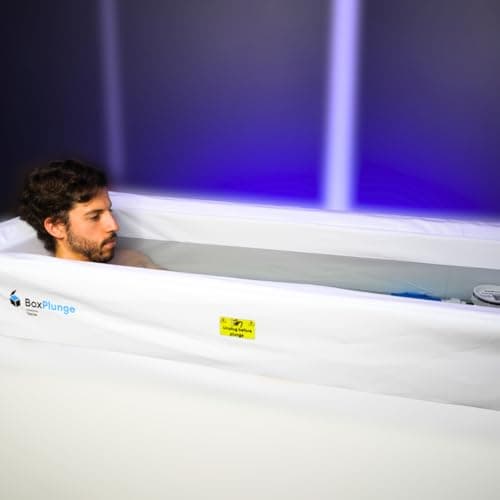 Caplide BoxPlunge Cold Plunge Liner, 14 to 14.8 Cu Ft The one product in the whole build whose maker publishes something about converting a chest freezer into a plunge, and the cheapest of the three BoxPlunge variants despite covering the largest boxes. Its two useful claims carry no numbers and its two recommended companion parts are not sold on Amazon at all. | Not published | The only part made for this job | 4.2 | $169.99 - Amazon |
| 2 | 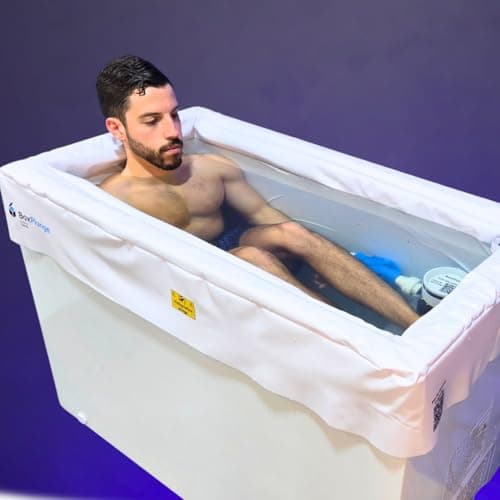 Caplide BoxPlunge Cold Plunge Liner Box 10 The variant sold for 10 cubic foot freezers, which is the most common size in the conversion builds. It costs more than the variant built for the larger boxes, and a third variant in the same line publishes the same dimensions as this one while being titled as the large option. | Not published | Best for a 10 cu ft box | 4.2 | $179.99 - Amazon |
| 3 | 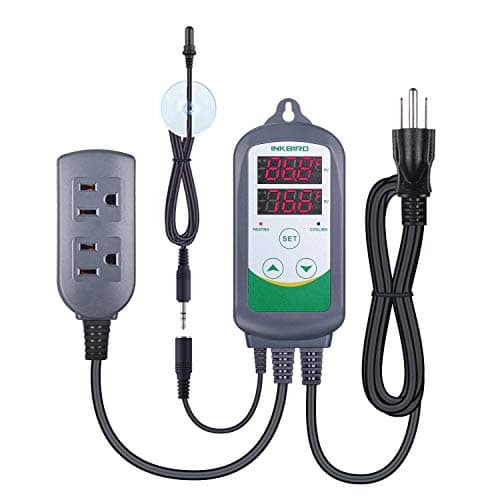 Inkbird ITC-308S Submersible-Probe Temperature Controller The same price as the standard ITC-308 with a fully submersible probe and a higher switching rating - 1,200 W against 1,100 - which makes the standard version the wrong one to buy for water. | 1,200 W (110 V) | Cheapest with a water probe | 1.2 | $35.99 - Amazon |
| 4 | 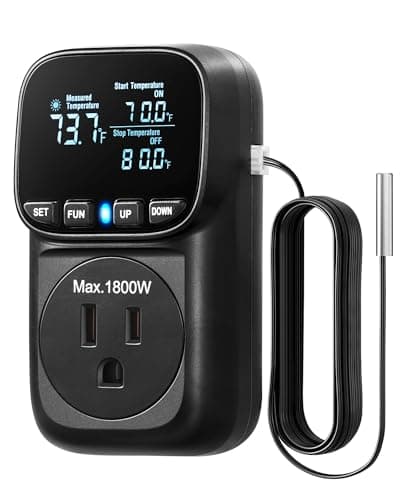 DEWENWILS 15 A Thermostat Outlet with Timer The cheapest controller here and, at a published 1,800 W and 15 A, one of only two with enough switching headroom for a full-size chiller - but it publishes nothing about its probe. | 1,800 W (15 A) | Cheapest with headroom | 1.0 | $19.99 - Amazon |
| 5 | 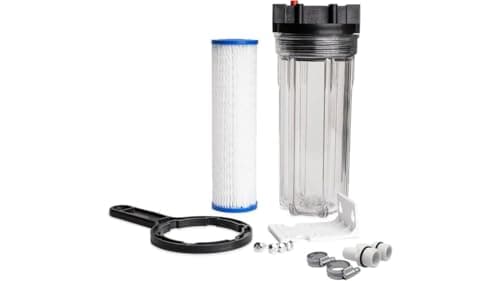 Plunge Crafters 10 in Cold Plunge Filter Housing A 10 in housing with a 50-micron pleated cartridge and the most completely specified port on this site: 3/4 in NPT with the outside diameter, inside diameter, thread pitch and threads per inch all published. | Not published | Published port thread | 5.2 | $39.95 - Amazon |
| 6 | 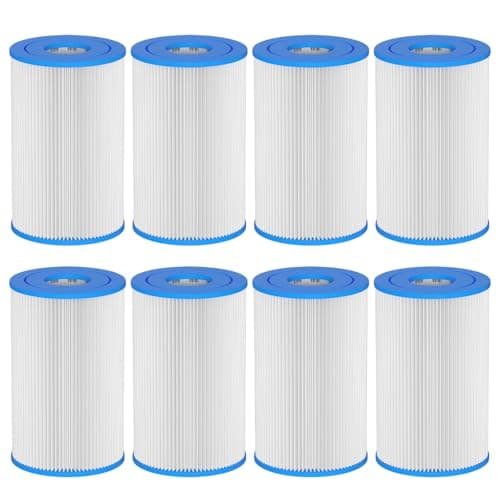 Macaberry 20 Micron Cold Plunge Filter Cartridges, 8-Pack Eight 20-micron cartridges at the standard 5 x 2.5 in size, with a published 30,000-gallon throughput and a one to two month replacement interval - and a compatibility claim that cannot be true of every housing sold for this job. | Not published | Lowest cost per change | 5.2 | $29.99 - Amazon |
| 7 | 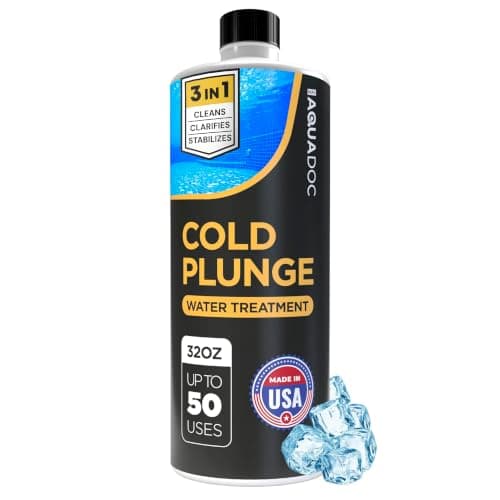 AquaDoc Cold Plunge Water Treatment, 32 oz A weekly treatment dosed at 1 oz per 100 gallons, which is the maintenance step most first-time plungers skip until the water turns. | Not published | Keeping the water usable | 5.0 | $23.99 - Amazon |
Read this first
A chest freezer conversion is four purchases, and only one of them has a manufacturer standing behind it for this use. The liner is sold specifically to turn a chest freezer into a plunge and publishes a compatibility band. The box, the setpoint and the filtration are all appliances or parts borrowed from other jobs. No chest freezer manufacturer rates its product for standing water that a person gets into, which is why our DIY page does not score that route and why no freezer appears in the picks here.
Buy it for the temperature floor, not for the money. A freezer publishes a range that runs well below freezing and, per the liner maker’s own site, holds water at freezing temperatures without added ice once it is cold. Of the cooling devices on this site that publish a floor at all, one publishes 32 F, one publishes 37 F and four publish 42 F. On price, a chest freezer in the 10 to 14.5 cubic foot class sits in the same bracket as a complete tub-and-chiller bundle before you have bought the liner, the controller, the filter or a pump.
What the conversion actually is
Strip the forum threads away and the build is four jobs, each needing a different part.
1. The box. A chest freezer supplies the insulated shell and the refrigeration. This is the part no maker will rate for water, and the part this site will not score. 2. The liner. A waterproof insert that keeps chlorinated water off the freezer’s own interior and stops the conversion from being a slow leak into an electrical appliance. 3. The setpoint. A plug-in temperature controller with its probe in the water, switching the freezer on and off, because a freezer left on its own dial does not make a plunge. 4. Circulation and treatment. Water that sits still in a warm garage goes off, so the build needs a pump moving water through a filter and a sanitizer dosing it.
The liner listings are candid about the shape of this. Both of them tell you to add the BoxPlunge filter and control box, both marked not included - and neither is sold on Amazon at all, which is why the controller and filtration picks here come from the controller roundup and the filter roundup instead. The maker sells a complete DIY kit on its own site at several times what the bare liner costs, and a finished plug-in unit at an order of magnitude more.
Why the box cannot be left on its own dial
This is the part of the build people underestimate, and the freezer listings make it obvious once you read the thermostat range rather than the capacity. One of the best-disclosed 7 cubic foot boxes on Amazon, read on 6 November 2026, publishes an adjustable range of roughly -7.6 F to 10 F. The second figure is the important one: at its warmest setting that freezer is 22 degrees below freezing. Left alone it does not produce a cold plunge, it produces a block of ice with nobody in it. Nothing is wrong with the appliance - it is a freezer being a freezer.
So the setpoint has to come from outside the box. A plug-in controller reads the water with a probe, cuts power to the freezer when the water hits your number and restores it when the water drifts up. Two published figures decide which controller: whether the probe is submersible, because a bead on a wire taped to a cabinet wall is not reading your water, and the maximum load it can switch. Match the second to the circuit rather than to the appliance: no chest freezer listing we read publishes a rated wattage at all, and a controller rated for 1,200 W or 1,800 W clears any 110 V household freezer because the branch circuit upstream is the real limit. The full controller comparison is here.
One exception is worth knowing about if you are still choosing a box. A handful of chest freezers are sold as dual-mode, with a published fridge range as well as a freezer range - one 14.5 cubic foot listing read the same day publishes 32 F to 46.4 F in fridge mode and -14.8 F to 10.4 F in freezer mode. A box like that will hold plunge temperature on its own dial with no controller in front of it, which removes a part and a probe from the build. It will not make ice in that mode, because the mode that reaches below freezing is the other one.
What size, and will you fit in it
Chest freezers are sold by storage volume in cubic feet, which is not a figure anybody shopping for a plunge thinks in. The conversion is exact arithmetic rather than an estimate: a cubic foot is 1,728 cubic inches, a US gallon is 231 cubic inches, so a cubic foot is 7.48 gallons.
Two warnings about that table. The gallon column is the rated storage volume converted, not the water you will put in: a liner takes up some of it, you need freeboard so the plunge does not overflow when you get in, and your own body displaces the rest. And no chest freezer listing we read publishes an interior dimension of any kind. The 7 cubic foot box above publishes a cabinet 20.23 inches deep, which puts the inside somewhere under 20 inches wide - narrow for an adult to sit down in, and the sort of thing you discover after delivery. The liner’s published compatibility band is the only fit guide in the whole build, and it tells you the liner fits the box, not that the box fits you. Measure your own shoulders against a 20 inch gap before ordering anything, and see how plunge sizing actually works.
What it costs to run, from the only figures measured in plunge service
Every running cost on this site is computed from a published figure at the current US average residential rate of 18.34 cents per kWh, and the chest freezer category almost never gives you one. Of the three boxes we read, one publishes about 0.92 kWh a day, one publishes a dollar figure a year with no electricity rate behind it, and one publishes nothing at all. Worse, the figures that do exist are measured in food service - an empty, sealed box at zero Fahrenheit - not with a hundred gallons of water being pulled down from room temperature, held at a setpoint, opened daily and warmed by a body.
The liner’s manufacturer is the one party that publishes energy for the actual use, and the figures are specific: 338 kWh a year for a 14.3 cubic foot freezer and 175 kWh a year for the filtration. Recomputed at the rate this site uses rather than the rate its own page assumes:
That is about 25.8 cents a day to own a cold plunge that holds temperature around the clock, and it is a genuinely low number - the insulated, sealed, lid-closed box is doing exactly what a chest freezer is good at. Treat it as the best case rather than the bill. It is the maker’s figure for its own installation, not a measurement of yours, and a garage at 95 F in August is not the condition it was derived in.
Forty-eight hours, and you still buy ice for the first fill
The maker publishes the one expectation no forum post sets: water may take 48 hours or more to reach low temperatures, 72 hours for the largest box, and it recommends using ice on the first fill to get there. It also recommends unplugging the water pump during that initial cool-down, because a pump adds heat to the water it is circulating. After that first pull-down the picture inverts - the same page says that once cold, the box holds water at freezing temperatures without added ice, which is the thing an uninsulated tub and a 42 F chiller cannot do at all.
That is the honest case for this build. Not that it is cheap, and not that it is better, but that it reaches and holds a temperature band the purpose-built category mostly does not serve. Of the cooling devices tracked on this site, four publish a 42 F floor, one publishes 37 F and one publishes 32 F. If you want water in the low thirties with ice forming at the edges, there is one product on this site that publishes a floor low enough, and a freezer does it by design.
The gap between a kit and a liner, in the maker’s own words
This is the paragraph to read twice, and the evidence for it comes from the company that sells the liner rather than from us. On its finished units, that company publishes three separate electrical provisions: the electronics automatically disconnect whenever the lid is opened, with a click you can hear and a thermostat display that goes dark; all the electronics are GFCI protected; and the unit ships with a water-safe GFCI plug. Having fitted all three, the same page still tells owners to unplug before getting in, and calls its own lid cutoff a redundant measure.
A liner and a generic plug-in thermostat give you none of the three. You get a waterproof insert and a device that switches a mains outlet on and off next to a hundred gallons of water, with no lid interlock, no GFCI unless the outlet already has one, and no interlock between the pump and the lid. That is the real difference between buying a conversion kit and assembling one from parts, and it is not a difference in temperature or in cost. If you build this, put it on a GFCI-protected circuit, unplug everything before you get in, and treat the lid as an electrical switch rather than a lid.
One more published detail worth carrying across. The maker says the interior of its own units is enameled coated metal, designed to be skin-safe, waterproof and corrosion-proof. The liner listings on Amazon describe their product only as smooth and waterproof and name no material at all, so if the material is what you are buying for, that figure lives on the manufacturer’s site and not on the listing you are ordering from.
Why the freezer is still not scored here
Every product on this site gets scored on what its manufacturer publishes for the use we are recommending it for. A chest freezer fails that test on its face: no maker rates one for holding standing water that a person gets into, none publishes a volume rating for water, a draw under that load, a seal specification for it or a warranty that survives it. So the freezer is not in the picks on this page, it carries no score, and there is no buy link for one anywhere on this site. That position has not changed and this page does not soften it - the DIY page states it in full.
What has changed is that one part of the build now has a manufacturer behind it. The liner is sold for this exact conversion, publishes a compatibility band, and its maker publishes energy, cooling time and safety provisions for a freezer used as a plunge. That is checkable, so it is scored. The box it goes inside is not, and the scores on this page are scores of parts rather than a verdict on the build.
If the temperature floor is not the point, buy the other thing
Most people who search for this build are looking for a cheaper plunge, and on live prices that is not what it is. A chest freezer in the size the liners are made for sits in the same price bracket as a complete tub-and-chiller bundle - and the bundle arrives in one order with a chiller, a pump, a filter and a tub, from a maker that rates the whole thing for water. The liner, the controller, the filter housing, the cartridge and a circulation pump are all additional to the box.
Note that last item, because nothing in this build moves water on its own. A filter housing is a canister, not a pump, and no standalone circulation pump is tracked on this site, so budget for one on top of everything in the picks above. If what you actually want is 40 F water with the least money and the fewest parts, start with the cheapest setups that publish figures or a tub and chiller pairing. Come back to the freezer when the thing you want is ice.
Every pick, in full
Each write-up below shows the score broken into its six components, the specs the listing actually publishes, and the running-cost arithmetic where a wattage exists to compute it from.
#1 - The only part made for this job
Caplide BoxPlunge Cold Plunge Liner, 14 to 14.8 Cu Ft
The one product in the whole build whose maker publishes something about converting a chest freezer into a plunge, and the cheapest of the three BoxPlunge variants despite covering the largest boxes. Its two useful claims carry no numbers and its two recommended companion parts are not sold on Amazon at all.
| Small-space fit | 0 / 20 |
|---|---|
| Electrical fit | 20 / 20 |
| Cost to run | 20 / 20 |
| Key-number disclosure | 0 / 15 |
| Spec completeness | 2 / 15 |
| Warranty | 0 / 10 |
| Total | 42 / 100 |
| Rated watts | Not published Not published |
|---|---|
| Maximum temperature | Not published Not published |
| Dimensions | 55 x 29 x 30 in Seller’s listing, read 2026-11-06 |
| Weight | Not published Not published |
| Timer | Not published Not published |
| Cooling floor | Not the relevant number for this category |
| Material | Not published Not published |
| Warranty (months) | Not published Not published |
No electrical load. This draws no power of its own. The running cost of a plunge lives in the chiller, or in the bag of ice.
This site's rule is that we recommend equipment whose maker publishes figures for the use we are recommending it for, and that rule is why the freezer itself is not scored anywhere on this site. The liner is the one part of the conversion that clears it: Caplide sells this specifically to convert a chest freezer into a cold plunge, and it publishes a compatibility band - 14 to 14.8 cubic feet internal volume - which is the single figure that decides whether the part fits the box you already own. It also states that it fits 10 cubic foot freezers with what the seller itself calls a loose fit, which is unusually candid for a compatibility bullet.
Two of its claims address the two problems that actually sink a conversion. The first is condensation: a cold box in a warm garage sweats, and the listing says the design does not condensate water or drip. The second is the freezer's interior, which is painted or coated steel never intended to sit in chlorinated water; the liner is removable, and the seller's argument is that lifting it out leaves the original interior unworn. Neither claim is accompanied by a test, a rating or a material name - the liner's own construction is never specified beyond smooth and waterproof - so both are the seller's word rather than a figure you can check.
Three things to know before you order. The published 55 by 29 by 30 inch dimensions are the product's own measurements and the listing never calls them the usable interior, so they are not a fit guide for a person. The energy claim - that a chest freezer is well insulated and will not affect your electric bill - is the sentence on this listing to disbelieve on principle, because pulling a hundred gallons from room temperature to 40 F and holding it there is work that shows up on a meter. And the listing twice tells you to add the BoxPlunge filter and control box, both marked not included, neither of which is sold on Amazon: the seller's own complete loop cannot be finished from this page, which is why the controller and filtration picks below come from elsewhere.
Buy it if
Someone who already owns, or has decided to buy, a 14 to 14.8 cubic foot chest freezer and wants the one part of the build that is sold for this purpose.
Skip it if
Your freezer is 7 cubic feet. Nothing in this line is made for that size, and the smallest variant is described by its own seller as a loose fit at 7 cu ft.
#2 - Best for a 10 cu ft box
Caplide BoxPlunge Cold Plunge Liner Box 10
The variant sold for 10 cubic foot freezers, which is the most common size in the conversion builds. It costs more than the variant built for the larger boxes, and a third variant in the same line publishes the same dimensions as this one while being titled as the large option.
| Small-space fit | 0 / 20 |
|---|---|
| Electrical fit | 20 / 20 |
| Cost to run | 20 / 20 |
| Key-number disclosure | 0 / 15 |
| Spec completeness | 2 / 15 |
| Warranty | 0 / 10 |
| Total | 42 / 100 |
| Rated watts | Not published Not published |
|---|---|
| Maximum temperature | Not published Not published |
| Dimensions | 55 x 21 x 25 in Seller’s listing, read 2026-11-06 |
| Weight | Not published Not published |
| Timer | Not published Not published |
| Cooling floor | Not the relevant number for this category |
| Material | Not published Not published |
| Warranty (months) | Not published Not published |
No electrical load. This draws no power of its own. The running cost of a plunge lives in the chiller, or in the bag of ice.
Same product family as the larger liner, same claim set, one size down: a published compatibility band of 10 cubic feet internal volume, a stated loose fit in 7 cubic foot boxes, a removable design the seller argues protects the freezer's own interior, and a stated tolerance for spa chemicals. If you are buying a 10 cubic foot box this is the variant whose title and compatibility bullet agree with each other, which on this listing page is not a given.
The pricing inside the line runs the wrong way. This 10 cubic foot variant is the dearer of the two we recommend and the 14 to 14.8 cubic foot variant is the cheaper, which is the reverse of what size would suggest. If you have not yet bought the freezer, that is worth knowing before you pick the box: the bigger build is cheaper on the liner and dearer on the appliance.
The line's third variant is the one to approach carefully. It is titled for both 10 and 19 cubic foot freezers and sold under a Box 19 Large option, but its compatibility bullet describes 10 cubic feet exactly like this one, and its published dimensions are identical to the ones here rather than larger. A listing whose title and specification disagree about which size you are buying is not a listing to order a part this size from on the strength of the title alone, and we have not featured it for that reason.
Buy it if
Someone pairing a liner with a 10 cubic foot chest freezer, where the published band and the box actually match.
Skip it if
Your box is 14 cubic feet or larger. The other variant is built for that and costs less.
#3 - Cheapest with a water probe
Inkbird ITC-308S Submersible-Probe Temperature Controller
The same price as the standard ITC-308 with a fully submersible probe and a higher switching rating - 1,200 W against 1,100 - which makes the standard version the wrong one to buy for water.
| Small-space fit | 8 / 20 |
|---|---|
| Electrical fit | 0 / 20 |
| Cost to run | 0 / 20 |
| Key-number disclosure | 0 / 15 |
| Spec completeness | 4 / 15 |
| Warranty | 0 / 10 |
| Total | 12 / 100 |
| Rated watts | Not published Not published |
|---|---|
| Maximum temperature | Not published Not published |
| Dimensions | 7.48 x 3.34 x 4.13 in Seller’s listing, read 2026-11-03 |
| Weight | 0.99 lb Seller’s listing, read 2026-11-03 |
| Timer | Not published Not published |
| Cooling floor | Not the relevant number for this category |
| Material | Not published Not published |
| Warranty (months) | Not published Not published |
No running cost can be computed. The listing does not publish a rated wattage, so there is no honest way to tell you what a session costs. We will not estimate one. How we compute running costs
This is the quiet value pick, and the reason is a comparison the listings make easy. Inkbird sells the ITC-308 and this ITC-308S at the same price. The S publishes a fully submersible probe - its own words are that an aquarium probe works better in water than a standard probe - and a 1,200 W maximum load against the standard model's 1,100 W. Same money, better probe, more headroom.
For a plunge the probe is the whole argument. A standard controller probe is a bead on a wire meant to sit in air or strap to a vessel wall, and reading the tub through an inch of insulated PVC is how you end up chasing a setpoint you never reach. A probe you can drop in the water reads the water.
What it does not have is the 608T's compressor delay or its ETL listing, and 1,200 W is only just above the draw of the two 1,200 W chillers on this site - which is to say no margin at all once startup current is accounted for. Pair it with something smaller: the 190 W, 280 W and 600 W units leave it plenty of room.
Buy it if
Someone controlling a modest chiller or a freezer conversion who wants a probe that belongs in water.
Skip it if
Your chiller publishes 1,030 W or more. Buy the 1,800 W unit instead and keep the headroom.
#4 - Cheapest with headroom
DEWENWILS 15 A Thermostat Outlet with Timer
The cheapest controller here and, at a published 1,800 W and 15 A, one of only two with enough switching headroom for a full-size chiller - but it publishes nothing about its probe.
| Small-space fit | 8 / 20 |
|---|---|
| Electrical fit | 0 / 20 |
| Cost to run | 0 / 20 |
| Key-number disclosure | 0 / 15 |
| Spec completeness | 2 / 15 |
| Warranty | 0 / 10 |
| Total | 10 / 100 |
| Rated watts | Not published Not published |
|---|---|
| Maximum temperature | Not published Not published |
| Dimensions | 4.14 x 2.26 x 1.53 in Seller’s listing, read 2026-11-03 |
| Weight | Not published Not published |
| Timer | Not published Not published |
| Cooling floor | Not the relevant number for this category |
| Material | Not published Not published |
| Warranty (months) | Not published Not published |
No running cost can be computed. The listing does not publish a rated wattage, so there is no honest way to tell you what a session costs. We will not estimate one. How we compute running costs
The counterintuitive result on this page: the cheapest product has the joint-highest switching rating. A published 15 A and 1,800 W clears every chiller draw we track, and it publishes a -40 to 210 F control range with a stated 0.1 F precision, both heating and cooling modes, temperature calibration, power-loss memory and a cyclic timer.
The cyclic timing is worth a second look for an ice-only setup. It can run a pump or a filter for a set period rather than continuously, which is exactly the duty the standalone filter units on this site want, so one device can hold a setpoint on a cooler and run filtration on a schedule.
The omission that decides it against the Inkbird units is the probe: nothing on the listing says whether the sensor is waterproof, let alone submersible, and for a device whose whole job is reading water temperature that is the specification you would most want. No compressor delay and no safety certification are published either. It is the right buy for switching a big load on a budget and the wrong buy if the probe has to live in the tub.
Buy it if
Someone switching a 1,030 W or 1,200 W chiller who will mount the probe themselves and does not mind rigging the probe themselves.
Skip it if
You want a published submersible probe. This listing does not describe its sensor at all.
#5 - Published port thread
Plunge Crafters 10 in Cold Plunge Filter Housing
A 10 in housing with a 50-micron pleated cartridge and the most completely specified port on this site: 3/4 in NPT with the outside diameter, inside diameter, thread pitch and threads per inch all published.
| Small-space fit | 8 / 20 |
|---|---|
| Electrical fit | 20 / 20 |
| Cost to run | 20 / 20 |
| Key-number disclosure | 0 / 15 |
| Spec completeness | 4 / 15 |
| Warranty | 0 / 10 |
| Total | 52 / 100 |
| Rated watts | Not published Not published |
|---|---|
| Maximum temperature | Not published Not published |
| Dimensions | 10 x 10 x 10 in Seller’s listing, read 2026-10-24 |
| Weight | Not published Not published |
| Timer | Not published Not published |
| Cooling floor | Not the relevant number for this category |
| Material | Not published Not published |
| Warranty (months) | Not published Not published |
No electrical load. This draws no power of its own. The running cost of a plunge lives in the chiller, or in the bag of ice.
The port specification is the reason this is here. It publishes 3/4 in NPT and then keeps going - 26.7 mm outside diameter, 23.7 mm inside, 1.814 mm pitch, 14 threads per inch - which is more thread detail than any tub, chiller or filter listing we have read. If you have ever ordered a fitting that did not seal, that paragraph is worth the price of the housing.
Two threaded hose barbs and clamps are included, with the honest caveat printed on the listing itself: barbs are for low-pressure plunge and spa use, not for whole-home plumbing. A mounting bracket and a housing wrench are in the box, and the listing says the cartridge is good for a month at daily use. It is also described as ozone-venturi ready, which matters only if you are adding a sanitation stage later.
The honest downside is the filter itself. Fifty micron is coarser than the 20-micron cartridges the rest of this category sells, so it captures rust, sand and grit and lets finer particles through; you are buying the housing and the port here, not the fine filtration. One cartridge is in the box, no warranty term is published, and a 10 in housing needs 10 in cartridges - the common 5 x 2.5 in replacements do not fit it.
Buy it if
Someone plumbing a loop who wants a port they can actually match a fitting to, and who will buy finer cartridges separately.
Skip it if
You want fine filtration out of the box. Fifty micron is the coarsest rating on this page.
#6 - Lowest cost per change
Macaberry 20 Micron Cold Plunge Filter Cartridges, 8-Pack
Eight 20-micron cartridges at the standard 5 x 2.5 in size, with a published 30,000-gallon throughput and a one to two month replacement interval - and a compatibility claim that cannot be true of every housing sold for this job.
| Small-space fit | 8 / 20 |
|---|---|
| Electrical fit | 20 / 20 |
| Cost to run | 20 / 20 |
| Key-number disclosure | 0 / 15 |
| Spec completeness | 4 / 15 |
| Warranty | 0 / 10 |
| Total | 52 / 100 |
| Rated watts | Not published Not published |
|---|---|
| Maximum temperature | Not published Not published |
| Dimensions | 5 x 2.5 in per cartridge Seller’s product title, read 2026-10-24 |
| Weight | 1.39 lb Seller’s listing, read 2026-10-24 |
| Timer | Not published Not published |
| Cooling floor | Not the relevant number for this category |
| Material | Not published Not published |
| Warranty (months) | Not published Not published |
No electrical load. This draws no power of its own. The running cost of a plunge lives in the chiller, or in the bag of ice.
This is the recurring cost of a plunge, bought in bulk. Eight cartridges against a published replacement interval of one to two months is somewhere between eight months and sixteen months of changes, which is the honest way to compare it against a rinsable screen that never needs replacing. It also publishes a throughput figure - up to 30,000 gallons per cartridge - which is unusual and gives you a second way to judge when it is spent.
Twenty micron is the fine end of what this category sells, and it is the same rating the better chillers put in their own loops. Pleated fabric rather than spun means more surface area for the same housing, which is why the listing claims longer life, and the cartridge is washable between changes rather than strictly single-use.
The claim to disregard is compatibility. The listing says it is compatible with any cold plunge system, and a 5 x 2.5 in cartridge physically cannot fit the 10 in housings also sold for cold plunges - including one on this page. Measure the housing you own, or buy the housing and the cartridges as a matched pair. Nothing else about the product is overstated; this one line is.
Buy it if
Anyone running a 5 in housing who would rather buy a year of cartridges once.
Skip it if
Your housing takes 10 in cartridges. These will not fit, whatever the listing says.
#7 - Keeping the water usable
AquaDoc Cold Plunge Water Treatment, 32 oz
A weekly treatment dosed at 1 oz per 100 gallons, which is the maintenance step most first-time plungers skip until the water turns.
| Small-space fit | 8 / 20 |
|---|---|
| Electrical fit | 20 / 20 |
| Cost to run | 20 / 20 |
| Key-number disclosure | 0 / 15 |
| Spec completeness | 2 / 15 |
| Warranty | 0 / 10 |
| Total | 50 / 100 |
| Rated watts | Not published Not published |
|---|---|
| Maximum temperature | Not published Not published |
| Dimensions | Not published Not published |
| Weight | 2 lb Seller’s listing, read 2026-09-07 |
| Timer | Not published Not published |
| Cooling floor | Not the relevant number for this category |
| Material | Not published Not published |
| Warranty (months) | Not published Not published |
No electrical load. This draws no power of its own. The running cost of a plunge lives in the chiller, or in the bag of ice.
A cold plunge is a body of standing water at a temperature that slows bacterial growth without stopping it, with body oils and skin cells going into it several times a week. Left alone it goes cloudy and then it smells, and the usual response is to drain and refill a hundred gallons, which is both wasteful and the reason people quit.
The dose is published clearly at one ounce per hundred gallons weekly, which is the sort of instruction you can actually follow. Whether you use this product or another, chemical treatment plus a filter is what turns a plunge from a weekly refill chore into something that runs for weeks.
Buy it if
Anyone who owns a plunge tub and has not yet worked out why the water goes cloudy.
Skip it if
You drain and refill after every session anyway.
Questions people actually ask
Do you need a liner for a chest freezer cold plunge?
You need something between chlorinated water and the freezer's own interior, and a purpose-made liner is the only part of this build whose manufacturer publishes anything for the job. It publishes a compatibility band in cubic feet, it is removable so the freezer's painted interior is not sitting in treated water, and the seller states it does not condensate or drip. The liners do not include the filter or the control box their own listings tell you to add, and neither of those companion parts is sold on Amazon.
What size chest freezer do you need for a cold plunge?
Match the box to the liner rather than the other way round, because the liner line has three sizes and the freezer market has dozens. A 10 cubic foot freezer is about 74.8 gallons of rated volume and is the size with the cleanest part match. A 7 cubic foot box is about 52.4 gallons and no liner is made for it - the smallest is sold for 10 cubic feet and its own seller calls the 7 cubic foot fit loose. No freezer listing we read publishes an interior dimension at all, so whether you personally fit is not answerable from any listing.
Do you need a temperature controller for a chest freezer cold plunge?
Almost always yes. A 7 cubic foot freezer we read publishes an adjustable range of about -7.6 F to 10 F, which means its warmest setting is 22 degrees below freezing - on its own dial it freezes the water solid rather than holding a plunge temperature. A plug-in controller with a submersible probe reads the water and switches the freezer off at your setpoint. The exception is a dual-mode chest freezer that publishes a fridge range: one 14.5 cubic foot listing publishes 32 F to 46.4 F in fridge mode, which covers plunge temperature on its own dial.
Is a chest freezer cold plunge cheaper than buying a cold plunge?
On current prices, no. A chest freezer in the size the liners are made for sits in the same price bracket as a complete tub-and-chiller bundle, and the liner, the controller, the filter housing, the cartridge and a circulation pump are all on top of the box. The bundle also arrives in one order and is rated for water by its maker. The freezer route buys a temperature floor, not a saving.
How long does a chest freezer cold plunge take to cool down?
The liner's manufacturer publishes 48 hours or more for the first fill, 72 hours for its largest box, and recommends adding ice on that first fill to get there. It also recommends unplugging the circulation pump during the initial cool-down, since a running pump adds heat. After that first pull-down the same page states the box holds water at freezing temperatures without added ice.
Does a chest freezer cold plunge need a GFCI?
The company that sells the liners fits three separate electrical provisions to its own finished units: electronics that automatically disconnect when the lid opens, GFCI protection on all the electronics, and a water-safe GFCI plug - and it still tells owners to unplug before getting in. A liner plus a generic plug-in thermostat has none of those unless you add them. Put the build on a GFCI-protected circuit and unplug it before you get in.
Sources
- BoxPlunge (Caplide) - manufacturer site, energy, cooling time and safety features - The only plunge-duty energy figures published for a freezer conversion by anyone: 338 kWh/yr for a 14.3 cu ft freezer and 175 kWh/yr for filtration, plus cooling time, the lid-open disconnect, GFCI provision and the Box 10 / Box 14 / Box 19 model differences. Read 2026-11-06.
- U.S. Energy Information Administration, Electric Power Monthly, Table 5.6.A - Average residential price of electricity, the rate every running cost on this site is computed at. Read 2026-09-07.