Cold Plunges
The best cold plunge filters, and the fit trap in the middle of the category
Four figures decide this purchase: the micron rating, the port thread, how often the element is replaced, and whether anything in your setup moves water at all. Most listings publish one or two of them.
By Scooter M. · Published · Last updated
How we are paid: the buy links on this page are affiliate links. If you buy through one, we earn a commission from the retailer at no extra cost to you. It does not change what we rank or what we tell you to skip - the full FTC disclosure is here.
| # | Product | Filter rating | Best for | Score | Price |
|---|---|---|---|---|---|
| 1 | 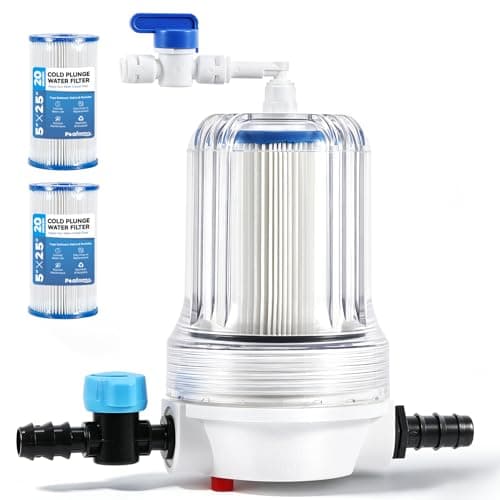 Poafamx 5 in Cold Plunge Filter Housing Kit The only filter here that publishes all four figures that decide the purchase - 20 micron, a 1/2 in FNPT port thread, a 4 to 6 week replacement interval and a 12-month warranty - with three cartridges already in the box. | 20 micron | Best documented | 6.0 | $39.99 - Amazon |
| 2 | 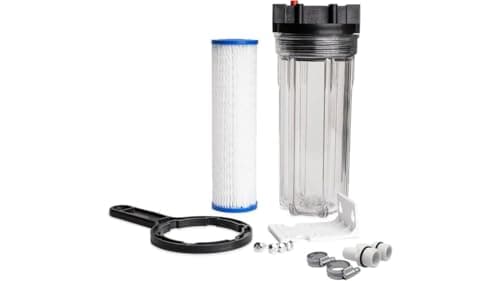 Plunge Crafters 10 in Cold Plunge Filter Housing A 10 in housing with a 50-micron pleated cartridge and the most completely specified port on this site: 3/4 in NPT with the outside diameter, inside diameter, thread pitch and threads per inch all published. | 50 micron | Published port thread | 5.2 | $39.95 - Amazon |
| 3 | 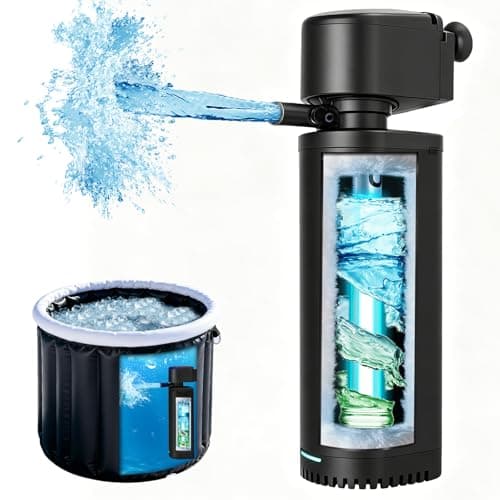 TARARIUM 500 GPH Cold Plunge Filter with UV Sanitation A 500 GPH submersible pump and filter with a UV stage, rated for tubs from 100 to 1,000 gallons, for anyone running ice rather than a chiller. | Membrane bag plus UV, no micron published | Filtration without a chiller | 1.0 | $58.99 - Amazon |
| 4 | 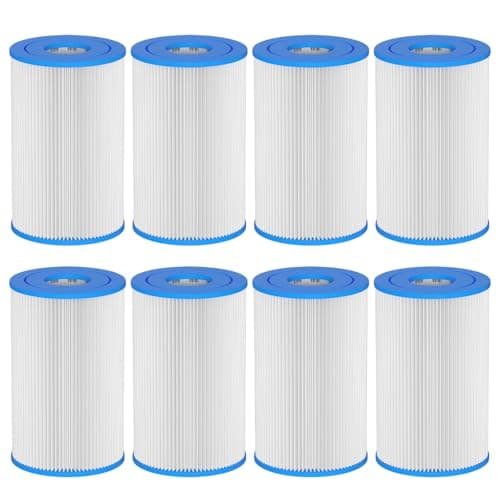 Macaberry 20 Micron Cold Plunge Filter Cartridges, 8-Pack Eight 20-micron cartridges at the standard 5 x 2.5 in size, with a published 30,000-gallon throughput and a one to two month replacement interval - and a compatibility claim that cannot be true of every housing sold for this job. | 20 micron | Lowest cost per change | 5.2 | $29.99 - Amazon |
| 5 | 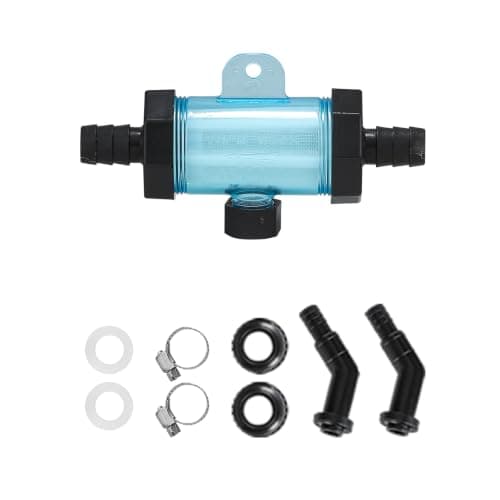 Poafamx Inline Nylon Mesh Cold Plunge Filter A rinsable nylon mesh in a transparent housing, so there is nothing to replace and you can see when it needs cleaning - and no micron rating, no flow figure and no dimensions published anywhere on the listing. | Not published | No recurring cost | 4.8 | $17.99 - Amazon |
| 6 | 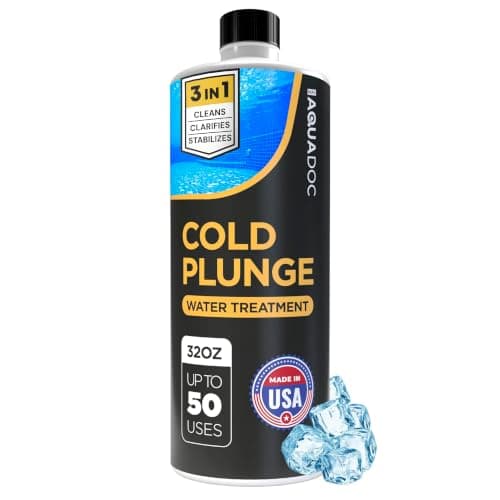 AquaDoc Cold Plunge Water Treatment, 32 oz A weekly treatment dosed at 1 oz per 100 gallons, which is the maintenance step most first-time plungers skip until the water turns. | Not a filter - a weekly treatment | Keeping the water usable | 5.0 | $23.99 - Amazon |
The short version
How we judged these, and what our own score cannot see
The criteria, before any ranking. We judged these on the published micron rating, the published port thread or size (because a filter you cannot connect is not a filter), the published replacement interval (which is the real cost), and whether the thing needs a pump to work. Everything below is read from the seller’s own listing; we have not tested filtration performance and we do not own a particle counter.
The decision that comes before any product
Does anything in your setup move the water? It is the only question that matters first, and it splits this category in two.
- You have a chiller, or a pump. Then you have circulation, and what you want is an inline housing: a canister you plumb into the loop with a replaceable cartridge inside. It adds no electrical load, because the pump you already own does the work.
- You are running ice in a bare tub. Then you have no circulation at all, and an inline housing is a paperweight. You need a submersible unit with its own pump, which is one product on this page.
That second case is more common than the category admits. Every chiller we track includes some filtration - which kind, and what it costs over three years - so an ice setup has exactly the same fouling problem and none of the equipment. If you have not decided between ice and a chiller yet, the break-even is worked through here.
What each one publishes
The fit trap, which is the most expensive mistake here
Two formats dominate this category and they are not interchangeable in either direction. The 5 in canister takes the 5 by 2.5 in cartridge and usually carries a 1/2 in port; the 10 in canister takes a 10 in cartridge and usually carries a 3/4 in port. Buying a housing and a cartridge pack from two different listings is how people end up with a filter they cannot close.
The safe route is the boring one: buy a housing that ships with its own cartridges, note the size on the box, and buy that size again. Of the two housings here, only one arrives with cartridges - three of them - which is worth more than the few dollars of difference in the sticker.
Micron, and what 20 against 50 actually means
A micron rating describes the size of particle an element is built to capture. Twenty micron is the fine end of this category and the same figure the better chillers quote for the cartridges in their own loops; 50 micron is the coarse end, aimed at rust, sand and sediment on well water.
The trade is not subtle. A finer element captures more and clogs faster, which is why the 20-micron housing kit publishes a four-to-six-week interval and the 50-micron housing publishes a month at daily use despite being the coarser filter - surface area and particle load pull in opposite directions. Pleated media, which both housings use, exists to push that interval out: more surface area in the same canister means more dirt before flow drops.
The recurring cost is the real cost
A housing is a one-time purchase of a few tens of dollars. What you actually commit to is the element inside it, and the published intervals across this page run from two weeks to never:
- Every 2 weeks - the filter cotton in the standalone 500 GPH unit, per its own listing.
- Every 4 to 6 weeks - the 20-micron pleated cartridge in the 5 in kit.
- Monthly at daily use - the 50-micron pleated cartridge in the 10 in housing.
- Every 1 to 2 months - the bulk 8-pack, which also publishes a throughput figure of up to 30,000 gallons per cartridge.
- Never - the nylon mesh screen, which you rinse. Nothing to buy again, and nothing published about what it filters.
That is the same argument our chiller filtration page makes with the three-year arithmetic, and we are not going to re-run it here: a cartridge is a subscription and a rinsable screen is not, and over three years that gap is larger than the electricity difference between two chillers. What is new on this page is that standalone filters publish the interval and chillers do not. Several chillers we track name a micron rating; not one of them tells you how often to change it.
Where it goes in the loop
One listing here publishes the answer, which makes it the only installation instruction in the category: put the filter after the pump and before the chiller, so the chiller’s heat exchanger sees filtered water rather than grit.
That ordering is worth following even if you buy a different housing. The cheapest component in a plunge loop is the filter and the most expensive is the chiller, and a screen upstream of the expensive part is doing two jobs: clearing the water you sit in, and keeping abrasive sediment out of the pump and the heat exchanger. It is also the argument for fitting the nylon mesh screen even if you already run a cartridge - coarse first, fine second.
If you are running ice, read this part
An ice setup has no pump, so it has no filtration, and nothing about the ice helps: cold water slows biological growth without stopping it, and body oils and skin cells go in regardless. The honest options are a submersible pump-and-filter unit, a weekly dosed treatment, or draining more often - and draining a hundred gallons every week is the thing that quietly ends the habit.
The quantities on the ice side are computable, if you have not done that arithmetic yet: about 103 lb of ice takes 100 gallons from a 70 F tap to 50 F, which is five bags a fill. Filtration is what buys you more fills between drains.
What none of these publishes
Three absences worth knowing before you shop, because they are category-wide rather than brand-specific:
- A flow rate on the housings. Neither inline housing publishes gallons per hour or a pressure drop, so you cannot work out whether it will throttle your pump. The standalone unit publishes 500 GPH, which is the only flow figure on the page.
- A micron figure on the screens. The nylon mesh publishes no rating, no mesh size and no dimensions - it publishes none of our eight checklist items, which is why it scores where it does.
- A service life in hours for any pump. The one powered unit here runs continuously in cold water and publishes a 180-day warranty with no expected life, and no wattage either, so neither its running cost nor its lifespan can be checked.
What we would buy
- Poafamx 5 in housing kit - the pick if you have circulation. Twenty micron, 1/2 in FNPT, a four-to-six-week interval, a 12-month warranty and three cartridges in the box, plus the only published install position in the category. Honest downside: no flow rate and no housing material published, and the 5 in format locks your future cartridge size.
- TARARIUM 500 GPH with UV - the pick if you are on ice with no pump, because it is the only unit here that works alone: 500 GPH, rated for 100 to 1,000 gallons, with a UV stage and an air valve. Honest downside: it publishes no wattage, so there is no honest running cost for it and it scores last on our own rubric; the filter cotton wants changing every two weeks; and no micron rating is published anywhere.
- Plunge Crafters 10 in housing - buy it for the port. The thread is specified down to the pitch and threads per inch, which is the detail that stops a leaking fitting, and it is ozone-venturi ready if a sanitation stage is coming later. Honest downside: 50 micron is the coarsest element here, one cartridge is in the box, and no warranty term is published.
- Macaberry 20 micron 8-pack - the cheapest way to own a year of changes, with a published throughput figure as a second way to judge a spent element. Honest downside: the compatibility claim on the listing is wrong for 10 in housings, so measure first.
- Poafamx inline nylon mesh - worth fitting upstream of anything expensive, at the price of a coffee round. Honest downside: not one specification is published, so you are buying a strainer on trust rather than a filter you can compare.
- AquaDoc weekly treatment - not a filter and not an alternative to one. It is the other half of the routine, dosed at 1 oz per 100 gallons. Honest downside: it publishes a dose and a weight and nothing else, and no treatment removes what a filter removes.
If the tub itself is still the open question rather than the water in it, what size cold plunge do I need covers the volume decision that sets your filtration load, and bathtub chillers covers the setup where the plumbing is already there.
Every pick, in full
Each write-up below shows the score broken into its six components, the specs the listing actually publishes, and the running-cost arithmetic where a wattage exists to compute it from.
#1 - Best documented
Poafamx 5 in Cold Plunge Filter Housing Kit
The only filter here that publishes all four figures that decide the purchase - 20 micron, a 1/2 in FNPT port thread, a 4 to 6 week replacement interval and a 12-month warranty - with three cartridges already in the box.
| Small-space fit | 8 / 20 |
|---|---|
| Electrical fit | 20 / 20 |
| Cost to run | 20 / 20 |
| Key-number disclosure | 0 / 15 |
| Spec completeness | 6 / 15 |
| Warranty | 6 / 10 |
| Total | 60 / 100 |
| Rated watts | Not published Not published |
|---|---|
| Maximum temperature | Not published Not published |
| Dimensions | 4.33 x 4.33 x 8.27 in Seller’s listing, read 2026-10-24 |
| Weight | Not published Not published |
| Timer | Not published Not published |
| Cooling floor | Not the relevant number for this category |
| Material | Not published Not published |
| Warranty (months) | 12 Seller’s listing, read 2026-10-24 |
No electrical load. This draws no power of its own. The running cost of a plunge lives in the chiller, or in the bag of ice.
Four published figures, which in this category is remarkable: a 20-micron pleated cartridge, a 1/2 in FNPT port, a replacement interval of four to six weeks depending on use, and a one-year warranty. Nothing else on this page publishes all four, and no chiller we track publishes an interval at all - they name a micron rating and leave the recurring cost to you.
It also publishes the one thing no other filter listing bothers with: where to put it. The listing tells you to install it after your pump and before any chiller, so the chiller's heat exchanger sees filtered water rather than grit. That is the difference between a filter that protects your most expensive component and one that just clears the water you sit in, and it is the sort of instruction you can act on without a plumber.
What it does not publish: a flow rate, so you cannot work out how many times an hour your tub turns over, and no housing material at all. The 5 in format is also a commitment - cartridges for it are not interchangeable with the 10 in housings sold alongside it, which is the trap this page exists to flag. Three cartridges in the box is about three to four months of daily use before you buy again.
Buy it if
Anyone with a chiller or a circulation pump who wants the micron rating, the thread and the replacement interval published before they buy.
Skip it if
You have no chiller and no pump. An inline housing filters nothing on its own - something has to move the water through it.
#2 - Published port thread
Plunge Crafters 10 in Cold Plunge Filter Housing
A 10 in housing with a 50-micron pleated cartridge and the most completely specified port on this site: 3/4 in NPT with the outside diameter, inside diameter, thread pitch and threads per inch all published.
| Small-space fit | 8 / 20 |
|---|---|
| Electrical fit | 20 / 20 |
| Cost to run | 20 / 20 |
| Key-number disclosure | 0 / 15 |
| Spec completeness | 4 / 15 |
| Warranty | 0 / 10 |
| Total | 52 / 100 |
| Rated watts | Not published Not published |
|---|---|
| Maximum temperature | Not published Not published |
| Dimensions | 10 x 10 x 10 in Seller’s listing, read 2026-10-24 |
| Weight | Not published Not published |
| Timer | Not published Not published |
| Cooling floor | Not the relevant number for this category |
| Material | Not published Not published |
| Warranty (months) | Not published Not published |
No electrical load. This draws no power of its own. The running cost of a plunge lives in the chiller, or in the bag of ice.
The port specification is the reason this is here. It publishes 3/4 in NPT and then keeps going - 26.7 mm outside diameter, 23.7 mm inside, 1.814 mm pitch, 14 threads per inch - which is more thread detail than any tub, chiller or filter listing we have read. If you have ever ordered a fitting that did not seal, that paragraph is worth the price of the housing.
Two threaded hose barbs and clamps are included, with the honest caveat printed on the listing itself: barbs are for low-pressure plunge and spa use, not for whole-home plumbing. A mounting bracket and a housing wrench are in the box, and the listing says the cartridge is good for a month at daily use. It is also described as ozone-venturi ready, which matters only if you are adding a sanitation stage later.
The honest downside is the filter itself. Fifty micron is coarser than the 20-micron cartridges the rest of this category sells, so it captures rust, sand and grit and lets finer particles through; you are buying the housing and the port here, not the fine filtration. One cartridge is in the box, no warranty term is published, and a 10 in housing needs 10 in cartridges - the common 5 x 2.5 in replacements do not fit it.
Buy it if
Someone plumbing a loop who wants a port they can actually match a fitting to, and who will buy finer cartridges separately.
Skip it if
You want fine filtration out of the box. Fifty micron is the coarsest rating on this page.
#3 - Filtration without a chiller
TARARIUM 500 GPH Cold Plunge Filter with UV Sanitation
A 500 GPH submersible pump and filter with a UV stage, rated for tubs from 100 to 1,000 gallons, for anyone running ice rather than a chiller.
| Small-space fit | 8 / 20 |
|---|---|
| Electrical fit | 0 / 20 |
| Cost to run | 0 / 20 |
| Key-number disclosure | 0 / 15 |
| Spec completeness | 2 / 15 |
| Warranty | 0 / 10 |
| Total | 10 / 100 |
| Rated watts | Not published Not published |
|---|---|
| Maximum temperature | Not published Not published |
| Dimensions | Not published Not published |
| Weight | Not published Not published |
| Timer | Not published Not published |
| Cooling floor | Not the relevant number for this category |
| Material | Not published Not published |
| Warranty (months) | Not published Not published |
No running cost can be computed. The listing does not publish a rated wattage, so there is no honest way to tell you what a session costs. We will not estimate one. How we compute running costs
Chillers come with filtration built in. Ice does not, which leaves ice-only plungers with the same water quality problem and none of the equipment, and it is why a standalone filter belongs in this category rather than being an afterthought.
Five hundred gallons per hour turns over a 100-gallon tub five times an hour, which is well above what a plunge needs, and the listing describes a UV stage alongside the membrane filter - ultraviolet handles the biological load that a mechanical filter cannot touch. Running it for an hour after each session is enough to keep water clear for weeks.
The listing also recommends replacing the filter cotton every two weeks, which is the recurring cost to budget for, and notes an adjustable air valve for oxygenation. The wattage is not published, so we cannot give you a running cost - but a submersible pump in this class is a small load, tens of watts rather than hundreds, and it runs for an hour rather than continuously.
Buy it if
An ice-only plunger whose water is going cloudy between refills.
Skip it if
Your chiller already includes filtration. Most in this roundup do.
#4 - Lowest cost per change
Macaberry 20 Micron Cold Plunge Filter Cartridges, 8-Pack
Eight 20-micron cartridges at the standard 5 x 2.5 in size, with a published 30,000-gallon throughput and a one to two month replacement interval - and a compatibility claim that cannot be true of every housing sold for this job.
| Small-space fit | 8 / 20 |
|---|---|
| Electrical fit | 20 / 20 |
| Cost to run | 20 / 20 |
| Key-number disclosure | 0 / 15 |
| Spec completeness | 4 / 15 |
| Warranty | 0 / 10 |
| Total | 52 / 100 |
| Rated watts | Not published Not published |
|---|---|
| Maximum temperature | Not published Not published |
| Dimensions | 5 x 2.5 in per cartridge Seller’s product title, read 2026-10-24 |
| Weight | 1.39 lb Seller’s listing, read 2026-10-24 |
| Timer | Not published Not published |
| Cooling floor | Not the relevant number for this category |
| Material | Not published Not published |
| Warranty (months) | Not published Not published |
No electrical load. This draws no power of its own. The running cost of a plunge lives in the chiller, or in the bag of ice.
This is the recurring cost of a plunge, bought in bulk. Eight cartridges against a published replacement interval of one to two months is somewhere between eight months and sixteen months of changes, which is the honest way to compare it against a rinsable screen that never needs replacing. It also publishes a throughput figure - up to 30,000 gallons per cartridge - which is unusual and gives you a second way to judge when it is spent.
Twenty micron is the fine end of what this category sells, and it is the same rating the better chillers put in their own loops. Pleated fabric rather than spun means more surface area for the same housing, which is why the listing claims longer life, and the cartridge is washable between changes rather than strictly single-use.
The claim to disregard is compatibility. The listing says it is compatible with any cold plunge system, and a 5 x 2.5 in cartridge physically cannot fit the 10 in housings also sold for cold plunges - including one on this page. Measure the housing you own, or buy the housing and the cartridges as a matched pair. Nothing else about the product is overstated; this one line is.
Buy it if
Anyone running a 5 in housing who would rather buy a year of cartridges once.
Skip it if
Your housing takes 10 in cartridges. These will not fit, whatever the listing says.
#5 - No recurring cost
Poafamx Inline Nylon Mesh Cold Plunge Filter
A rinsable nylon mesh in a transparent housing, so there is nothing to replace and you can see when it needs cleaning - and no micron rating, no flow figure and no dimensions published anywhere on the listing.
| Small-space fit | 8 / 20 |
|---|---|
| Electrical fit | 20 / 20 |
| Cost to run | 20 / 20 |
| Key-number disclosure | 0 / 15 |
| Spec completeness | 0 / 15 |
| Warranty | 0 / 10 |
| Total | 48 / 100 |
| Rated watts | Not published Not published |
|---|---|
| Maximum temperature | Not published Not published |
| Dimensions | Not published Not published |
| Weight | Not published Not published |
| Timer | Not published Not published |
| Cooling floor | Not the relevant number for this category |
| Material | Not published Not published |
| Warranty (months) | Not published Not published |
No electrical load. This draws no power of its own. The running cost of a plunge lives in the chiller, or in the bag of ice.
The case for a mesh screen is the one our chiller filtration page makes at length: a cartridge is a subscription and a rinsable screen is not. Over three years that difference is larger than the electricity gap between two chillers. This is the cheapest way to put that principle in a loop that does not already have one, and the transparent housing means you can see the grit load rather than guessing at an interval.
It is also doing a different job from a 20-micron cartridge, and the listing is reasonably clear about it: trapping hair, dirt and floating debris, and keeping sediment out of the pipework so the pump and the chiller are not abraded by it. Protecting the expensive component is a real reason to fit one even if you already run a cartridge downstream.
What you cannot check is anything. No mesh size, no micron equivalent, no flow rate, no dimensions, no material thickness, no warranty term - nothing on our eight-item checklist, which is why it scores where it does. Nylon mesh is coarse by nature, so treat it as a strainer rather than a filter, and read the scoring note on the page before comparing its number against a cartridge's.
Buy it if
Someone who wants grit out of the loop with no cartridge to buy again.
Skip it if
You want to know what it filters. Not one specification is published, so there is nothing to compare.
#6 - Keeping the water usable
AquaDoc Cold Plunge Water Treatment, 32 oz
A weekly treatment dosed at 1 oz per 100 gallons, which is the maintenance step most first-time plungers skip until the water turns.
| Small-space fit | 8 / 20 |
|---|---|
| Electrical fit | 20 / 20 |
| Cost to run | 20 / 20 |
| Key-number disclosure | 0 / 15 |
| Spec completeness | 2 / 15 |
| Warranty | 0 / 10 |
| Total | 50 / 100 |
| Rated watts | Not published Not published |
|---|---|
| Maximum temperature | Not published Not published |
| Dimensions | Not published Not published |
| Weight | 2 lb Seller’s listing, read 2026-09-07 |
| Timer | Not published Not published |
| Cooling floor | Not the relevant number for this category |
| Material | Not published Not published |
| Warranty (months) | Not published Not published |
No electrical load. This draws no power of its own. The running cost of a plunge lives in the chiller, or in the bag of ice.
A cold plunge is a body of standing water at a temperature that slows bacterial growth without stopping it, with body oils and skin cells going into it several times a week. Left alone it goes cloudy and then it smells, and the usual response is to drain and refill a hundred gallons, which is both wasteful and the reason people quit.
The dose is published clearly at one ounce per hundred gallons weekly, which is the sort of instruction you can actually follow. Whether you use this product or another, chemical treatment plus a filter is what turns a plunge from a weekly refill chore into something that runs for weeks.
Buy it if
Anyone who owns a plunge tub and has not yet worked out why the water goes cloudy.
Skip it if
You drain and refill after every session anyway.
Questions people actually ask
What micron filter do you need for a cold plunge?
Twenty micron is the fine end of what this category sells and what the better chillers put in their own loops; 50 micron is the coarse end and captures rust, sand and grit while letting finer particles through. If you are filtering a plunge you sit in several times a week, buy 20 micron. If you are protecting a pump or a chiller from grit on well water, 50 micron ahead of it is the right tool.
Do you need a filter for a cold plunge?
If the water stays in the tub for more than a few days, yes - a plunge is standing water you sweat into repeatedly, and the failure mode is cloudy water, then a smell, then draining a hundred gallons. Most chillers include some filtration already, so the buyers who need a standalone filter are the ones running ice with no circulation at all, or anyone who wants finer filtration than the screen their chiller shipped with.
How often should you change a cold plunge filter?
The listings here publish four different intervals: four to six weeks for one 20-micron housing kit, monthly at daily use for a 50-micron housing, one to two months for a bulk cartridge pack, and every two weeks for the filter cotton in the standalone pump unit. A rinsable metal or nylon screen never needs replacing at all. That spread, not the purchase price, is what this category actually costs.
Will a 5 inch cold plunge cartridge fit a 10 inch housing?
No. The common replacement cartridge is 5 by 2.5 in and it physically cannot fit a 10 in housing, even though the cartridge listing claims compatibility with any cold plunge system. Measure the housing you own, or buy a housing that arrives with its own cartridges and stay on that size.
Does a cold plunge filter make the water safe?
A sediment filter removes particles, and that is all we will claim for it. Bacteria are smaller than the finest rating on this page, so filtration is not sanitation - which is why a UV stage or a dosed weekly treatment does a different job from the cartridge, and why our maintenance routine uses both. We make no health claim for any of these products.
Can you use a pool filter for a cold plunge?
The hardware is the same hardware - the standalone unit on this page is sold for small pools and spas as well as plunges, and the 10 in housing is the same format used for whole-home sediment filtration. What matters is the thread on your ports, the micron rating and whether the pump is rated for continuous low-temperature use. Buy on those three rather than on what the title calls it.