Cold Plunges
The best cold plunge for indoor use
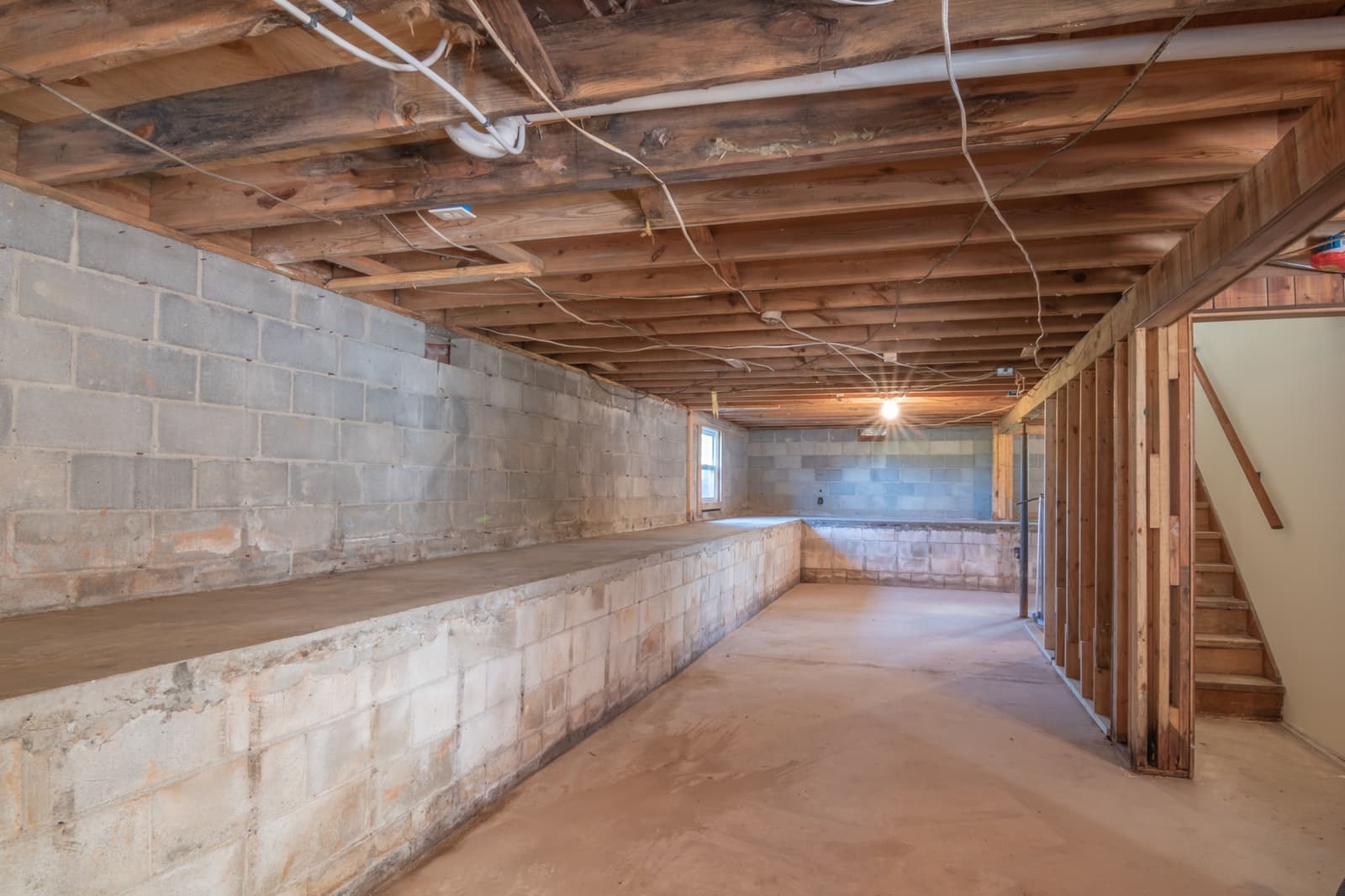
Outdoors you worry about weather. Indoors you worry about weight, drainage and the noise of a compressor two rooms from where you sleep.
By Scooter M. · Published · Last updated
How we are paid: the buy links on this page are affiliate links. If you buy through one, we earn a commission from the retailer at no extra cost to you. It does not change what we rank or what we tell you to skip - the full FTC disclosure is here.
| # | Product | Capacity | Best for | Score | Price |
|---|---|---|---|---|---|
| 1 | 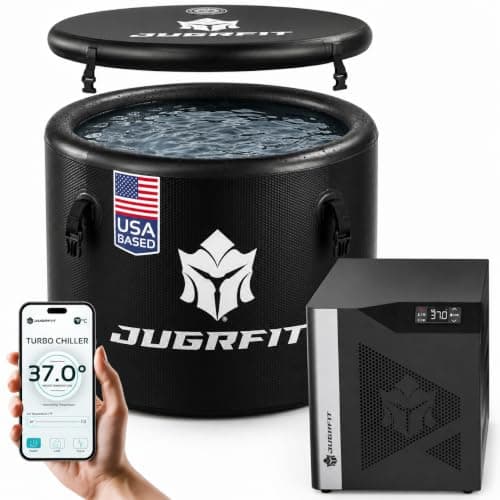 JUGRFIT 90 Gallon Cold Plunge Tub with 1,050 W Chiller Tub, chiller, lid, filter, pump, mat and thermometer in one box, with a published 37 F floor - but the only power figure published is cooling output, not what it draws. | 90 gal | One-box system | 3.7 | $1,377.49 - Amazon |
| 2 | 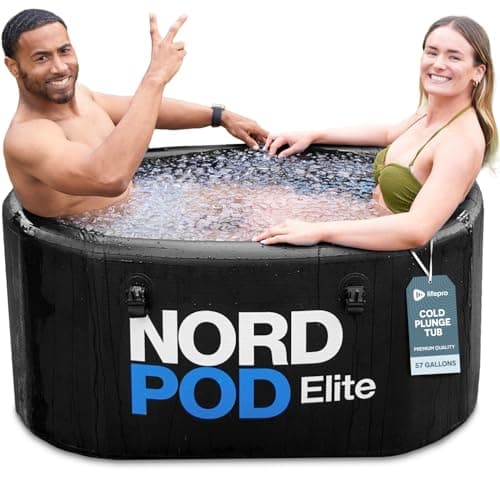 Lifepro NordPod Elite Ice Bath Tub An elongated 51.6 in oval with rigid 6 to 8 PSI drop-stitch walls and a published folded size - the only listing here that tells you how much closet it needs. | 57 gal | Two people, or stretching out | 7.3 | $499.99 - Amazon |
| 3 | 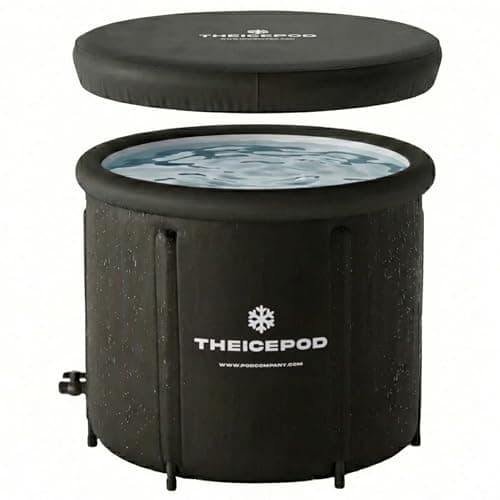 The Pod Company Standard Ice Bath Tub, 84 Gallon Eighty-four gallons with five-layer insulated walls and a built-in side drain, which is the smallest sensible volume for full immersion and cheap to keep cold as a result. | 84 gal | Smallest full-depth soak | 5.9 | $53.99 - Amazon |
| 4 | 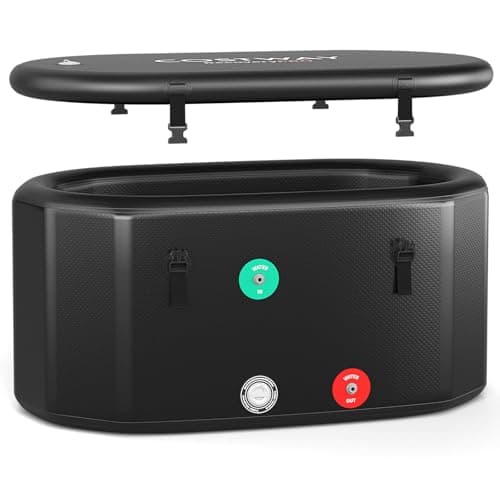 COSTWAY XL 129 Gal Oval Ice Bath Tub Publishes all seven layers of the wall by name, plus the inlet and outlet thread size, and its title and spec-table capacities agree. | 129 gal | Best documented construction | 7.1 | $209.99 - Amazon |
| 5 | 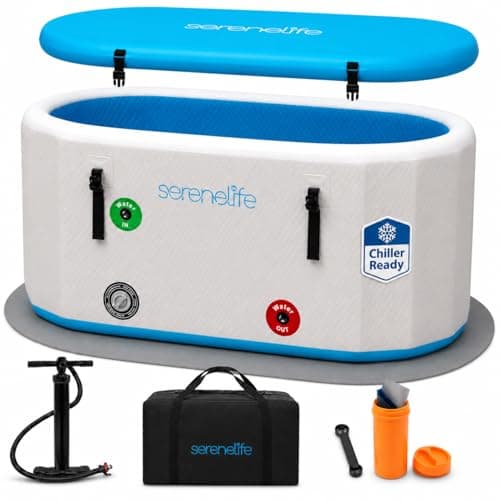 SereneLife XXL 216 Gallon Cold Plunge Tub The only tub here that publishes an interior dimension as well as an exterior one, with the port standard named three ways and a 3.15 in clamp-on insulated lid - and two external dimension sets on the same listing that do not agree. | 216 gal | Published interior size | 6.8 | $339.99 - Amazon |
The three indoor constraints
The outdoor version of this decision is about weather and UV. Indoors those disappear and three different problems take their place, and the tub that is right outside is often not the one that is right in a spare room.
Weight, which nobody mentions until it is in the room
Drainage decides whether you keep doing it
Every few weeks you have to empty the thing, even with filtration and weekly treatment. A hundred gallons weighs about 830 pounds. Your options indoors are a floor drain, a hose to a bathroom, or a submersible pump - and the last one is cheap and works everywhere.
Buy a tub with a side drain or with ports that double as one. One tub in our roundup ships a three-foot drain hose and quotes a twenty-minute empty; another needs a conversion kit before it has ports at all. Indoors, where a tipped tub means a ruined floor rather than a wet lawn, this stops being a convenience feature. The full maintenance routine is here.
Noise, and the figure almost nobody publishes
A chiller is refrigeration. It cycles on and off on its own schedule, for hours, including while you are asleep. Not one chiller on this site publishes a decibel figure. The only listing that ever did quoted 35 dB, a quiet-room claim, and it has since gone dead; every other listing prints the word “quiet” and stops.
Outdoors that absence is tolerable. In a spare room next to a bedroom it is the specification that decides whether the setup survives the first month. The chiller roundup notes which one publishes it.
What indoors gives you back
It is not all constraint. A tub in a temperature-controlled room is a genuinely cheaper tub to run, because ambient temperature is one of the largest inputs to how hard a chiller works. A 65 F basement is a much easier environment than a 95 F garage in August, and the difference shows up on the bill every month rather than once. The garage version of that trade - a floor that costs nothing, free cooling in winter and a hot August - has its own page.
You also lose UV degradation of the fabric, leaves and debris in the water, and any freeze risk. Only one tub on this site publishes a low-temperature material tolerance at all; move indoors and that unpublished number stops mattering. If it stays outdoors instead, a rigid insulated shell is the other way to buy out of that uncertainty - the two Ice Barrel models are reviewed here.
The option that avoids all three problems
Your own bathtub. It is already plumbed, already drained, already on a floor built for the load, and it costs no floor space at all. A chiller with a submersible pump or a drop-in unit turns it into a plunge with no plumbing and nothing to install - the units that work this way are here.
The honest limitation is that a bathtub gets emptied because somebody wants a shower, so you chill from scratch each time rather than topping up under a lid. If you plunge daily that difference is hours of chiller run time per session, and a dedicated tub starts paying for itself. If you plunge twice a week, it never does. The complete small-space version of this setup is in the apartment recovery setup guide.
Every pick, in full
Each write-up below shows the score broken into its six components, the specs the listing actually publishes, and the running-cost arithmetic where a wattage exists to compute it from.
#1 - One-box system
JUGRFIT 90 Gallon Cold Plunge Tub with 1,050 W Chiller
Tub, chiller, lid, filter, pump, mat and thermometer in one box, with a published 37 F floor - but the only power figure published is cooling output, not what it draws.
| Small-space fit | 17 / 20 |
|---|---|
| Electrical fit | 0 / 20 |
| Cost to run | 0 / 20 |
| Key-number disclosure | 12 / 15 |
| Spec completeness | 8 / 15 |
| Warranty | 0 / 10 |
| Total | 37 / 100 |
| Rated watts | Not published Not published |
|---|---|
| Water capacity | 90 Seller’s listing, read 2026-09-26 |
| Dimensions | 36 x 36 x 32 in Seller’s listing, read 2026-09-26 |
| Weight | Not published Not published |
| Cooling floor | 37 Fno cooling rate published Seller’s listing, read 2026-09-26 |
| Material | Military-grade drop-stitch fabric Seller’s listing, read 2026-09-26 |
| Warranty (months) | Not published Not published |
No running cost can be computed. The listing does not publish a rated wattage, so there is no honest way to tell you what a session costs. We will not estimate one. How we compute running costs
This is the most complete box in the category: the listing itemizes the tub and lid, the chiller with a built-in filter and circulation pump, a hand skimmer, a hand pump, a non-slip mat, hoses and valves, tub plugs, a GFCI power cable, a floating thermometer, a repair kit and a storage backpack. For a first plunge that is the difference between one purchase and four, and it is the reason this sits where it does.
The number that looks like a wattage is not one. The listing publishes 1,050 W of cooling capacity, which is heat removed rather than power drawn, so it cannot be turned into a running cost - and no input draw is published anywhere. The listing does claim the unit runs on about 50 cents to a dollar a day, which comes with no wattage, no assumed rate and no duty cycle behind it, so it cannot be reproduced or compared. That is the same unverifiable shape we flag on brand-direct plunges.
What is published and useful: a 37 F floor, an honest note that the initial cooldown from room temperature typically takes overnight, an IPX4 rating on the chiller so it can sit outdoors, and a capacity matched to users up to 6 ft 5 in. What is missing is a warranty term and any weight at all, and the tub is inflatable drop-stitch rather than a rigid shell - which is what keeps it packable and also what makes it a different object from a hard-sided plunge.
Buy it if
A first cold plunge where you want one box, one delivery and nothing else to source.
Skip it if
You want a published draw so you can budget the electricity, or a stated warranty term.
#2 - Two people, or stretching out
Lifepro NordPod Elite Ice Bath Tub
An elongated 51.6 in oval with rigid 6 to 8 PSI drop-stitch walls and a published folded size - the only listing here that tells you how much closet it needs.
| Small-space fit | 17 / 20 |
|---|---|
| Electrical fit | 20 / 20 |
| Cost to run | 20 / 20 |
| Key-number disclosure | 5 / 15 |
| Spec completeness | 11 / 15 |
| Warranty | 0 / 10 |
| Total | 73 / 100 |
| Rated watts | Not published Not published |
|---|---|
| Water capacity | 57 Seller’s listing, read 2026-09-07 |
| Dimensions | 51.6 x 29.5 x 25.6 in; folds to 19.7 x 11.8 x 28.0 in Seller’s listing, read 2026-09-07 |
| Weight | 24 lb Seller’s listing, read 2026-09-07 |
| Cooling floor | Claim, no figure “The only NordPod with water input & output valves for hose-connect fill/drain AND external chiller connection” |
| Material | Rigid drop-stitch inflated to 6-8 PSI Seller’s listing, read 2026-09-07 |
| Warranty (months) | Not published Not published |
No electrical load. This draws no power of its own. The running cost of a plunge lives in the chiller, or in the bag of ice.
The folded dimensions are the reason this is here. Every tub in this category claims to store away; exactly one publishes the size of the bundle. Twenty by twelve by twenty-eight inches is a large holdall - it fits in a wardrobe and not in a kitchen cupboard - and knowing that before you buy is worth more than another paragraph about recovery benefits.
The inflation pressure is also published: six to eight PSI, which is genuine drop-stitch territory and roughly what a stand-up paddleboard runs at. A tub inflated to that pressure holds its shape under a body; one at two PSI does not.
Fifty-seven gallons is the smallest capacity of any full-length tub here, which is a real advantage for chilling cost and a real constraint on immersion depth. Read the oval shape as the trade-off it is: room to extend your legs, less water over your shoulders.
Buy it if
Someone who needs to know exactly how much storage the tub will claim between sessions.
Skip it if
You want deep shoulder immersion. Fifty-seven gallons in a 51-inch oval is a shallow soak.
#3 - Smallest full-depth soak
The Pod Company Standard Ice Bath Tub, 84 Gallon
Eighty-four gallons with five-layer insulated walls and a built-in side drain, which is the smallest sensible volume for full immersion and cheap to keep cold as a result.
| Small-space fit | 8 / 20 |
|---|---|
| Electrical fit | 20 / 20 |
| Cost to run | 20 / 20 |
| Key-number disclosure | 5 / 15 |
| Spec completeness | 6 / 15 |
| Warranty | 0 / 10 |
| Total | 59 / 100 |
| Rated watts | Not published Not published |
|---|---|
| Water capacity | 84 Seller’s listing, read 2026-10-10 |
| Dimensions | Not published Not published |
| Weight | Not published Not published |
| Cooling floor | Claim, no figure “CHILLER COMPATIBLE (CONVERSION KIT SOLD SEPARATELY) - Cold plunge tub is compatible with water chillers using The Pod Company Conversion Kit” |
| Material | Five-layer insulated walls Seller’s listing, read 2026-10-10 |
| Warranty (months) | Not published Not published |
No electrical load. This draws no power of its own. The running cost of a plunge lives in the chiller, or in the bag of ice.
Volume is the variable nobody thinks about until the first electricity bill or the third bag of ice. Chilling 84 gallons takes roughly a third less energy than chilling 129, and about 60 percent less than 216, for the same temperature drop. If you plunge alone and you are under about six foot two, the extra volume in a bigger tub is water you are paying to keep cold for no benefit.
The side drain with a three-foot hose is the other quiet advantage. Emptying a full tub by tipping it is a two-person job and a wet floor; emptying it through a hose into a drain is not.
The catch is in capitals in the listing itself: chiller compatibility requires a conversion kit sold separately. That is more honest than the listings that imply ports are included, but it is a second purchase, and you should price it before deciding this is the cheap option.
Buy it if
A solo plunger who wants the smallest volume that still covers their shoulders.
Skip it if
You are tall, you plunge with someone else, or you want chiller ports without a second purchase.
#4 - Best documented construction
COSTWAY XL 129 Gal Oval Ice Bath Tub
Publishes all seven layers of the wall by name, plus the inlet and outlet thread size, and its title and spec-table capacities agree.
| Small-space fit | 17 / 20 |
|---|---|
| Electrical fit | 20 / 20 |
| Cost to run | 20 / 20 |
| Key-number disclosure | 5 / 15 |
| Spec completeness | 9 / 15 |
| Warranty | 0 / 10 |
| Total | 71 / 100 |
| Rated watts | Not published Not published |
|---|---|
| Water capacity | 129 Seller’s listing, read 2026-09-07 |
| Dimensions | 51 x 29.5 x 29 in Seller’s listing, read 2026-09-07 |
| Weight | Not published Not published |
| Cooling floor | Claim, no figure “designed with a 0.5 inch female inlet and 0.5 inch water outlet that can be connected to a water chiller” |
| Material | Seven layers: PVC, mesh fabric, drop-stitch, mesh fabric, EPE foam, PVC, waterproof coating Seller’s listing, read 2026-09-07 |
| Warranty (months) | Not published Not published |
No electrical load. This draws no power of its own. The running cost of a plunge lives in the chiller, or in the bag of ice.
Naming all seven layers in order is the most detailed construction disclosure in this roundup, and the layer that matters is the EPE foam. Foam is insulation; drop-stitch is structure. A tub with drop-stitch and no foam layer is rigid but not especially insulating, and plenty of listings here describe drop-stitch walls in a way that invites you to assume otherwise.
The ports are specified as half-inch female inlet and half-inch outlet, which matches the standard most chillers ship with. Between that and the foam layer this is a tub built for a chiller from the start rather than one that merely tolerates the idea.
At 51 by 29.5 inches it is one of the more compact full-immersion tubs here - about ten and a half square feet - and it folds into a backpack rather than a duffel. If the plunge has to disappear when guests come over, that matters more than the extra twenty gallons a larger tub buys you.
Buy it if
A buyer who wants insulation, not just rigidity, and wants to read the layer stack before deciding.
Skip it if
You are over about six feet two. The published length is 51 inches.
#5 - Published interior size
SereneLife XXL 216 Gallon Cold Plunge Tub
The only tub here that publishes an interior dimension as well as an exterior one, with the port standard named three ways and a 3.15 in clamp-on insulated lid - and two external dimension sets on the same listing that do not agree.
| Small-space fit | 14 / 20 |
|---|---|
| Electrical fit | 20 / 20 |
| Cost to run | 20 / 20 |
| Key-number disclosure | 5 / 15 |
| Spec completeness | 9 / 15 |
| Warranty | 0 / 10 |
| Total | 68 / 100 |
| Rated watts | Not published Not published |
|---|---|
| Water capacity | 216 Seller’s product title, read 2026-10-25 |
| Dimensions | 59 x 32.2 x 26.3 in outer and 51.1 x 26 x 24.4 in inner per the description; 53.15 x 31.5 x 24.02 in in the spec table Seller’s listing, read 2026-10-25 |
| Weight | Not published Not published |
| Cooling floor | Claim, no figure “Inlet and outlet ports work with common 20 mm G1/2 DN15 1/2 in chiller tubes, so you can connect a compatible water chiller system or use ice directly” |
| Material | Double-wall drop-stitch PVC, reinforced sidewalls, dual-layer inner sealing Seller’s listing, read 2026-10-25 |
| Warranty (months) | Not published Not published |
No electrical load. This draws no power of its own. The running cost of a plunge lives in the chiller, or in the bag of ice.
The disclosure that earns this its place is the interior dimension: 51.1 by 26 by 24.4 inches, published alongside the exterior. Almost nothing in this category gives you that, and it is the figure that actually decides whether you fit - the gap between a 59-inch outside and a 51-inch inside is eight inches of wall you cannot sit in. If you are tall, measure your seated length against the inner figure rather than the headline one.
Two more things it publishes that matter more than they look. The port standard is named three ways - 20 mm, G1/2, DN15, half-inch - which is what lets you buy a fitting that seals before the chiller arrives. And the lid is specified as a 3.15 inch clamp-on: both the thickness and the fact that it clamps rather than rests, which is the single cheapest thing that reduces your ice bill, because most heat comes back in through the open water surface.
The gaps are real. The external dimensions appear twice and disagree - 59 by 32.2 by 26.3 inches in the description against 53.15 by 31.5 by 24.02 in the specification table - which is the same pattern we keep finding, and we print both rather than choosing the flattering one. No empty weight, no warranty term and no material temperature tolerance are published; on that last point it is now in company, because no tub on this site publishes a cold rating at all.
Buy it if
Someone buying the largest tub on this site who wants an interior dimension and a named port standard before ordering.
Skip it if
You need the external dimensions to agree with themselves, or a published weight. Neither is available here.
Questions people actually ask
Can you put a cold plunge inside the house?
Yes, and most people should. Indoors you get stable ambient temperature, which makes the chiller work less, no UV on the fabric and no leaves in the water. What you take on instead is floor loading, a drainage plan and compressor noise in a room you live in.
How much does an indoor cold plunge weigh?
Water is 8.34 pounds a US gallon, so an 84-gallon tub holds about 700 pounds and a 216-gallon tub about 1,800, before the tub and before you get in. On a ground-floor slab that is unremarkable. On an upper floor it is worth thinking about, and worth spreading across joists rather than sitting between two.
Where should you put a cold plunge indoors?
Somewhere with a drain, a floor you are not worried about, and a circuit you have checked. A basement, a garage or a utility room beats a bedroom on all three. If none of those exist, using your own bathtub with a drop-in or pump-fed chiller sidesteps every one of these problems.
Are cold plunge chillers loud?
Not one chiller in our roundup publishes a decibel figure any more - the single listing that did has gone - and everything else just says quiet. That absence matters more indoors than anywhere else, because a unit that turns out to sound like a window air conditioner running overnight next to a bedroom is one you stop using.