Small Spaces
A complete apartment recovery setup
Hot and cold in a one-bedroom flat, with the floor space, the electrical load and the running cost all accounted for.
By Scooter M. · Published · Last updated
How we are paid: the buy links on this page are affiliate links. If you buy through one, we earn a commission from the retailer at no extra cost to you. It does not change what we rank or what we tell you to skip - the full FTC disclosure is here.
| # | Product | EMF figure | Best for | Score | Price |
|---|---|---|---|---|---|
| 1 | 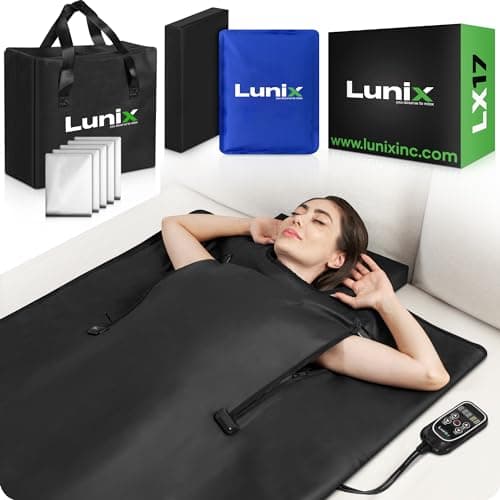 Lunix LX17 Far Infrared Sauna Blanket The most complete spec sheet in the category and the only published lifetime warranty, though the EMF claim is still a phrase rather than a figure. | Claim only | Best documented | 4.0 | $299.97 - Amazon |
| 2 | 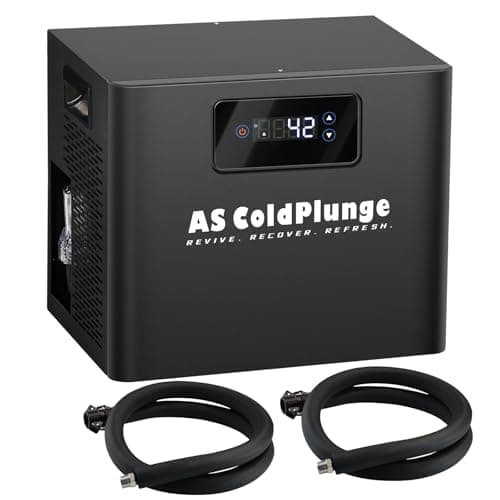 AS ColdPlunge 1/3 HP Cold Plunge Chiller 600 W, a 42 F floor, a reusable metal filter instead of cartridges, and a submersible pump in the box so it works with a bathtub that has no ports. | Not mentioned | Best for a bathtub | 7.7 | $399.00 - Amazon |
| 3 | 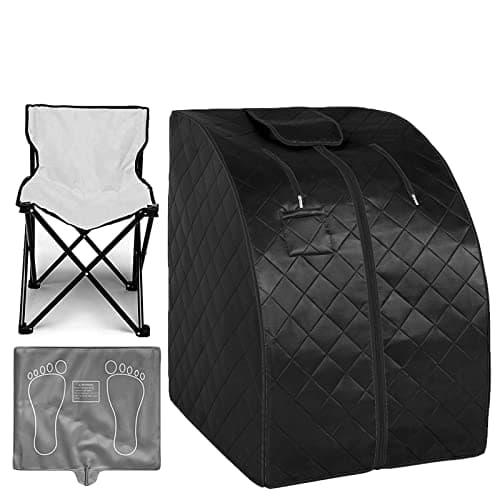 ZONEMEL Portable Infrared Sauna, 1 Person 1,050 W across three carbon panels plus a heated foot pad, with the wattage, the temperature ceiling and the timer all published - unusual for an infrared tent. | Not mentioned | Best infrared for a standard outlet | 6.4 | $179.99 - Amazon |
| 4 | 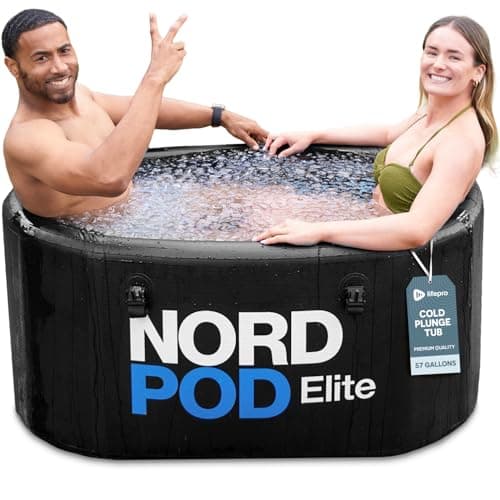 Lifepro NordPod Elite Ice Bath Tub An elongated 51.6 in oval with rigid 6 to 8 PSI drop-stitch walls and a published folded size - the only listing here that tells you how much closet it needs. | Not mentioned | Two people, or stretching out | 7.3 | $499.99 - Amazon |
| 5 | 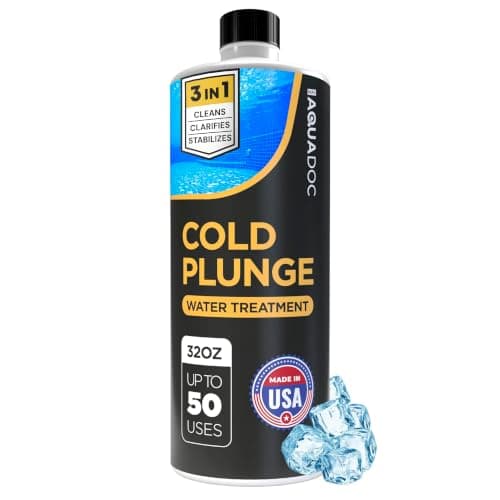 AquaDoc Cold Plunge Water Treatment, 32 oz A weekly treatment dosed at 1 oz per 100 gallons, which is the maintenance step most first-time plungers skip until the water turns. | Not mentioned | Keeping the water usable | 5.0 | $23.99 - Amazon |
Two routes that actually work
Route A: the bathtub setup
This is the setup we would build first in a small flat, and it is not a compromise version of something better. It claims no permanent floor, it needs nothing installed, and the only object with a footprint is a chiller the size of a large toaster oven sitting beside the bath.
The honest limitation is that a bathtub gets emptied because somebody wants a shower, which means chilling from scratch rather than topping up. If you plunge daily that is hours of chiller run time per session rather than minutes, and at that point a dedicated tub with a lid starts to make financial sense. Chillers that work with a bathtub covers which units ship with the pump you need.
Route B: the corner setup
Roughly sixteen to twenty square feet while both are standing, and both fold. That is a real amount of a one-bedroom flat, which is why we would put it second rather than first. What it buys you is a proper sit-up sauna and a tub you can leave chilled with a lid on.
The electrical check, before you buy anything
Finding out which outlets share a circuit takes ten minutes with the breaker panel and a lamp. It is set out step by step in what your circuit can actually carry, and it is the single most useful thing you can do before spending money on any of this.
What it costs to run
At 18.34 cents per kWh:
- Heat side: under five dollars a month at four sessions a week, whichever route you take. Genuinely not a factor.
- Cold side: six to forty dollars a month depending on the chiller and how long it runs. This dominates the whole setup.
Which means the single highest-leverage decision in a small-space setup is chiller sizing and lid discipline, not anything about the sauna. The arithmetic is in what a chiller costs to run.
What to buy, in order
- Nothing. Try a bathtub with ice three times. It costs almost nothing and answers the real question.
- The heat side. A blanket if space is tight, a tent if it is not.
- A tub with real ports, if you want cold that lives somewhere other than the bathroom.
- The chiller, once the habit is established and the errand of buying ice has become the reason you skip sessions.
- Treatment and a filter. Cheap, and the thing that stops the water becoming a reason to quit.
The protocol side - how long, in what order, how often - is in the contrast therapy guide. If you have a spare room rather than only a bathroom, the floor-loading and drainage questions for a dedicated tub indoors are in the best cold plunge for indoor use.
Every pick, in full
Each write-up below shows the score broken into its six components, the specs the listing actually publishes, and the running-cost arithmetic where a wattage exists to compute it from.
#1 - Best documented
Lunix LX17 Far Infrared Sauna Blanket
The most complete spec sheet in the category and the only published lifetime warranty, though the EMF claim is still a phrase rather than a figure.
| Small-space fit | 14 / 20 |
|---|---|
| Electrical fit | 0 / 20 |
| Cost to run | 0 / 20 |
| Key-number disclosure | 5 / 15 |
| Spec completeness | 11 / 15 |
| Warranty | 10 / 10 |
| Total | 40 / 100 |
| Rated watts | Not published Not published |
|---|---|
| Maximum temperature | 77-176 F Seller’s listing, read 2026-09-07 |
| Dimensions | 75 x 37 in folded for use, 75 x 75 in opened flat Seller’s listing, read 2026-09-07 |
| Weight | 21.1 lb Seller’s listing, read 2026-09-07 |
| Timer | Up to 60 minutes Seller’s listing, read 2026-09-07 |
| EMF disclosure | Claim, no figure “Low EMF Far-Infrared Heat, 77-176 F” |
| Material | Five layers: waterproof fabric, cotton, carbon fiber heating, cotton, PU leather Seller’s listing, read 2026-09-07 |
| Warranty (months) | 120 Seller’s listing, read 2026-09-07 |
No running cost can be computed. The listing does not publish a rated wattage, so there is no honest way to tell you what a session costs. We will not estimate one. How we compute running costs
Six of the eight items on our spec checklist are published here, which is the highest count of any blanket we looked at. The dimensions are given twice - folded for use and opened flat - which is genuinely useful, because a blanket you have to lie inside is a different piece of furniture from a blanket you lay out on a bed, and most sellers publish only one of the two numbers.
The warranty is the outlier. A lifetime term, conditional on registering the product, is the longest published commitment in this roundup by a wide margin, and it is the sort of claim a seller does not make lightly on a heating appliance. It is worth reading as a statement about expected failure rate rather than as a promise you will ever need to use.
What is still missing is the number that matters most for cost: rated watts. Nobody in this category publishes it, and Lunix is no exception, so the electrical-fit and cost-to-run components of the score have nothing to work with. The EMF language is the same phrase everyone uses - 'Low EMF' with no measurement, no unit and no distance - which earns partial credit for saying something and no credit for saying anything checkable.
Buy it if
Someone who wants the most published information in the category and values a long warranty term over a brand name.
Skip it if
You want a measured EMF figure. There is no number here, only the phrase.
#2 - Best for a bathtub
AS ColdPlunge 1/3 HP Cold Plunge Chiller
600 W, a 42 F floor, a reusable metal filter instead of cartridges, and a submersible pump in the box so it works with a bathtub that has no ports.
| Small-space fit | 12 / 20 |
|---|---|
| Electrical fit | 20 / 20 |
| Cost to run | 16 / 20 |
| Key-number disclosure | 12 / 15 |
| Spec completeness | 11 / 15 |
| Warranty | 6 / 10 |
| Total | 77 / 100 |
| Rated watts | 600 Seller’s listing, read 2026-09-07 |
|---|---|
| Water capacity | 79 Seller’s listing, read 2026-09-07 |
| Dimensions | 11.8 x 14.9 x 12.6 in Seller’s listing, read 2026-09-07 |
| Weight | 35 lb Seller’s listing, read 2026-09-07 |
| Cooling floor | 42 Fno cooling rate published Seller’s listing, read 2026-09-07 |
| Material | Not published Not published |
| Warranty (months) | 12 Seller’s listing, read 2026-09-07 |
| Rated draw | 600 W |
|---|---|
| Cost per hour at full draw | 11.0 cents |
| Upper bound, running continuously | $80.29 per month |
A chiller cycles. It draws its rated power while the compressor runs and almost nothing while it does not, and how often it runs depends on ambient temperature, insulation, lid use and setpoint. We do not measure duty cycle, so we publish the two figures that need no assumption and no figure in between. Computed at 18.34 cents per kWh (June 2026). The method.
The submersible pump is what makes this the bathtub answer. A chiller normally needs a tub with inlet and outlet ports; a bathtub has neither. Dropping a pump into the water and running two hoses over the rim is inelegant and it works, and it is the cheapest route to a cold plunge for anyone who cannot give up floor space for a tub at all.
Six hundred watts is eleven cents an hour at full draw, comfortably mid-range here. The 79-gallon rating is a good match for a standard bathtub, which holds somewhere between 40 and 80 gallons at plunge depth.
The reusable metal mesh filter rather than disposable cartridges is a genuine running-cost detail that gets ignored because it is not electricity. Cartridge filters are a recurring purchase; a rinsable metal screen is not, and over a year that difference is larger than the difference in power draw between two chillers.
An availability note, because we said we would keep it current: this listing went to "Currently unavailable" on 2026-09-09 and we routed its buy link to a search rather than to a product nobody could add to a cart. Re-checked on 2026-09-12, it is back in stock with a buy-box offer, so the link points at the listing again.
Buy it if
Anyone plunging in an existing bathtub rather than buying a tub.
Skip it if
Your tub is over 79 gallons.
#3 - Best infrared for a standard outlet
ZONEMEL Portable Infrared Sauna, 1 Person
1,050 W across three carbon panels plus a heated foot pad, with the wattage, the temperature ceiling and the timer all published - unusual for an infrared tent.
| Small-space fit | 20 / 20 |
|---|---|
| Electrical fit | 15 / 20 |
| Cost to run | 20 / 20 |
| Key-number disclosure | 0 / 15 |
| Spec completeness | 9 / 15 |
| Warranty | 0 / 10 |
| Total | 64 / 100 |
| Rated watts | 1050 Seller’s listing, read 2026-09-07 |
|---|---|
| Maximum temperature | 140 F maximum Seller’s listing, read 2026-09-07 |
| Dimensions | 27.6 x 31.5 x 37.8 in Seller’s product title, read 2026-09-07 |
| Weight | 19.8 lb Seller’s listing, read 2026-09-07 |
| Timer | Up to 60 minutes Seller’s listing, read 2026-09-07 |
| EMF disclosure | Not mentioned at all |
| Material | Not published Not published |
| Warranty (months) | Not published Not published |
| Rated draw | 1050 W (8.8 A at 120 V) |
|---|---|
| Energy per 30-minute session | 0.525 kWh |
| Maximum cost per session | 9.6 cents |
| Maximum per month, 4 sessions a week | $1.67 |
| Circuit | Wants the outlet to itself |
These are maximums, assuming continuous draw. A resistive heater pulls its rated power only while the element is energized; once it reaches setpoint it cycles, so the real figure is lower and depends on your room. Computed at 18.34 cents per kWh (June 2026). The method, and how to substitute your own rate.
At 1,050 W this draws about 8.8 amps, which a standard 15 A outlet carries without complaint even with something else plugged in. It is the highest-powered infrared unit here that still sits comfortably under the 1,000 W line where we start recommending the outlet be left to itself, and a thirty-minute session works out to roughly ten cents at the national average rate.
The heated foot pad is the detail worth knowing about. Infrared tents heat what the panels face, and in a seated tent that means your back and sides get the heat while your feet sit on ambient floor. A separate foot element is the direct fix and not every unit in this price range includes one.
The footprint is the smallest of any sit-in sauna in this roundup: 27.6 by 31.5 inches deployed, about six square feet, which is roughly the area of a single armchair. That is what makes an infrared tent viable in a one-bedroom apartment at all.
Buy it if
Someone who wants dry infrared heat in the smallest deployed footprint that still fits an adult.
Skip it if
EMF disclosure matters to you. This listing does not mention it.
#4 - Two people, or stretching out
Lifepro NordPod Elite Ice Bath Tub
An elongated 51.6 in oval with rigid 6 to 8 PSI drop-stitch walls and a published folded size - the only listing here that tells you how much closet it needs.
| Small-space fit | 17 / 20 |
|---|---|
| Electrical fit | 20 / 20 |
| Cost to run | 20 / 20 |
| Key-number disclosure | 5 / 15 |
| Spec completeness | 11 / 15 |
| Warranty | 0 / 10 |
| Total | 73 / 100 |
| Rated watts | Not published Not published |
|---|---|
| Water capacity | 57 Seller’s listing, read 2026-09-07 |
| Dimensions | 51.6 x 29.5 x 25.6 in; folds to 19.7 x 11.8 x 28.0 in Seller’s listing, read 2026-09-07 |
| Weight | 24 lb Seller’s listing, read 2026-09-07 |
| Cooling floor | Claim, no figure “The only NordPod with water input & output valves for hose-connect fill/drain AND external chiller connection” |
| Material | Rigid drop-stitch inflated to 6-8 PSI Seller’s listing, read 2026-09-07 |
| Warranty (months) | Not published Not published |
No electrical load. This draws no power of its own. The running cost of a plunge lives in the chiller, or in the bag of ice.
The folded dimensions are the reason this is here. Every tub in this category claims to store away; exactly one publishes the size of the bundle. Twenty by twelve by twenty-eight inches is a large holdall - it fits in a wardrobe and not in a kitchen cupboard - and knowing that before you buy is worth more than another paragraph about recovery benefits.
The inflation pressure is also published: six to eight PSI, which is genuine drop-stitch territory and roughly what a stand-up paddleboard runs at. A tub inflated to that pressure holds its shape under a body; one at two PSI does not.
Fifty-seven gallons is the smallest capacity of any full-length tub here, which is a real advantage for chilling cost and a real constraint on immersion depth. Read the oval shape as the trade-off it is: room to extend your legs, less water over your shoulders.
Buy it if
Someone who needs to know exactly how much storage the tub will claim between sessions.
Skip it if
You want deep shoulder immersion. Fifty-seven gallons in a 51-inch oval is a shallow soak.
#5 - Keeping the water usable
AquaDoc Cold Plunge Water Treatment, 32 oz
A weekly treatment dosed at 1 oz per 100 gallons, which is the maintenance step most first-time plungers skip until the water turns.
| Small-space fit | 8 / 20 |
|---|---|
| Electrical fit | 20 / 20 |
| Cost to run | 20 / 20 |
| Key-number disclosure | 0 / 15 |
| Spec completeness | 2 / 15 |
| Warranty | 0 / 10 |
| Total | 50 / 100 |
| Rated watts | Not published Not published |
|---|---|
| Maximum temperature | Not published Not published |
| Dimensions | Not published Not published |
| Weight | 2 lb Seller’s listing, read 2026-09-07 |
| Timer | Not published Not published |
| Cooling floor | Not the relevant number for this category |
| Material | Not published Not published |
| Warranty (months) | Not published Not published |
No electrical load. This draws no power of its own. The running cost of a plunge lives in the chiller, or in the bag of ice.
A cold plunge is a body of standing water at a temperature that slows bacterial growth without stopping it, with body oils and skin cells going into it several times a week. Left alone it goes cloudy and then it smells, and the usual response is to drain and refill a hundred gallons, which is both wasteful and the reason people quit.
The dose is published clearly at one ounce per hundred gallons weekly, which is the sort of instruction you can actually follow. Whether you use this product or another, chemical treatment plus a filter is what turns a plunge from a weekly refill chore into something that runs for weeks.
Buy it if
Anyone who owns a plunge tub and has not yet worked out why the water goes cloudy.
Skip it if
You drain and refill after every session anyway.
Questions people actually ask
Can you do contrast therapy in an apartment?
Yes, and the cheapest version needs no dedicated space at all: a sauna blanket on the bed for heat, and your own bathtub with a chiller for cold. The whole setup claims no permanent floor and draws well under what a standard circuit carries.
What is the cheapest way to set up a home sauna and cold plunge?
A sauna blanket plus a bathtub with ice. That combination costs a fraction of any other route, requires nothing installed, and answers the only question that matters, which is whether you will keep doing it. The chiller is the upgrade that removes the errand once the habit exists.
How much floor space do you need for a home recovery setup?
Between zero and about twenty square feet depending on the route. A blanket plus a bathtub claims none. An infrared tent plus a dedicated plunge tub claims about six square feet for the tent and ten to thirteen for the tub, though both can be packed away.
How much does a home recovery setup cost to run?
Under five dollars a month for the heat side at four sessions a week, and between about six and forty dollars a month for a chiller depending on its draw and how long it runs. The chiller dominates, which is why sizing it correctly matters more than anything else you decide.