Guides
Contrast therapy at home
Alternating heat and cold, in a small apartment, with the ordering, the timings and the running cost all written down.
By Scooter M. · Published · Last updated
How we are paid: the buy links on this page are affiliate links. If you buy through one, we earn a commission from the retailer at no extra cost to you. It does not change what we rank or what we tell you to skip - the full FTC disclosure is here.
| # | Product | EMF figure | Best for | Score | Price |
|---|---|---|---|---|---|
| 1 | 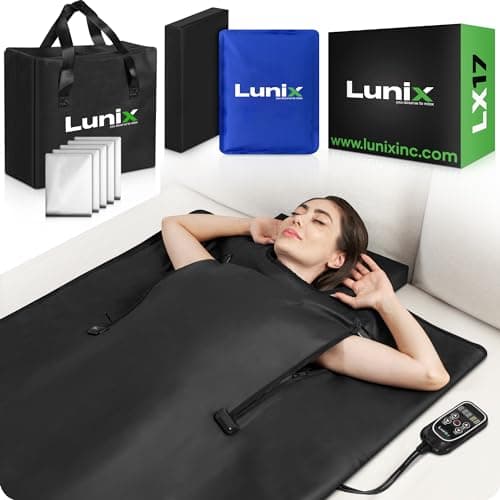 Lunix LX17 Far Infrared Sauna Blanket The most complete spec sheet in the category and the only published lifetime warranty, though the EMF claim is still a phrase rather than a figure. | Claim only | Best documented | 4.0 | $299.97 - Amazon |
| 2 | 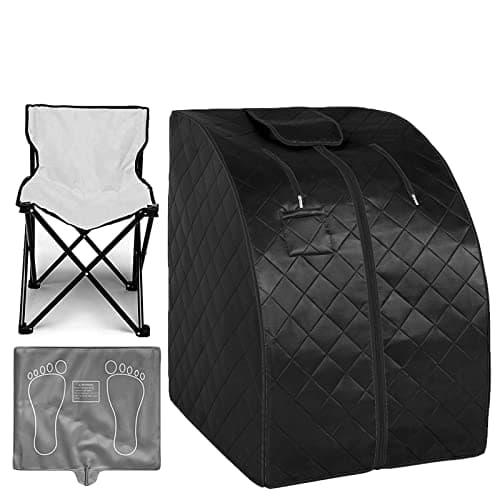 ZONEMEL Portable Infrared Sauna, 1 Person 1,050 W across three carbon panels plus a heated foot pad, with the wattage, the temperature ceiling and the timer all published - unusual for an infrared tent. | Not mentioned | Best infrared for a standard outlet | 6.4 | $179.99 - Amazon |
| 3 | 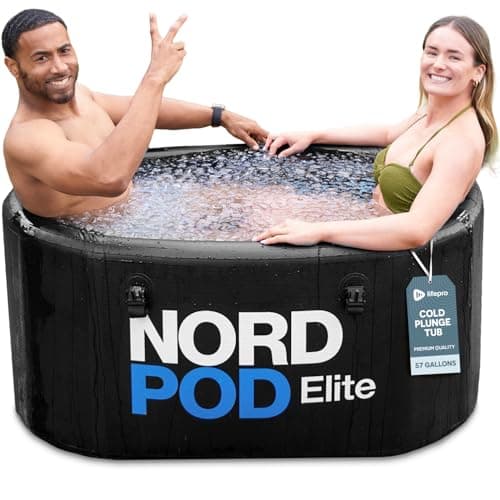 Lifepro NordPod Elite Ice Bath Tub An elongated 51.6 in oval with rigid 6 to 8 PSI drop-stitch walls and a published folded size - the only listing here that tells you how much closet it needs. | Not mentioned | Two people, or stretching out | 7.3 | $499.99 - Amazon |
| 4 | 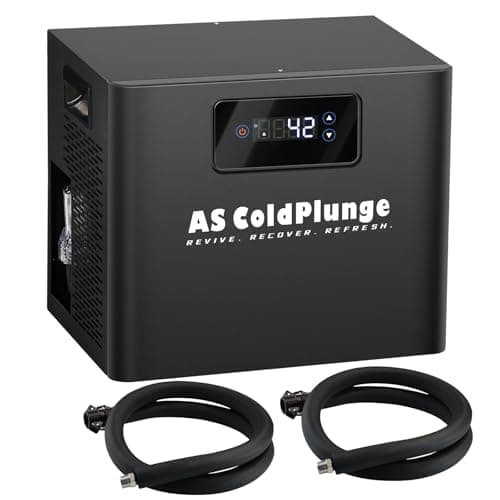 AS ColdPlunge 1/3 HP Cold Plunge Chiller 600 W, a 42 F floor, a reusable metal filter instead of cartridges, and a submersible pump in the box so it works with a bathtub that has no ports. | Not mentioned | Best for a bathtub | 7.7 | $399.00 - Amazon |
What contrast therapy actually is
The protocol, and where it comes from
There is no single agreed protocol for home contrast therapy, and it is worth saying that before setting one out. What exists is a long tradition of sauna-and-cold practice, and a growing but still limited research literature on cold water immersion specifically, most of it conducted in a sports-recovery context rather than a domestic one.
The most useful recent figure comes from a 2025 network meta-analysis of cold water immersion dosing, which ranked 10 to 15 minutes at 11 to 15 C (about 52 to 59 F) best for muscle soreness, and 10 to 15 minutes at 5 to 10 C (about 41 to 50 F) best for biochemical markers and neuromuscular function.
Hot first, and why
Every sauna culture that pairs heat with cold does heat first. There is no strong published evidence that the reverse is harmful, and the practical arguments for the conventional order are these:
- The cold arrives as relief rather than as a shock, which makes it far easier to sustain as a habit.
- You are already loose and warm, so getting into the water is less unpleasant.
- Finishing cold leaves you alert. Finishing hot leaves you sleepy. Choose based on the time of day.
A structure to start with
Build the cold side up over weeks rather than sessions. The first thirty seconds of any cold immersion is a breathing problem rather than a cold-tolerance problem, and it settles with repetition - the beginner guide covers what that actually feels like.
What it takes to run at home
The equipment question resolves into two routes, both covered in detail in the apartment recovery setup guide:
- No floor space: a sauna blanket on the bed plus your existing bathtub. Nothing to install, nothing permanently claimed.
- A spare corner: an infrared tent plus an inflatable tub, about sixteen to twenty square feet while both are standing, both folding away.
At 18.34 cents per kWh the heat side runs under five dollars a month at four sessions a week. The cold side runs between six and forty depending on the chiller and how long it runs, which means chiller sizing is the only decision here with real cost consequences - that arithmetic is here.
What we are not claiming
We are not going to tell you what contrast therapy does for you. The published work on the cold half alone is genuinely mixed - a 2025 systematic review of 11 trials and 3,177 participants found reduced stress at 12 hours, improvements in sleep quality, no significant immunity effect, and increased inflammation immediately post-immersion - and the review’s own authors note that six of those eleven studies looked at a single immersion, which prevents conclusions about long-term effects.
The evidence position is set out properly, with the figures and the limitations, in what the research actually says. This page is about the practice and the equipment. Those we can be precise about.
One equipment note, because it is the most expensive mistake people make setting this up: the hot half does not need to be a hot tub. A blanket or a tent does the same job for a small fraction of the running cost.
Every pick, in full
Each write-up below shows the score broken into its six components, the specs the listing actually publishes, and the running-cost arithmetic where a wattage exists to compute it from.
#1 - Best documented
Lunix LX17 Far Infrared Sauna Blanket
The most complete spec sheet in the category and the only published lifetime warranty, though the EMF claim is still a phrase rather than a figure.
| Small-space fit | 14 / 20 |
|---|---|
| Electrical fit | 0 / 20 |
| Cost to run | 0 / 20 |
| Key-number disclosure | 5 / 15 |
| Spec completeness | 11 / 15 |
| Warranty | 10 / 10 |
| Total | 40 / 100 |
| Rated watts | Not published Not published |
|---|---|
| Maximum temperature | 77-176 F Seller’s listing, read 2026-09-07 |
| Dimensions | 75 x 37 in folded for use, 75 x 75 in opened flat Seller’s listing, read 2026-09-07 |
| Weight | 21.1 lb Seller’s listing, read 2026-09-07 |
| Timer | Up to 60 minutes Seller’s listing, read 2026-09-07 |
| EMF disclosure | Claim, no figure “Low EMF Far-Infrared Heat, 77-176 F” |
| Material | Five layers: waterproof fabric, cotton, carbon fiber heating, cotton, PU leather Seller’s listing, read 2026-09-07 |
| Warranty (months) | 120 Seller’s listing, read 2026-09-07 |
No running cost can be computed. The listing does not publish a rated wattage, so there is no honest way to tell you what a session costs. We will not estimate one. How we compute running costs
Six of the eight items on our spec checklist are published here, which is the highest count of any blanket we looked at. The dimensions are given twice - folded for use and opened flat - which is genuinely useful, because a blanket you have to lie inside is a different piece of furniture from a blanket you lay out on a bed, and most sellers publish only one of the two numbers.
The warranty is the outlier. A lifetime term, conditional on registering the product, is the longest published commitment in this roundup by a wide margin, and it is the sort of claim a seller does not make lightly on a heating appliance. It is worth reading as a statement about expected failure rate rather than as a promise you will ever need to use.
What is still missing is the number that matters most for cost: rated watts. Nobody in this category publishes it, and Lunix is no exception, so the electrical-fit and cost-to-run components of the score have nothing to work with. The EMF language is the same phrase everyone uses - 'Low EMF' with no measurement, no unit and no distance - which earns partial credit for saying something and no credit for saying anything checkable.
Buy it if
Someone who wants the most published information in the category and values a long warranty term over a brand name.
Skip it if
You want a measured EMF figure. There is no number here, only the phrase.
#2 - Best infrared for a standard outlet
ZONEMEL Portable Infrared Sauna, 1 Person
1,050 W across three carbon panels plus a heated foot pad, with the wattage, the temperature ceiling and the timer all published - unusual for an infrared tent.
| Small-space fit | 20 / 20 |
|---|---|
| Electrical fit | 15 / 20 |
| Cost to run | 20 / 20 |
| Key-number disclosure | 0 / 15 |
| Spec completeness | 9 / 15 |
| Warranty | 0 / 10 |
| Total | 64 / 100 |
| Rated watts | 1050 Seller’s listing, read 2026-09-07 |
|---|---|
| Maximum temperature | 140 F maximum Seller’s listing, read 2026-09-07 |
| Dimensions | 27.6 x 31.5 x 37.8 in Seller’s product title, read 2026-09-07 |
| Weight | 19.8 lb Seller’s listing, read 2026-09-07 |
| Timer | Up to 60 minutes Seller’s listing, read 2026-09-07 |
| EMF disclosure | Not mentioned at all |
| Material | Not published Not published |
| Warranty (months) | Not published Not published |
| Rated draw | 1050 W (8.8 A at 120 V) |
|---|---|
| Energy per 30-minute session | 0.525 kWh |
| Maximum cost per session | 9.6 cents |
| Maximum per month, 4 sessions a week | $1.67 |
| Circuit | Wants the outlet to itself |
These are maximums, assuming continuous draw. A resistive heater pulls its rated power only while the element is energized; once it reaches setpoint it cycles, so the real figure is lower and depends on your room. Computed at 18.34 cents per kWh (June 2026). The method, and how to substitute your own rate.
At 1,050 W this draws about 8.8 amps, which a standard 15 A outlet carries without complaint even with something else plugged in. It is the highest-powered infrared unit here that still sits comfortably under the 1,000 W line where we start recommending the outlet be left to itself, and a thirty-minute session works out to roughly ten cents at the national average rate.
The heated foot pad is the detail worth knowing about. Infrared tents heat what the panels face, and in a seated tent that means your back and sides get the heat while your feet sit on ambient floor. A separate foot element is the direct fix and not every unit in this price range includes one.
The footprint is the smallest of any sit-in sauna in this roundup: 27.6 by 31.5 inches deployed, about six square feet, which is roughly the area of a single armchair. That is what makes an infrared tent viable in a one-bedroom apartment at all.
Buy it if
Someone who wants dry infrared heat in the smallest deployed footprint that still fits an adult.
Skip it if
EMF disclosure matters to you. This listing does not mention it.
#3 - Two people, or stretching out
Lifepro NordPod Elite Ice Bath Tub
An elongated 51.6 in oval with rigid 6 to 8 PSI drop-stitch walls and a published folded size - the only listing here that tells you how much closet it needs.
| Small-space fit | 17 / 20 |
|---|---|
| Electrical fit | 20 / 20 |
| Cost to run | 20 / 20 |
| Key-number disclosure | 5 / 15 |
| Spec completeness | 11 / 15 |
| Warranty | 0 / 10 |
| Total | 73 / 100 |
| Rated watts | Not published Not published |
|---|---|
| Water capacity | 57 Seller’s listing, read 2026-09-07 |
| Dimensions | 51.6 x 29.5 x 25.6 in; folds to 19.7 x 11.8 x 28.0 in Seller’s listing, read 2026-09-07 |
| Weight | 24 lb Seller’s listing, read 2026-09-07 |
| Cooling floor | Claim, no figure “The only NordPod with water input & output valves for hose-connect fill/drain AND external chiller connection” |
| Material | Rigid drop-stitch inflated to 6-8 PSI Seller’s listing, read 2026-09-07 |
| Warranty (months) | Not published Not published |
No electrical load. This draws no power of its own. The running cost of a plunge lives in the chiller, or in the bag of ice.
The folded dimensions are the reason this is here. Every tub in this category claims to store away; exactly one publishes the size of the bundle. Twenty by twelve by twenty-eight inches is a large holdall - it fits in a wardrobe and not in a kitchen cupboard - and knowing that before you buy is worth more than another paragraph about recovery benefits.
The inflation pressure is also published: six to eight PSI, which is genuine drop-stitch territory and roughly what a stand-up paddleboard runs at. A tub inflated to that pressure holds its shape under a body; one at two PSI does not.
Fifty-seven gallons is the smallest capacity of any full-length tub here, which is a real advantage for chilling cost and a real constraint on immersion depth. Read the oval shape as the trade-off it is: room to extend your legs, less water over your shoulders.
Buy it if
Someone who needs to know exactly how much storage the tub will claim between sessions.
Skip it if
You want deep shoulder immersion. Fifty-seven gallons in a 51-inch oval is a shallow soak.
#4 - Best for a bathtub
AS ColdPlunge 1/3 HP Cold Plunge Chiller
600 W, a 42 F floor, a reusable metal filter instead of cartridges, and a submersible pump in the box so it works with a bathtub that has no ports.
| Small-space fit | 12 / 20 |
|---|---|
| Electrical fit | 20 / 20 |
| Cost to run | 16 / 20 |
| Key-number disclosure | 12 / 15 |
| Spec completeness | 11 / 15 |
| Warranty | 6 / 10 |
| Total | 77 / 100 |
| Rated watts | 600 Seller’s listing, read 2026-09-07 |
|---|---|
| Water capacity | 79 Seller’s listing, read 2026-09-07 |
| Dimensions | 11.8 x 14.9 x 12.6 in Seller’s listing, read 2026-09-07 |
| Weight | 35 lb Seller’s listing, read 2026-09-07 |
| Cooling floor | 42 Fno cooling rate published Seller’s listing, read 2026-09-07 |
| Material | Not published Not published |
| Warranty (months) | 12 Seller’s listing, read 2026-09-07 |
| Rated draw | 600 W |
|---|---|
| Cost per hour at full draw | 11.0 cents |
| Upper bound, running continuously | $80.29 per month |
A chiller cycles. It draws its rated power while the compressor runs and almost nothing while it does not, and how often it runs depends on ambient temperature, insulation, lid use and setpoint. We do not measure duty cycle, so we publish the two figures that need no assumption and no figure in between. Computed at 18.34 cents per kWh (June 2026). The method.
The submersible pump is what makes this the bathtub answer. A chiller normally needs a tub with inlet and outlet ports; a bathtub has neither. Dropping a pump into the water and running two hoses over the rim is inelegant and it works, and it is the cheapest route to a cold plunge for anyone who cannot give up floor space for a tub at all.
Six hundred watts is eleven cents an hour at full draw, comfortably mid-range here. The 79-gallon rating is a good match for a standard bathtub, which holds somewhere between 40 and 80 gallons at plunge depth.
The reusable metal mesh filter rather than disposable cartridges is a genuine running-cost detail that gets ignored because it is not electricity. Cartridge filters are a recurring purchase; a rinsable metal screen is not, and over a year that difference is larger than the difference in power draw between two chillers.
An availability note, because we said we would keep it current: this listing went to "Currently unavailable" on 2026-09-09 and we routed its buy link to a search rather than to a product nobody could add to a cart. Re-checked on 2026-09-12, it is back in stock with a buy-box offer, so the link points at the listing again.
Buy it if
Anyone plunging in an existing bathtub rather than buying a tub.
Skip it if
Your tub is over 79 gallons.
Questions people actually ask
What is contrast therapy?
Alternating exposure to heat and cold in the same session - typically a sauna followed by a cold plunge, repeated for two to four rounds. The alternation is the point: heat dilates peripheral blood vessels and cold constricts them, and the practice is built around cycling between the two.
Should you do hot or cold first?
Hot first is the conventional order and it is the one nearly every sauna culture uses. Practically it is also the easier one: heat first means the cold plunge is a relief rather than a shock, and it gives your body something to react against. There is no strong evidence that the reverse order is worse, and if you finish cold you will feel more alert, while finishing hot is more relaxing.
How long should each round be?
A common structure is 10 to 20 minutes hot, then 1 to 3 minutes cold, repeated two to four times. The heat side is limited by comfort and the cold side by the published research on immersion dosing, which found 10 to 15 minutes at 11 to 15 C most effective for soreness - considerably longer than most home plungers manage.
How often should you do contrast therapy?
Three to four times a week is a common routine and it is what we use for every running-cost figure on this site. There is no established optimum frequency for home contrast therapy in the published literature, and anyone presenting one as settled is overstating what has been studied.
Do you need a sauna and a cold plunge?
Not to start. A sauna blanket on the bed and a bathtub with ice is a complete contrast setup that claims no floor space and costs a fraction of the equipment route. Buy the heat side first, use your bathtub for the cold side, and upgrade only once the habit has proved itself.
Sources
- Wang H, Wang L, Pan Y. Impact of different doses of cold water immersion (duration and temperature variations) on recovery from acute exercise-induced muscle damage: a network meta-analysis. Frontiers in Physiology, 2025 - Ranked 10-15 min at 11-15 C best for soreness, and 10-15 min at 5-10 C best for biochemical markers and neuromuscular function.
- Cain T, Brinsley J, Bennett H, Nelson M, Maher C, Singh B. Effects of cold-water immersion on health and wellbeing: A systematic review and meta-analysis. PLOS ONE, 29 January 2025 - 11 randomized controlled trials, 3,177 participants. Reports increased inflammation immediately post-immersion, reduced stress at 12 hours, and no significant immunity change.