Guides
Cold plunge vs hot tub
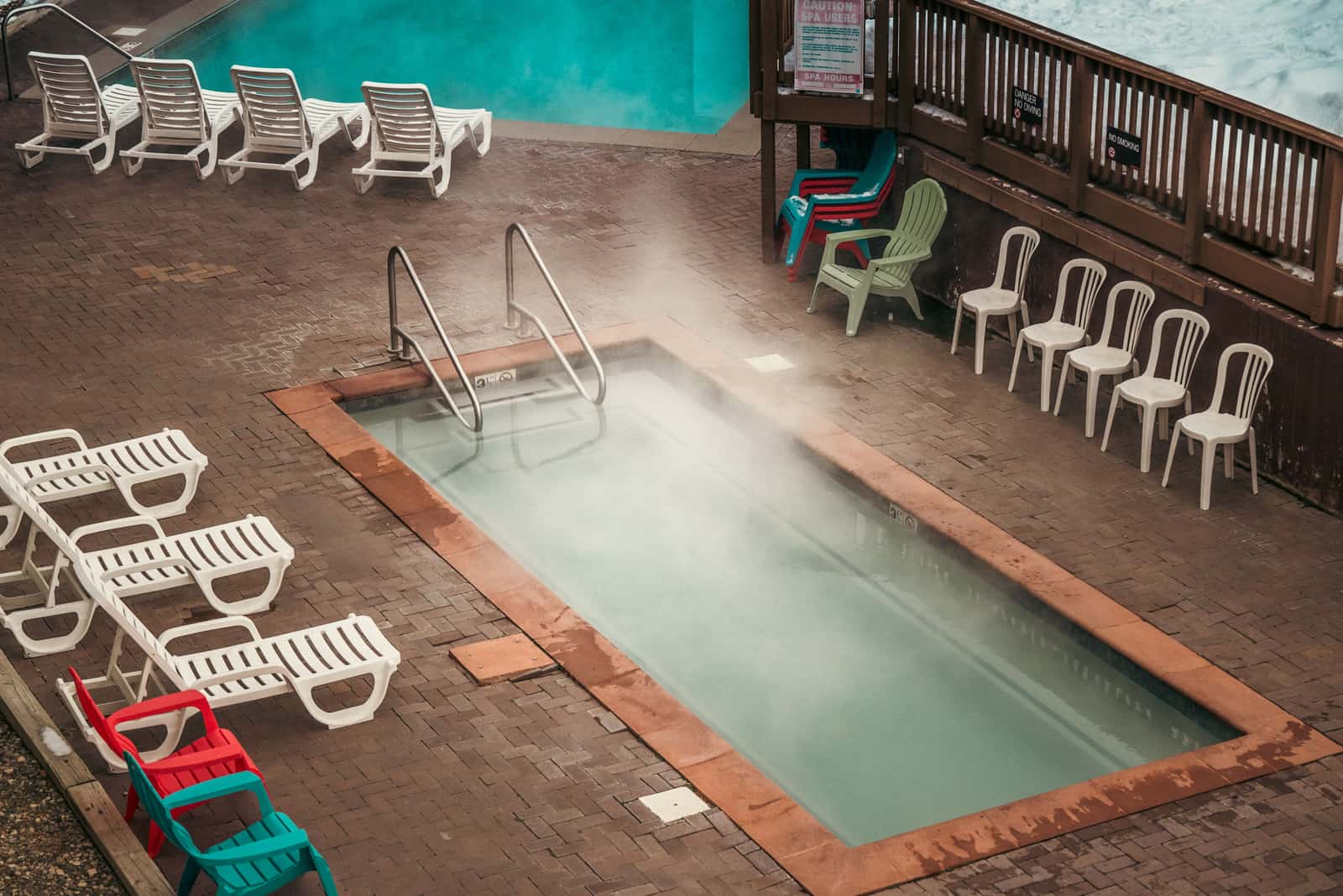
These get compared as if they were alternatives. They are opposite stressors with wildly different running costs, and only one of them fits in a spare room.
By Scooter M. · Published · Last updated
How we are paid: the buy links on this page are affiliate links. If you buy through one, we earn a commission from the retailer at no extra cost to you. It does not change what we rank or what we tell you to skip - the full FTC disclosure is here.
| # | Product | Capacity | Best for | Score | Price |
|---|---|---|---|---|---|
| 1 | 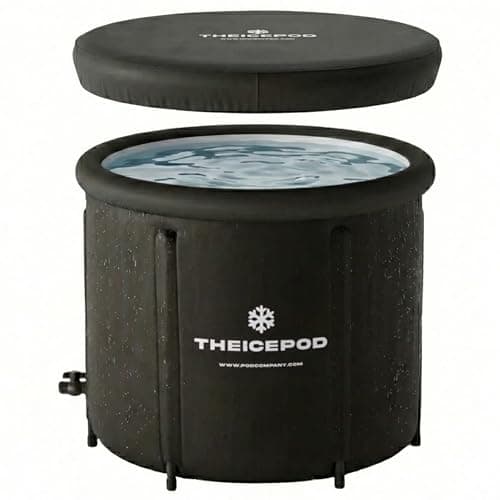 The Pod Company Standard Ice Bath Tub, 84 Gallon Eighty-four gallons with five-layer insulated walls and a built-in side drain, which is the smallest sensible volume for full immersion and cheap to keep cold as a result. | 84 gal | Smallest full-depth soak | 5.9 | $53.99 - Amazon |
| 2 | 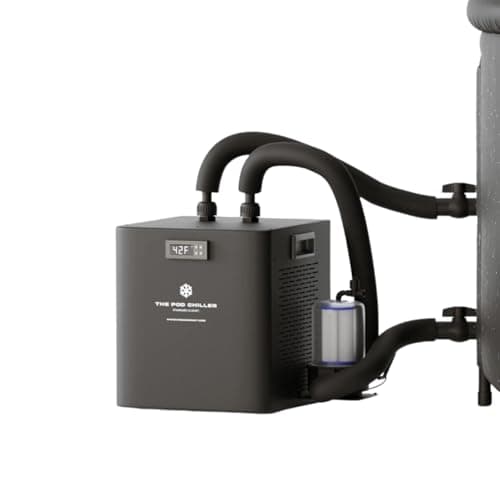 The Pod Company Standard Water Chiller, 1/3 HP 280 watts, a published 41 F floor and a 20-micron filter. It is less than half the draw of every other chiller here, and the listing volunteers the comparison. | Not published | Cheapest to run | 7.2 | $569.00 - Amazon |
| 3 | 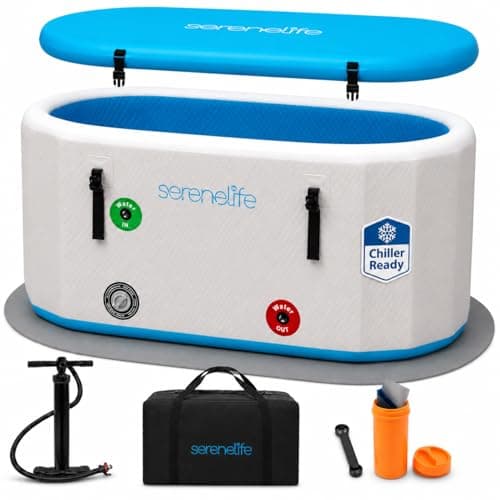 SereneLife XXL 216 Gallon Cold Plunge Tub The only tub here that publishes an interior dimension as well as an exterior one, with the port standard named three ways and a 3.15 in clamp-on insulated lid - and two external dimension sets on the same listing that do not agree. | 216 gal | Published interior size | 6.8 | $339.99 - Amazon |
| 4 | 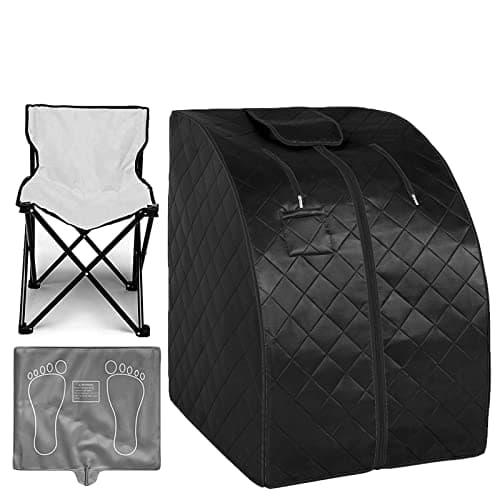 ZONEMEL Portable Infrared Sauna, 1 Person 1,050 W across three carbon panels plus a heated foot pad, with the wattage, the temperature ceiling and the timer all published - unusual for an infrared tent. | Not published | Best infrared for a standard outlet | 6.4 | $179.99 - Amazon |
The short version
Why the running costs are not comparable
This is the part that decides it for most people, and the asymmetry is larger than it looks.
A cold plunge holds a modest volume slightly below room temperature. The gradient the chiller works against is maybe 20 to 30 degrees, and the tub sits under an insulated lid most of the day. Published chiller draws on this site run from 190 W to 1,200 W - 3.5 to 22 cents an hour at full draw, cycling rather than running continuously.
A hot tub holds three to five times the water at around 102 F, against ambient air that is almost always colder and often much colder. The gradient is bigger, the volume is bigger, and the direction is against the weather rather than with it. It is a fundamentally larger and more constant heat load.
Space, weight and permanence
The weight row is the one that surprises people. Water is 8.34 pounds a gallon, so even a modest plunge tub is several hundred pounds - and a hot tub is measured in tons. That is why one of them is a purchase and the other is a project.
Maintenance
Both are standing water you get into repeatedly, so both need filtration and treatment. The difference is temperature: warm water is a far more hospitable environment for bacteria than cold, which is why hot tub chemistry is a more demanding routine with a tighter tolerance.
A cold plunge is not maintenance-free - cold slows bacterial growth, it does not stop it, and body oils accumulate the same way. But the interval is longer and the routine is simpler. Our full plunge routine is here, and the short version is a rinse before you get in, a lid, a filter and a weekly dose.
What each one is actually for
A hot tub is social and relaxing. You sit in it for half an hour with other people. That is a genuine and underrated reason to own one, and no cold plunge replaces it.
A cold plunge is a stressor. One to three minutes, alone, and the first thirty seconds are a breathing problem rather than a cold-tolerance one. The alertness effect afterwards is immediate and hard to get any other way, and the post-exercise soreness evidence is reasonably consistent - with the findings that cut against the popular claims reported too.
If you want both, do not buy a hot tub
This is the practical conclusion and it is worth stating bluntly. If your goal is alternating hot and cold, the hot side does not need to be 400 gallons of heated water.
A sauna blanket on a bed costs under about twenty cents a session at the outside and claims no floor space. An infrared tent claims about six square feet and folds away. Either paired with a plunge tub gives you a complete contrast setup for a fraction of the installation cost and a small fraction of the running cost, and it fits in a flat. The complete small-space version is here, and the protocol - ordering, round structure, timings - is in the contrast therapy guide.
The picks below are that setup: the smallest sensible tub, the cheapest chiller to run on this site, a full-length tub if you need the room, and the infrared tent for the heat side. If you want the hot-versus-cold question answered on the sauna side instead, cold plunge versus sauna covers which to buy first.
Every pick, in full
Each write-up below shows the score broken into its six components, the specs the listing actually publishes, and the running-cost arithmetic where a wattage exists to compute it from.
#1 - Smallest full-depth soak
The Pod Company Standard Ice Bath Tub, 84 Gallon
Eighty-four gallons with five-layer insulated walls and a built-in side drain, which is the smallest sensible volume for full immersion and cheap to keep cold as a result.
| Small-space fit | 8 / 20 |
|---|---|
| Electrical fit | 20 / 20 |
| Cost to run | 20 / 20 |
| Key-number disclosure | 5 / 15 |
| Spec completeness | 6 / 15 |
| Warranty | 0 / 10 |
| Total | 59 / 100 |
| Rated watts | Not published Not published |
|---|---|
| Water capacity | 84 Seller’s listing, read 2026-10-10 |
| Dimensions | Not published Not published |
| Weight | Not published Not published |
| Cooling floor | Claim, no figure “CHILLER COMPATIBLE (CONVERSION KIT SOLD SEPARATELY) - Cold plunge tub is compatible with water chillers using The Pod Company Conversion Kit” |
| Material | Five-layer insulated walls Seller’s listing, read 2026-10-10 |
| Warranty (months) | Not published Not published |
No electrical load. This draws no power of its own. The running cost of a plunge lives in the chiller, or in the bag of ice.
Volume is the variable nobody thinks about until the first electricity bill or the third bag of ice. Chilling 84 gallons takes roughly a third less energy than chilling 129, and about 60 percent less than 216, for the same temperature drop. If you plunge alone and you are under about six foot two, the extra volume in a bigger tub is water you are paying to keep cold for no benefit.
The side drain with a three-foot hose is the other quiet advantage. Emptying a full tub by tipping it is a two-person job and a wet floor; emptying it through a hose into a drain is not.
The catch is in capitals in the listing itself: chiller compatibility requires a conversion kit sold separately. That is more honest than the listings that imply ports are included, but it is a second purchase, and you should price it before deciding this is the cheap option.
Buy it if
A solo plunger who wants the smallest volume that still covers their shoulders.
Skip it if
You are tall, you plunge with someone else, or you want chiller ports without a second purchase.
#2 - Cheapest to run
The Pod Company Standard Water Chiller, 1/3 HP
280 watts, a published 41 F floor and a 20-micron filter. It is less than half the draw of every other chiller here, and the listing volunteers the comparison.
| Small-space fit | 12 / 20 |
|---|---|
| Electrical fit | 20 / 20 |
| Cost to run | 20 / 20 |
| Key-number disclosure | 12 / 15 |
| Spec completeness | 8 / 15 |
| Warranty | 0 / 10 |
| Total | 72 / 100 |
| Rated watts | 280 Seller’s listing, read 2026-09-07 |
|---|---|
| Water capacity | Not published Not published |
| Dimensions | 13 x 13 x 21 in Seller’s listing, read 2026-09-07 |
| Weight | 40 lb Seller’s listing, read 2026-09-07 |
| Cooling floor | 41 Fno cooling rate published Seller’s listing, read 2026-09-07 |
| Material | Not published Not published |
| Warranty (months) | Not published Not published |
| Rated draw | 280 W |
|---|---|
| Cost per hour at full draw | 5.1 cents |
| Upper bound, running continuously | $37.47 per month |
A chiller cycles. It draws its rated power while the compressor runs and almost nothing while it does not, and how often it runs depends on ambient temperature, insulation, lid use and setpoint. We do not measure duty cycle, so we publish the two figures that need no assumption and no figure in between. Computed at 18.34 cents per kWh (June 2026). The method.
Two hundred and eighty watts is the number that decides this category. At the current US residential average it costs about five cents an hour at full draw, and even running continuously for a month - which no chiller does - the absolute ceiling is around thirty-eight dollars. The 1,200 W units in this roundup are four times that.
The listing's own comparison is a good one: about the same as a home freezer. That is a useful mental model, because a chiller works the same way and cycles the same way. It draws its rated power while the compressor is running and almost nothing while it is not, and how often it runs depends on your lid discipline, your room temperature and how well your tub is insulated.
The published floor is 41 F, which is warmer than the 37 to 39 F claimed by the bigger units. For most people that is irrelevant - the commonly recommended starting band is 50 to 59 F and experienced plungers usually settle around 45 to 50 F - but if you specifically want to get below 40, this will not do it.
Buy it if
Anyone whose plunge is a daily habit rather than an occasional event, where running cost compounds.
Skip it if
You want water below 41 F. This unit does not claim to go there.
#3 - Published interior size
SereneLife XXL 216 Gallon Cold Plunge Tub
The only tub here that publishes an interior dimension as well as an exterior one, with the port standard named three ways and a 3.15 in clamp-on insulated lid - and two external dimension sets on the same listing that do not agree.
| Small-space fit | 14 / 20 |
|---|---|
| Electrical fit | 20 / 20 |
| Cost to run | 20 / 20 |
| Key-number disclosure | 5 / 15 |
| Spec completeness | 9 / 15 |
| Warranty | 0 / 10 |
| Total | 68 / 100 |
| Rated watts | Not published Not published |
|---|---|
| Water capacity | 216 Seller’s product title, read 2026-10-25 |
| Dimensions | 59 x 32.2 x 26.3 in outer and 51.1 x 26 x 24.4 in inner per the description; 53.15 x 31.5 x 24.02 in in the spec table Seller’s listing, read 2026-10-25 |
| Weight | Not published Not published |
| Cooling floor | Claim, no figure “Inlet and outlet ports work with common 20 mm G1/2 DN15 1/2 in chiller tubes, so you can connect a compatible water chiller system or use ice directly” |
| Material | Double-wall drop-stitch PVC, reinforced sidewalls, dual-layer inner sealing Seller’s listing, read 2026-10-25 |
| Warranty (months) | Not published Not published |
No electrical load. This draws no power of its own. The running cost of a plunge lives in the chiller, or in the bag of ice.
The disclosure that earns this its place is the interior dimension: 51.1 by 26 by 24.4 inches, published alongside the exterior. Almost nothing in this category gives you that, and it is the figure that actually decides whether you fit - the gap between a 59-inch outside and a 51-inch inside is eight inches of wall you cannot sit in. If you are tall, measure your seated length against the inner figure rather than the headline one.
Two more things it publishes that matter more than they look. The port standard is named three ways - 20 mm, G1/2, DN15, half-inch - which is what lets you buy a fitting that seals before the chiller arrives. And the lid is specified as a 3.15 inch clamp-on: both the thickness and the fact that it clamps rather than rests, which is the single cheapest thing that reduces your ice bill, because most heat comes back in through the open water surface.
The gaps are real. The external dimensions appear twice and disagree - 59 by 32.2 by 26.3 inches in the description against 53.15 by 31.5 by 24.02 in the specification table - which is the same pattern we keep finding, and we print both rather than choosing the flattering one. No empty weight, no warranty term and no material temperature tolerance are published; on that last point it is now in company, because no tub on this site publishes a cold rating at all.
Buy it if
Someone buying the largest tub on this site who wants an interior dimension and a named port standard before ordering.
Skip it if
You need the external dimensions to agree with themselves, or a published weight. Neither is available here.
#4 - Best infrared for a standard outlet
ZONEMEL Portable Infrared Sauna, 1 Person
1,050 W across three carbon panels plus a heated foot pad, with the wattage, the temperature ceiling and the timer all published - unusual for an infrared tent.
| Small-space fit | 20 / 20 |
|---|---|
| Electrical fit | 15 / 20 |
| Cost to run | 20 / 20 |
| Key-number disclosure | 0 / 15 |
| Spec completeness | 9 / 15 |
| Warranty | 0 / 10 |
| Total | 64 / 100 |
| Rated watts | 1050 Seller’s listing, read 2026-09-07 |
|---|---|
| Maximum temperature | 140 F maximum Seller’s listing, read 2026-09-07 |
| Dimensions | 27.6 x 31.5 x 37.8 in Seller’s product title, read 2026-09-07 |
| Weight | 19.8 lb Seller’s listing, read 2026-09-07 |
| Timer | Up to 60 minutes Seller’s listing, read 2026-09-07 |
| EMF disclosure | Not mentioned at all |
| Material | Not published Not published |
| Warranty (months) | Not published Not published |
| Rated draw | 1050 W (8.8 A at 120 V) |
|---|---|
| Energy per 30-minute session | 0.525 kWh |
| Maximum cost per session | 9.6 cents |
| Maximum per month, 4 sessions a week | $1.67 |
| Circuit | Wants the outlet to itself |
These are maximums, assuming continuous draw. A resistive heater pulls its rated power only while the element is energized; once it reaches setpoint it cycles, so the real figure is lower and depends on your room. Computed at 18.34 cents per kWh (June 2026). The method, and how to substitute your own rate.
At 1,050 W this draws about 8.8 amps, which a standard 15 A outlet carries without complaint even with something else plugged in. It is the highest-powered infrared unit here that still sits comfortably under the 1,000 W line where we start recommending the outlet be left to itself, and a thirty-minute session works out to roughly ten cents at the national average rate.
The heated foot pad is the detail worth knowing about. Infrared tents heat what the panels face, and in a seated tent that means your back and sides get the heat while your feet sit on ambient floor. A separate foot element is the direct fix and not every unit in this price range includes one.
The footprint is the smallest of any sit-in sauna in this roundup: 27.6 by 31.5 inches deployed, about six square feet, which is roughly the area of a single armchair. That is what makes an infrared tent viable in a one-bedroom apartment at all.
Buy it if
Someone who wants dry infrared heat in the smallest deployed footprint that still fits an adult.
Skip it if
EMF disclosure matters to you. This listing does not mention it.
Questions people actually ask
Is a cold plunge better than a hot tub?
They do opposite things, so neither replaces the other. A hot tub is warm, social and relaxing, and it is a permanent installation holding hundreds of gallons at temperature around the clock. A cold plunge is a short, sharp, solitary stressor in a fraction of the water. If you want relaxation, a hot tub. If you want the alertness and post-exercise soreness effects, a plunge.
Which is cheaper to run, a cold plunge or a hot tub?
A cold plunge, by a wide margin. A chiller on this site draws 190 W to 1,200 W - 3.5 to 22 cents an hour at full draw - holding 84 to 216 gallons. A hot tub typically holds 300 to 500 gallons at around 102 F continuously, against ambient air that is almost always colder, which is a far larger and more constant heat load.
Can you use a cold plunge and a hot tub together?
Yes, and alternating between them is contrast therapy, which is what this whole site is named after. The conventional order is hot first then cold, repeated for two to four rounds, because the cold then arrives as relief rather than as a shock.
Can you turn a hot tub into a cold plunge?
Not practically with the tub's own equipment - a hot tub heater cannot cool, and chilling 400 gallons needs far more capacity than a domestic chiller offers. Some purpose-built units do both: one chiller on this site publishes a 36 to 86 F range, which spans well above room temperature. But it is rated for 132 gallons, not 400.
Do you need a hot tub for contrast therapy?
No, and it is the expensive way to do it. The heat side can be a sauna blanket on a bed or an infrared tent in a corner, both of which cost single-digit dollars a month to run and pack away. A hot tub is a permanent installation, and for contrast purposes it is doing a job a $100 blanket also does.