Guides
Cold plunge vs sauna
Two opposite stressors, two very different equipment problems. Compared on mechanism, footprint, running cost and which one to buy first.
By Scooter M. · Published · Last updated
How we are paid: the buy links on this page are affiliate links. If you buy through one, we earn a commission from the retailer at no extra cost to you. It does not change what we rank or what we tell you to skip - the full FTC disclosure is here.

| # | Product | Rated watts | Best for | Score | Price |
|---|---|---|---|---|---|
| 1 | 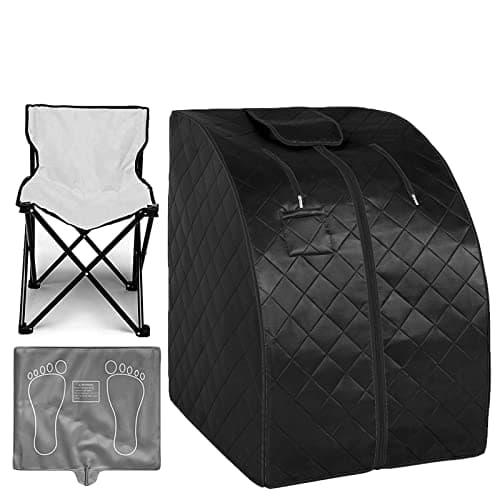 ZONEMEL Portable Infrared Sauna, 1 Person 1,050 W across three carbon panels plus a heated foot pad, with the wattage, the temperature ceiling and the timer all published - unusual for an infrared tent. | 1050 W | Best infrared for a standard outlet | 6.4 | $179.99 - Amazon |
| 2 | 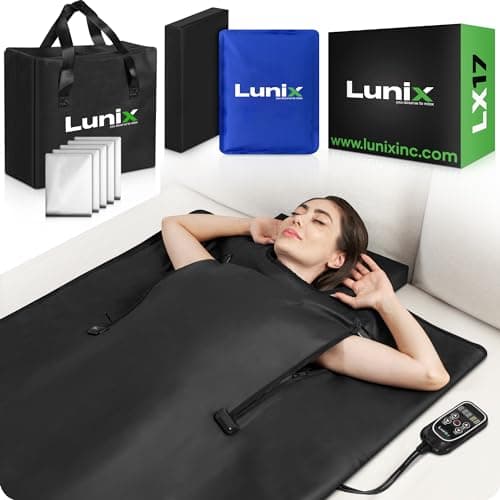 Lunix LX17 Far Infrared Sauna Blanket The most complete spec sheet in the category and the only published lifetime warranty, though the EMF claim is still a phrase rather than a figure. | Not published | Best documented | 4.0 | $299.97 - Amazon |
| 3 | 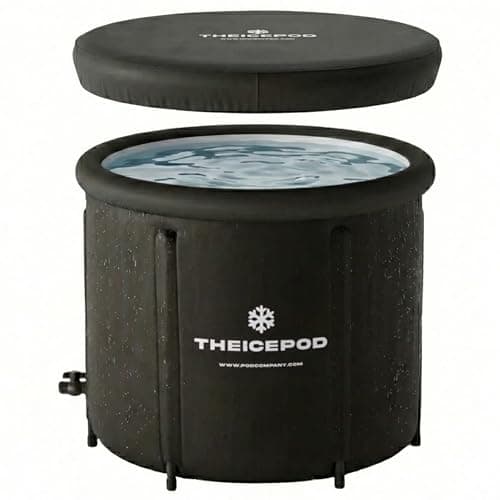 The Pod Company Standard Ice Bath Tub, 84 Gallon Eighty-four gallons with five-layer insulated walls and a built-in side drain, which is the smallest sensible volume for full immersion and cheap to keep cold as a result. | Not published | Smallest full-depth soak | 5.9 | $53.99 - Amazon |
| 4 | 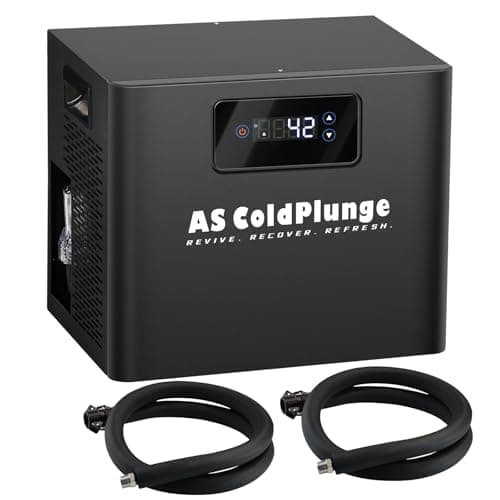 AS ColdPlunge 1/3 HP Cold Plunge Chiller 600 W, a 42 F floor, a reusable metal filter instead of cartridges, and a submersible pump in the box so it works with a bathtub that has no ports. | 600 W | Best for a bathtub | 7.7 | $399.00 - Amazon |
The short answer if you can only have one
How each one works on you
The last row matters more than it looks. Most sauna research was conducted in traditional Finnish saunas at 175 to 195 F, and the hottest portable unit in our roundup publishes 150 F. Whether findings transfer across that gap is an open question, and we are not going to close it for you.
Space and power
The weight row is the one people never anticipate. Water is 8.34 pounds a gallon, so a modest 84-gallon tub is 700 pounds of water sitting on your floor - which is why the balcony page exists and why a sauna is the easier object to introduce into a rented home.
Running cost, which is not close
At 18.34 cents per kWh:
- Sauna: 7 to 15 cents per 30-minute session. Four a week is between $1.27 and $2.54 a month.
- Cold plunge with a chiller: 3.5 to 22 cents an hour, running for hours rather than minutes. Between $6 and $40 a month at six hours a day.
- Cold plunge with ice: whatever bagged ice costs you, several times a week, forever.
Then add filtration, water treatment and the periodic drain-and-refill on the cold side. The sauna has none of that. Full figures are in portable sauna running cost and chiller running cost.
Where the cold plunge wins
Two places, and both are real. The evidence for post-exercise soreness reduction is more consistent on the cold side than anything comparable on the heat side at home-sauna temperatures. And the alertness effect after a cold immersion is immediate and hard to get any other way - if that is what you are after, no amount of sauna substitutes for it.
If you want both, the ordering and timing questions are in the contrast therapy guide, and the complete small-space setup in the apartment recovery setup guide. If the heat side you were picturing was a hot tub rather than a sauna, the running-cost gap is much larger than most people expect - cold plunge versus hot tub.
Every pick, in full
Each write-up below shows the score broken into its six components, the specs the listing actually publishes, and the running-cost arithmetic where a wattage exists to compute it from.
#1 - Best infrared for a standard outlet
ZONEMEL Portable Infrared Sauna, 1 Person
1,050 W across three carbon panels plus a heated foot pad, with the wattage, the temperature ceiling and the timer all published - unusual for an infrared tent.
| Small-space fit | 20 / 20 |
|---|---|
| Electrical fit | 15 / 20 |
| Cost to run | 20 / 20 |
| Key-number disclosure | 0 / 15 |
| Spec completeness | 9 / 15 |
| Warranty | 0 / 10 |
| Total | 64 / 100 |
| Rated watts | 1050 Seller’s listing, read 2026-09-07 |
|---|---|
| Maximum temperature | 140 F maximum Seller’s listing, read 2026-09-07 |
| Dimensions | 27.6 x 31.5 x 37.8 in Seller’s product title, read 2026-09-07 |
| Weight | 19.8 lb Seller’s listing, read 2026-09-07 |
| Timer | Up to 60 minutes Seller’s listing, read 2026-09-07 |
| EMF disclosure | Not mentioned at all |
| Material | Not published Not published |
| Warranty (months) | Not published Not published |
| Rated draw | 1050 W (8.8 A at 120 V) |
|---|---|
| Energy per 30-minute session | 0.525 kWh |
| Maximum cost per session | 9.6 cents |
| Maximum per month, 4 sessions a week | $1.67 |
| Circuit | Wants the outlet to itself |
These are maximums, assuming continuous draw. A resistive heater pulls its rated power only while the element is energized; once it reaches setpoint it cycles, so the real figure is lower and depends on your room. Computed at 18.34 cents per kWh (June 2026). The method, and how to substitute your own rate.
At 1,050 W this draws about 8.8 amps, which a standard 15 A outlet carries without complaint even with something else plugged in. It is the highest-powered infrared unit here that still sits comfortably under the 1,000 W line where we start recommending the outlet be left to itself, and a thirty-minute session works out to roughly ten cents at the national average rate.
The heated foot pad is the detail worth knowing about. Infrared tents heat what the panels face, and in a seated tent that means your back and sides get the heat while your feet sit on ambient floor. A separate foot element is the direct fix and not every unit in this price range includes one.
The footprint is the smallest of any sit-in sauna in this roundup: 27.6 by 31.5 inches deployed, about six square feet, which is roughly the area of a single armchair. That is what makes an infrared tent viable in a one-bedroom apartment at all.
Buy it if
Someone who wants dry infrared heat in the smallest deployed footprint that still fits an adult.
Skip it if
EMF disclosure matters to you. This listing does not mention it.
#2 - Best documented
Lunix LX17 Far Infrared Sauna Blanket
The most complete spec sheet in the category and the only published lifetime warranty, though the EMF claim is still a phrase rather than a figure.
| Small-space fit | 14 / 20 |
|---|---|
| Electrical fit | 0 / 20 |
| Cost to run | 0 / 20 |
| Key-number disclosure | 5 / 15 |
| Spec completeness | 11 / 15 |
| Warranty | 10 / 10 |
| Total | 40 / 100 |
| Rated watts | Not published Not published |
|---|---|
| Maximum temperature | 77-176 F Seller’s listing, read 2026-09-07 |
| Dimensions | 75 x 37 in folded for use, 75 x 75 in opened flat Seller’s listing, read 2026-09-07 |
| Weight | 21.1 lb Seller’s listing, read 2026-09-07 |
| Timer | Up to 60 minutes Seller’s listing, read 2026-09-07 |
| EMF disclosure | Claim, no figure “Low EMF Far-Infrared Heat, 77-176 F” |
| Material | Five layers: waterproof fabric, cotton, carbon fiber heating, cotton, PU leather Seller’s listing, read 2026-09-07 |
| Warranty (months) | 120 Seller’s listing, read 2026-09-07 |
No running cost can be computed. The listing does not publish a rated wattage, so there is no honest way to tell you what a session costs. We will not estimate one. How we compute running costs
Six of the eight items on our spec checklist are published here, which is the highest count of any blanket we looked at. The dimensions are given twice - folded for use and opened flat - which is genuinely useful, because a blanket you have to lie inside is a different piece of furniture from a blanket you lay out on a bed, and most sellers publish only one of the two numbers.
The warranty is the outlier. A lifetime term, conditional on registering the product, is the longest published commitment in this roundup by a wide margin, and it is the sort of claim a seller does not make lightly on a heating appliance. It is worth reading as a statement about expected failure rate rather than as a promise you will ever need to use.
What is still missing is the number that matters most for cost: rated watts. Nobody in this category publishes it, and Lunix is no exception, so the electrical-fit and cost-to-run components of the score have nothing to work with. The EMF language is the same phrase everyone uses - 'Low EMF' with no measurement, no unit and no distance - which earns partial credit for saying something and no credit for saying anything checkable.
Buy it if
Someone who wants the most published information in the category and values a long warranty term over a brand name.
Skip it if
You want a measured EMF figure. There is no number here, only the phrase.
#3 - Smallest full-depth soak
The Pod Company Standard Ice Bath Tub, 84 Gallon
Eighty-four gallons with five-layer insulated walls and a built-in side drain, which is the smallest sensible volume for full immersion and cheap to keep cold as a result.
| Small-space fit | 8 / 20 |
|---|---|
| Electrical fit | 20 / 20 |
| Cost to run | 20 / 20 |
| Key-number disclosure | 5 / 15 |
| Spec completeness | 6 / 15 |
| Warranty | 0 / 10 |
| Total | 59 / 100 |
| Rated watts | Not published Not published |
|---|---|
| Water capacity | 84 Seller’s listing, read 2026-10-10 |
| Dimensions | Not published Not published |
| Weight | Not published Not published |
| Cooling floor | Claim, no figure “CHILLER COMPATIBLE (CONVERSION KIT SOLD SEPARATELY) - Cold plunge tub is compatible with water chillers using The Pod Company Conversion Kit” |
| Material | Five-layer insulated walls Seller’s listing, read 2026-10-10 |
| Warranty (months) | Not published Not published |
No electrical load. This draws no power of its own. The running cost of a plunge lives in the chiller, or in the bag of ice.
Volume is the variable nobody thinks about until the first electricity bill or the third bag of ice. Chilling 84 gallons takes roughly a third less energy than chilling 129, and about 60 percent less than 216, for the same temperature drop. If you plunge alone and you are under about six foot two, the extra volume in a bigger tub is water you are paying to keep cold for no benefit.
The side drain with a three-foot hose is the other quiet advantage. Emptying a full tub by tipping it is a two-person job and a wet floor; emptying it through a hose into a drain is not.
The catch is in capitals in the listing itself: chiller compatibility requires a conversion kit sold separately. That is more honest than the listings that imply ports are included, but it is a second purchase, and you should price it before deciding this is the cheap option.
Buy it if
A solo plunger who wants the smallest volume that still covers their shoulders.
Skip it if
You are tall, you plunge with someone else, or you want chiller ports without a second purchase.
#4 - Best for a bathtub
AS ColdPlunge 1/3 HP Cold Plunge Chiller
600 W, a 42 F floor, a reusable metal filter instead of cartridges, and a submersible pump in the box so it works with a bathtub that has no ports.
| Small-space fit | 12 / 20 |
|---|---|
| Electrical fit | 20 / 20 |
| Cost to run | 16 / 20 |
| Key-number disclosure | 12 / 15 |
| Spec completeness | 11 / 15 |
| Warranty | 6 / 10 |
| Total | 77 / 100 |
| Rated watts | 600 Seller’s listing, read 2026-09-07 |
|---|---|
| Water capacity | 79 Seller’s listing, read 2026-09-07 |
| Dimensions | 11.8 x 14.9 x 12.6 in Seller’s listing, read 2026-09-07 |
| Weight | 35 lb Seller’s listing, read 2026-09-07 |
| Cooling floor | 42 Fno cooling rate published Seller’s listing, read 2026-09-07 |
| Material | Not published Not published |
| Warranty (months) | 12 Seller’s listing, read 2026-09-07 |
| Rated draw | 600 W |
|---|---|
| Cost per hour at full draw | 11.0 cents |
| Upper bound, running continuously | $80.29 per month |
A chiller cycles. It draws its rated power while the compressor runs and almost nothing while it does not, and how often it runs depends on ambient temperature, insulation, lid use and setpoint. We do not measure duty cycle, so we publish the two figures that need no assumption and no figure in between. Computed at 18.34 cents per kWh (June 2026). The method.
The submersible pump is what makes this the bathtub answer. A chiller normally needs a tub with inlet and outlet ports; a bathtub has neither. Dropping a pump into the water and running two hoses over the rim is inelegant and it works, and it is the cheapest route to a cold plunge for anyone who cannot give up floor space for a tub at all.
Six hundred watts is eleven cents an hour at full draw, comfortably mid-range here. The 79-gallon rating is a good match for a standard bathtub, which holds somewhere between 40 and 80 gallons at plunge depth.
The reusable metal mesh filter rather than disposable cartridges is a genuine running-cost detail that gets ignored because it is not electricity. Cartridge filters are a recurring purchase; a rinsable metal screen is not, and over a year that difference is larger than the difference in power draw between two chillers.
An availability note, because we said we would keep it current: this listing went to "Currently unavailable" on 2026-09-09 and we routed its buy link to a search rather than to a product nobody could add to a cart. Re-checked on 2026-09-12, it is back in stock with a buy-box offer, so the link points at the listing again.
Buy it if
Anyone plunging in an existing bathtub rather than buying a tub.
Skip it if
Your tub is over 79 gallons.
Questions people actually ask
Should I get a sauna or a cold plunge first?
A sauna, in most cases. It is cheaper to set up in a small space, it has no ongoing water maintenance, its running cost is trivial, and you can use your existing bathtub with ice for the cold side while you decide. A plunge tub plus a chiller is the larger commitment in space, money and upkeep.
Is a sauna or a cold plunge better for recovery?
They are studied for different things. Cold water immersion has reasonably consistent meta-analytic support for reducing delayed-onset muscle soreness after exercise. Sauna bathing has a separate literature, mostly conducted in traditional Finnish saunas at temperatures home units do not reach. Neither is better in general, and the honest answer is that they are answering different questions.
Which is cheaper, a sauna or a cold plunge?
A sauna, decisively, on both counts. A portable sauna costs 7 to 15 cents a session to run and needs nothing else. A cold plunge needs either a chiller at 3.5 to 22 cents an hour running for hours, or a recurring ice purchase, plus filtration and water treatment.
Can you have both in an apartment?
Yes. The cheapest complete setup is a sauna blanket on the bed and your existing bathtub for the cold side, which claims no permanent floor space at all. A tent plus a dedicated tub needs about sixteen to twenty square feet while standing, and both fold away.
Sources
- Wang H, Wang L, Pan Y. Impact of different doses of cold water immersion (duration and temperature variations) on recovery from acute exercise-induced muscle damage: a network meta-analysis. Frontiers in Physiology, 2025 - Ranked 10-15 min at 11-15 C best for soreness, and 10-15 min at 5-10 C best for biochemical markers and neuromuscular function.
- U.S. Energy Information Administration, Electric Power Monthly, Table 5.6.A - Average Price of Electricity to Ultimate Customers by End-Use Sector - U.S. Total, Residential: 18.34 cents per kWh, June 2026. Retrieved 2026-09-07.