Cold Plunges
Cold plunge for beginners
Where to start on temperature and time, what the first thirty seconds are actually like, and the smallest sensible amount of equipment.
By Scooter M. · Published · Last updated
How we are paid: the buy links on this page are affiliate links. If you buy through one, we earn a commission from the retailer at no extra cost to you. It does not change what we rank or what we tell you to skip - the full FTC disclosure is here.

| # | Product | Capacity | Best for | Score | Price |
|---|---|---|---|---|---|
| 1 | 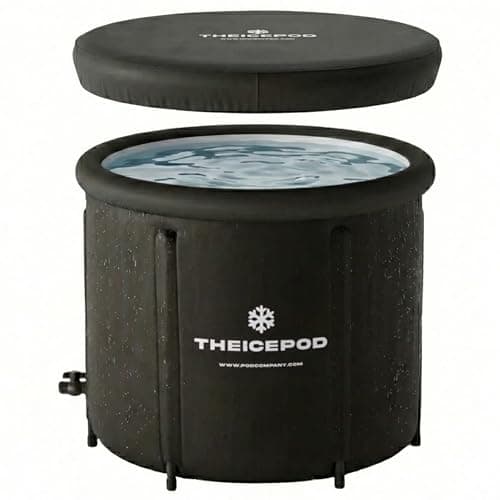 The Pod Company Standard Ice Bath Tub, 84 Gallon Eighty-four gallons with five-layer insulated walls and a built-in side drain, which is the smallest sensible volume for full immersion and cheap to keep cold as a result. | 84 gal | Smallest full-depth soak | 5.9 | $53.99 - Amazon |
| 2 | 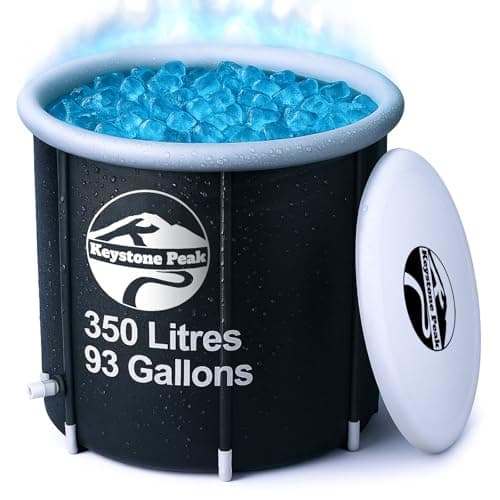 Keystone Peak Portable Cold Plunge Tub Three-layer insulation and a thermal inflatable lid with a five-year assurance behind it, though the capacity is published in liters and the assurance is not called a warranty. | 92 gal | Longest stated cover | 5.6 | $44.97 - Amazon |
| 3 | 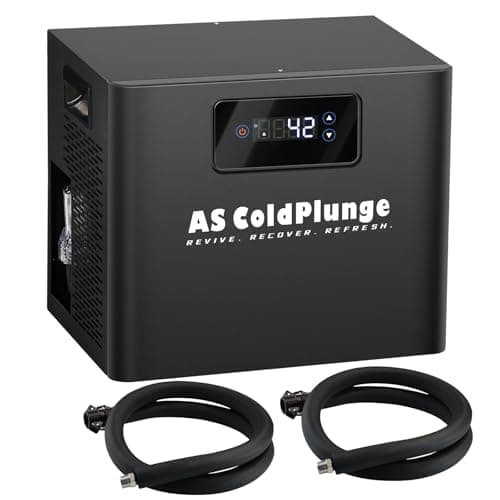 AS ColdPlunge 1/3 HP Cold Plunge Chiller 600 W, a 42 F floor, a reusable metal filter instead of cartridges, and a submersible pump in the box so it works with a bathtub that has no ports. | 79 gal | Best for a bathtub | 7.7 | $399.00 - Amazon |
Where to start
The first thirty seconds are the whole difficulty
Almost everyone assumes the hard part of a cold plunge is enduring the cold. It is not. The hard part is the cold shock response: an involuntary gasp on entry followed by rapid, uncontrolled breathing, peaking in roughly the first half-minute.
That response is not willpower-dependent and you do not talk yourself out of it. What you can do is give it somewhere to go: get in slowly, keep your hands out of the water for the first few seconds if that helps, and put all of your attention on making the out-breath longer than the in-breath. It settles. The second week is markedly easier than the first, and that adaptation is the most reliable thing about the whole practice.
Building it up
Two things worth saying about that table. It is a ramp we consider sensible, not a protocol from a published trial - there is no agreed standard for home cold immersion and anyone presenting one as settled is overstating the literature. And more is not obviously better: the temperature question is covered properly in what cold plunge temperature actually does.
The cheapest honest way to start
Before buying anything: fill your bathtub with cold water and a bag or two of ice, and do it three times. It costs almost nothing and it answers the only question that matters, which is whether you will actually keep doing this.
If the answer is yes, the sensible first purchase is an insulated tub with a clamped lid, run on ice. The tub is the part you will keep; the chiller is the upgrade that turns it from a chore into a habit. Two things to get right at that stage:
- Buy a tub with real ports. Adding a chiller later to a tub without them means buying the tub twice. The inflatable roundup covers which ones name their thread standard.
- Buy less volume than you think. Chilling 84 gallons takes about a third less energy than 129. If you plunge alone, the extra water is water you pay to keep cold. The full version of that argument is in the best cold plunge for the money, and if you are tall enough that fit rather than volume is your constraint, the published height limits are here.
The ice-versus-chiller economics, including the point at which a chiller pays for itself, are worked through in chiller versus ice.
Two things not to do
Do not plunge alone your first few times if you can avoid it, and do not plunge after drinking. Both for the same reason: the failure mode here is losing control of your breathing, and having someone in the room turns that from a problem into a moment.
Do not treat a bad first session as the answer. Nearly everyone finds the first one unpleasant and disorienting. The interesting data point is session five, not session one.
If you are combining this with heat, the ordering and timing questions are in the contrast therapy guide. And if you are starting on ice, how much ice a cold plunge needs tells you how many bags a given tub and tap temperature actually takes.
Every pick, in full
Each write-up below shows the score broken into its six components, the specs the listing actually publishes, and the running-cost arithmetic where a wattage exists to compute it from.
#1 - Smallest full-depth soak
The Pod Company Standard Ice Bath Tub, 84 Gallon
Eighty-four gallons with five-layer insulated walls and a built-in side drain, which is the smallest sensible volume for full immersion and cheap to keep cold as a result.
| Small-space fit | 8 / 20 |
|---|---|
| Electrical fit | 20 / 20 |
| Cost to run | 20 / 20 |
| Key-number disclosure | 5 / 15 |
| Spec completeness | 6 / 15 |
| Warranty | 0 / 10 |
| Total | 59 / 100 |
| Rated watts | Not published Not published |
|---|---|
| Water capacity | 84 Seller’s listing, read 2026-10-10 |
| Dimensions | Not published Not published |
| Weight | Not published Not published |
| Cooling floor | Claim, no figure “CHILLER COMPATIBLE (CONVERSION KIT SOLD SEPARATELY) - Cold plunge tub is compatible with water chillers using The Pod Company Conversion Kit” |
| Material | Five-layer insulated walls Seller’s listing, read 2026-10-10 |
| Warranty (months) | Not published Not published |
No electrical load. This draws no power of its own. The running cost of a plunge lives in the chiller, or in the bag of ice.
Volume is the variable nobody thinks about until the first electricity bill or the third bag of ice. Chilling 84 gallons takes roughly a third less energy than chilling 129, and about 60 percent less than 216, for the same temperature drop. If you plunge alone and you are under about six foot two, the extra volume in a bigger tub is water you are paying to keep cold for no benefit.
The side drain with a three-foot hose is the other quiet advantage. Emptying a full tub by tipping it is a two-person job and a wet floor; emptying it through a hose into a drain is not.
The catch is in capitals in the listing itself: chiller compatibility requires a conversion kit sold separately. That is more honest than the listings that imply ports are included, but it is a second purchase, and you should price it before deciding this is the cheap option.
Buy it if
A solo plunger who wants the smallest volume that still covers their shoulders.
Skip it if
You are tall, you plunge with someone else, or you want chiller ports without a second purchase.
#2 - Longest stated cover
Keystone Peak Portable Cold Plunge Tub
Three-layer insulation and a thermal inflatable lid with a five-year assurance behind it, though the capacity is published in liters and the assurance is not called a warranty.
| Small-space fit | 8 / 20 |
|---|---|
| Electrical fit | 20 / 20 |
| Cost to run | 20 / 20 |
| Key-number disclosure | 0 / 15 |
| Spec completeness | 8 / 15 |
| Warranty | 0 / 10 |
| Total | 56 / 100 |
| Rated watts | Not published Not published |
|---|---|
| Water capacity | 92 Seller’s listing, read 2026-09-07 |
| Dimensions | Packs to 9.84 x 4.72 x 25.2 in Seller’s listing, read 2026-09-07 |
| Weight | 3 kg Seller’s listing, read 2026-09-07 |
| Cooling floor | Not mentioned at all |
| Material | Three-layer insulation, leak-proof build Seller’s listing, read 2026-09-07 |
| Warranty (months) | Not published Not published |
No electrical load. This draws no power of its own. The running cost of a plunge lives in the chiller, or in the bag of ice.
Three hundred and fifty liters is about 92 US gallons, which puts this between the Pod Company Standard and the COSTWAY on volume. We convert it here because the listing does not, and a buyer comparing this against tubs quoted in gallons will otherwise be comparing two different units without noticing.
The five-year assurance is the longest coverage claim on any tub here. It is worth reading the word carefully: an 'assurance' backed by a support team is not the same undertaking as a warranty with terms, and we score warranty only where a term is published as one. Treat it as a signal of confidence rather than a contract.
There are no chiller ports mentioned anywhere in the listing, which for a tub at this price is the honest limitation. This is an ice tub. If you expect to add a chiller within the year, buy something with ports and save yourself the second purchase.
Buy it if
Someone who wants an ice-only tub with the longest stated support and no chiller ambitions.
Skip it if
You plan to add a chiller. There are no ports.
#3 - Best for a bathtub
AS ColdPlunge 1/3 HP Cold Plunge Chiller
600 W, a 42 F floor, a reusable metal filter instead of cartridges, and a submersible pump in the box so it works with a bathtub that has no ports.
| Small-space fit | 12 / 20 |
|---|---|
| Electrical fit | 20 / 20 |
| Cost to run | 16 / 20 |
| Key-number disclosure | 12 / 15 |
| Spec completeness | 11 / 15 |
| Warranty | 6 / 10 |
| Total | 77 / 100 |
| Rated watts | 600 Seller’s listing, read 2026-09-07 |
|---|---|
| Water capacity | 79 Seller’s listing, read 2026-09-07 |
| Dimensions | 11.8 x 14.9 x 12.6 in Seller’s listing, read 2026-09-07 |
| Weight | 35 lb Seller’s listing, read 2026-09-07 |
| Cooling floor | 42 Fno cooling rate published Seller’s listing, read 2026-09-07 |
| Material | Not published Not published |
| Warranty (months) | 12 Seller’s listing, read 2026-09-07 |
| Rated draw | 600 W |
|---|---|
| Cost per hour at full draw | 11.0 cents |
| Upper bound, running continuously | $80.29 per month |
A chiller cycles. It draws its rated power while the compressor runs and almost nothing while it does not, and how often it runs depends on ambient temperature, insulation, lid use and setpoint. We do not measure duty cycle, so we publish the two figures that need no assumption and no figure in between. Computed at 18.34 cents per kWh (June 2026). The method.
The submersible pump is what makes this the bathtub answer. A chiller normally needs a tub with inlet and outlet ports; a bathtub has neither. Dropping a pump into the water and running two hoses over the rim is inelegant and it works, and it is the cheapest route to a cold plunge for anyone who cannot give up floor space for a tub at all.
Six hundred watts is eleven cents an hour at full draw, comfortably mid-range here. The 79-gallon rating is a good match for a standard bathtub, which holds somewhere between 40 and 80 gallons at plunge depth.
The reusable metal mesh filter rather than disposable cartridges is a genuine running-cost detail that gets ignored because it is not electricity. Cartridge filters are a recurring purchase; a rinsable metal screen is not, and over a year that difference is larger than the difference in power draw between two chillers.
An availability note, because we said we would keep it current: this listing went to "Currently unavailable" on 2026-09-09 and we routed its buy link to a search rather than to a product nobody could add to a cart. Re-checked on 2026-09-12, it is back in stock with a buy-box offer, so the link points at the listing again.
Buy it if
Anyone plunging in an existing bathtub rather than buying a tub.
Skip it if
Your tub is over 79 gallons.
Questions people actually ask
What temperature should a beginner cold plunge at?
Fifty to fifty-nine Fahrenheit is the usual starting band, and there is no benefit to going colder before you are comfortable there. Water in that range is unambiguously cold, produces the full gasp response, and is survivable for the one to three minutes a beginner should be aiming at.
How long should a beginner stay in a cold plunge?
One to three minutes. The limiting factor at first is not cold tolerance, it is breathing control - the involuntary gasp and rapid breathing in the first thirty seconds is what most people find hardest, and it settles with practice rather than with willpower.
Is it normal to gasp when you get into cold water?
Yes. The cold shock response is an involuntary gasp followed by rapid breathing, and it peaks in the first thirty seconds or so of immersion. It is the reason cold water entry is genuinely dangerous in open water where a gasp can happen underwater, and it is the reason you get into a plunge tub slowly and in control.
What do I need to start cold plunging?
A tub that holds enough water to cover your shoulders, a way to make it cold, and a lid. The cheapest honest starting point is an insulated inflatable tub plus ice, and the upgrade that makes it a daily habit rather than a chore is a chiller. Starting with a bathtub and a bag of ice costs nothing and will tell you within a week whether you want the equipment.