Guides
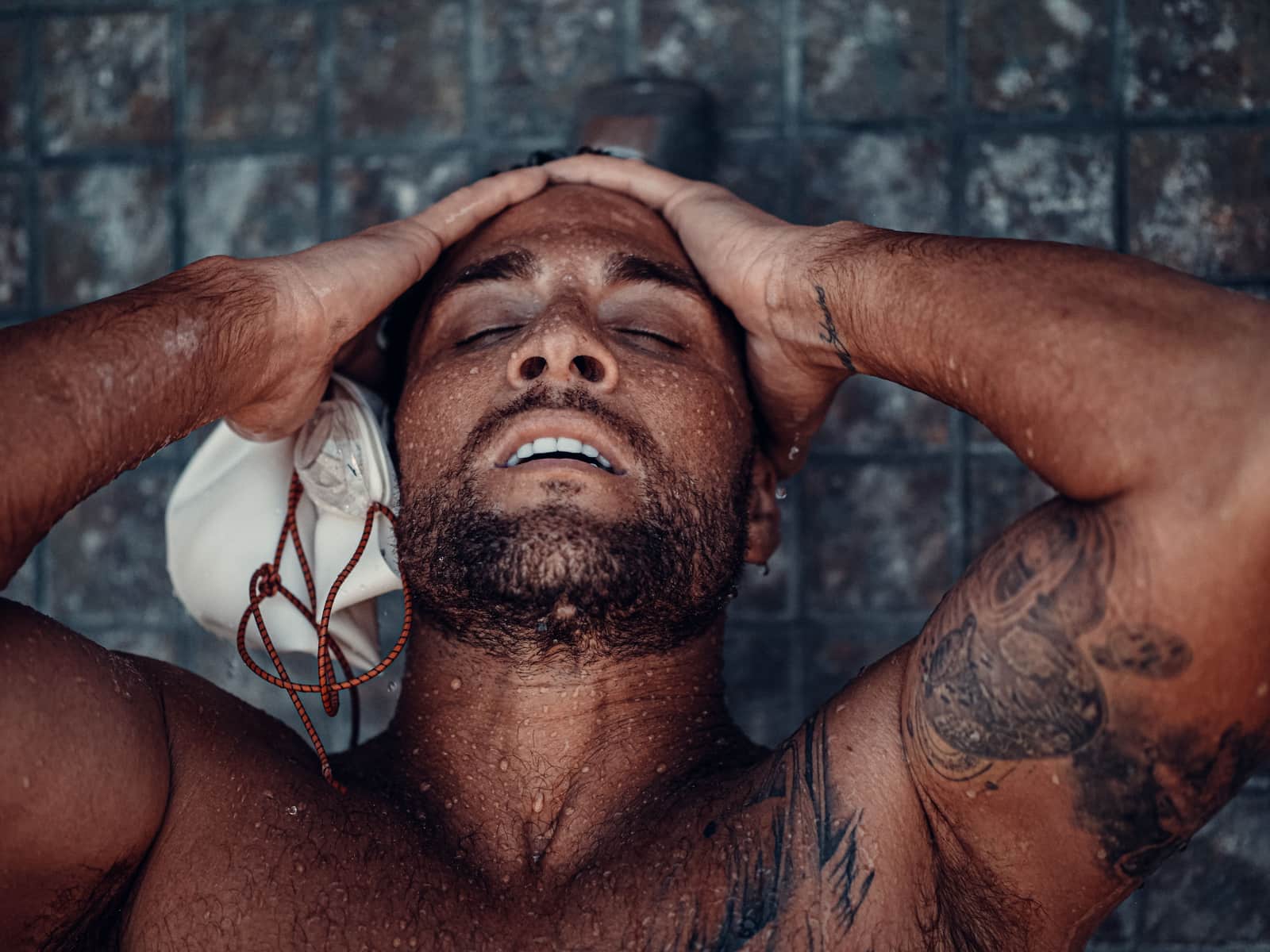
Cold plunge vs cold shower
A shower is free and available now. Here is exactly what it does and does not replicate, and when it is genuinely enough.
By Scooter M. · Published · Last updated
How we are paid: the buy links on this page are affiliate links. If you buy through one, we earn a commission from the retailer at no extra cost to you. It does not change what we rank or what we tell you to skip - the full FTC disclosure is here.
| # | Product | Capacity | Best for | Score | Price |
|---|---|---|---|---|---|
| 1 | 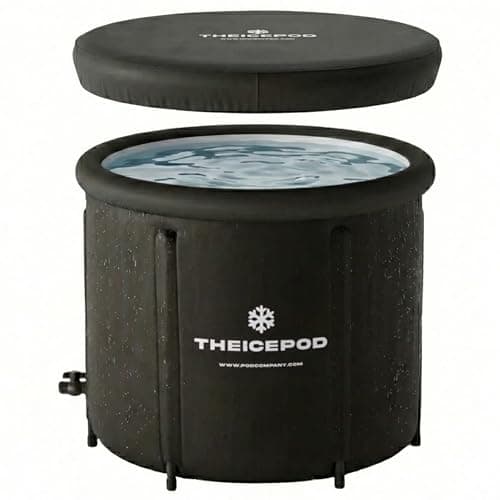 The Pod Company Standard Ice Bath Tub, 84 Gallon Eighty-four gallons with five-layer insulated walls and a built-in side drain, which is the smallest sensible volume for full immersion and cheap to keep cold as a result. | 84 gal | Smallest full-depth soak | 5.9 | $53.99 - Amazon |
| 2 | 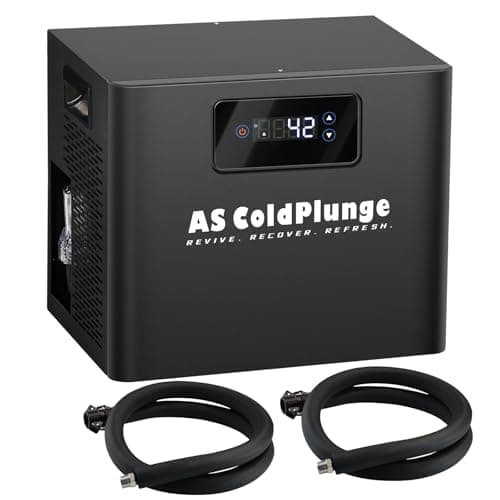 AS ColdPlunge 1/3 HP Cold Plunge Chiller 600 W, a 42 F floor, a reusable metal filter instead of cartridges, and a submersible pump in the box so it works with a bathtub that has no ports. | 79 gal | Best for a bathtub | 7.7 | $399.00 - Amazon |
Three real differences
Surface area
This is the biggest one and it is easy to underrate. In a plunge, every square inch below the waterline is in contact with cold water simultaneously and continuously. In a shower, the stream hits a fraction of your body at any moment and the rest is in air.
The consequence is a much smaller rate of heat loss and a much weaker cold shock response. That is why a cold shower is tolerable within days of starting while a 50 F plunge remains genuinely difficult for weeks.
Temperature you cannot set
Your cold tap is roughly 50 to 60 F in winter in much of the US and can be well into the 70s in summer, depending on where you are and whether your supply runs through hot ground or an unheated basement.
So a “cold shower” in January and one in July are different interventions with the same name. If you are trying to be systematic - to progress, or to aim at the bands in the temperature guide - that variability is the fundamental limitation.
What the research used
The dosing meta-analysis we cite throughout this site examined immersion at specific temperatures for specific durations. The health and wellbeing review pooled trials of cold water immersion. Neither studied showers.
When a shower is genuinely enough
- Working out whether you will keep this up. Two weeks of 30 to 60 seconds cold at the end of your normal shower will tell you more than any amount of reading.
- The alertness effect. The wake-up response is real from a shower and does not need immersion.
- Travel, or no space at all. A shower exists everywhere. A plunge tub does not.
- Building tolerance before your first plunge. Genuinely useful as a ramp.
When it is not
If you want the post-exercise recovery effects the literature describes, those studies immersed people, generally for ten to fifteen minutes at controlled temperatures. A shower does not reproduce that.
And if you want progression - to know that this month is colder or longer than last month - you need a number you control. That is what a chiller buys, and the cheapest route to one is your own bathtub, covered in chillers for a bathtub.
The sensible sequence
- Cold showers for two weeks. Free.
- Bathtub with ice, three times. Nearly free.
- A tub with real ports, if you are still doing it.
- A chiller, once buying ice has become the reason you skip sessions.
Most people who buy equipment first stop at step zero and own a tub they do not use. The beginner guide covers what the first sessions are actually like.
Every pick, in full
Each write-up below shows the score broken into its six components, the specs the listing actually publishes, and the running-cost arithmetic where a wattage exists to compute it from.
#1 - Smallest full-depth soak
The Pod Company Standard Ice Bath Tub, 84 Gallon
Eighty-four gallons with five-layer insulated walls and a built-in side drain, which is the smallest sensible volume for full immersion and cheap to keep cold as a result.
| Small-space fit | 8 / 20 |
|---|---|
| Electrical fit | 20 / 20 |
| Cost to run | 20 / 20 |
| Key-number disclosure | 5 / 15 |
| Spec completeness | 6 / 15 |
| Warranty | 0 / 10 |
| Total | 59 / 100 |
| Rated watts | Not published Not published |
|---|---|
| Water capacity | 84 Seller’s listing, read 2026-10-10 |
| Dimensions | Not published Not published |
| Weight | Not published Not published |
| Cooling floor | Claim, no figure “CHILLER COMPATIBLE (CONVERSION KIT SOLD SEPARATELY) - Cold plunge tub is compatible with water chillers using The Pod Company Conversion Kit” |
| Material | Five-layer insulated walls Seller’s listing, read 2026-10-10 |
| Warranty (months) | Not published Not published |
No electrical load. This draws no power of its own. The running cost of a plunge lives in the chiller, or in the bag of ice.
Volume is the variable nobody thinks about until the first electricity bill or the third bag of ice. Chilling 84 gallons takes roughly a third less energy than chilling 129, and about 60 percent less than 216, for the same temperature drop. If you plunge alone and you are under about six foot two, the extra volume in a bigger tub is water you are paying to keep cold for no benefit.
The side drain with a three-foot hose is the other quiet advantage. Emptying a full tub by tipping it is a two-person job and a wet floor; emptying it through a hose into a drain is not.
The catch is in capitals in the listing itself: chiller compatibility requires a conversion kit sold separately. That is more honest than the listings that imply ports are included, but it is a second purchase, and you should price it before deciding this is the cheap option.
Buy it if
A solo plunger who wants the smallest volume that still covers their shoulders.
Skip it if
You are tall, you plunge with someone else, or you want chiller ports without a second purchase.
#2 - Best for a bathtub
AS ColdPlunge 1/3 HP Cold Plunge Chiller
600 W, a 42 F floor, a reusable metal filter instead of cartridges, and a submersible pump in the box so it works with a bathtub that has no ports.
| Small-space fit | 12 / 20 |
|---|---|
| Electrical fit | 20 / 20 |
| Cost to run | 16 / 20 |
| Key-number disclosure | 12 / 15 |
| Spec completeness | 11 / 15 |
| Warranty | 6 / 10 |
| Total | 77 / 100 |
| Rated watts | 600 Seller’s listing, read 2026-09-07 |
|---|---|
| Water capacity | 79 Seller’s listing, read 2026-09-07 |
| Dimensions | 11.8 x 14.9 x 12.6 in Seller’s listing, read 2026-09-07 |
| Weight | 35 lb Seller’s listing, read 2026-09-07 |
| Cooling floor | 42 Fno cooling rate published Seller’s listing, read 2026-09-07 |
| Material | Not published Not published |
| Warranty (months) | 12 Seller’s listing, read 2026-09-07 |
| Rated draw | 600 W |
|---|---|
| Cost per hour at full draw | 11.0 cents |
| Upper bound, running continuously | $80.29 per month |
A chiller cycles. It draws its rated power while the compressor runs and almost nothing while it does not, and how often it runs depends on ambient temperature, insulation, lid use and setpoint. We do not measure duty cycle, so we publish the two figures that need no assumption and no figure in between. Computed at 18.34 cents per kWh (June 2026). The method.
The submersible pump is what makes this the bathtub answer. A chiller normally needs a tub with inlet and outlet ports; a bathtub has neither. Dropping a pump into the water and running two hoses over the rim is inelegant and it works, and it is the cheapest route to a cold plunge for anyone who cannot give up floor space for a tub at all.
Six hundred watts is eleven cents an hour at full draw, comfortably mid-range here. The 79-gallon rating is a good match for a standard bathtub, which holds somewhere between 40 and 80 gallons at plunge depth.
The reusable metal mesh filter rather than disposable cartridges is a genuine running-cost detail that gets ignored because it is not electricity. Cartridge filters are a recurring purchase; a rinsable metal screen is not, and over a year that difference is larger than the difference in power draw between two chillers.
An availability note, because we said we would keep it current: this listing went to "Currently unavailable" on 2026-09-09 and we routed its buy link to a search rather than to a product nobody could add to a cart. Re-checked on 2026-09-12, it is back in stock with a buy-box offer, so the link points at the listing again.
Buy it if
Anyone plunging in an existing bathtub rather than buying a tub.
Skip it if
Your tub is over 79 gallons.
Questions people actually ask
Is a cold shower as good as a cold plunge?
Not equivalent, for three reasons: a shower wets a fraction of your skin at any moment rather than immersing all of it, the temperature is whatever your cold tap delivers rather than a number you set, and cold water immersion research is conducted with immersion rather than showers. As a way to get some cold exposure with zero equipment, it is genuinely useful.
How cold is a cold shower?
Whatever your cold water supply is, which varies enormously by season and location - roughly 50 to 60 F in winter in much of the US and considerably warmer in summer. You cannot set it, you cannot measure it easily at the tap, and it changes through the year, which is the main practical difference from a chilled plunge.
Is a cold shower enough for recovery?
The published recovery research uses immersion, not showers, so there is no direct evidence that a shower delivers the same effect. For general cold exposure, habit-building and the alertness response, a shower does something real. For the specific post-exercise soreness findings, the studies immersed people.
Should I start with cold showers before buying a plunge tub?
Yes. Thirty to sixty seconds of cold at the end of your normal shower, for two weeks, costs nothing and tells you whether you will keep this up. Most people who buy a plunge tub without doing that use it for a fortnight.
Sources
- Wang H, Wang L, Pan Y. Impact of different doses of cold water immersion (duration and temperature variations) on recovery from acute exercise-induced muscle damage: a network meta-analysis. Frontiers in Physiology, 2025 - Ranked 10-15 min at 11-15 C best for soreness, and 10-15 min at 5-10 C best for biochemical markers and neuromuscular function.
- Cain T, Brinsley J, Bennett H, Nelson M, Maher C, Singh B. Effects of cold-water immersion on health and wellbeing: A systematic review and meta-analysis. PLOS ONE, 29 January 2025 - 11 randomized controlled trials, 3,177 participants. Reports increased inflammation immediately post-immersion, reduced stress at 12 hours, and no significant immunity change.