Small Spaces
Can you put a sauna on an apartment balcony?
Only as something you carry out, use and carry back in. No seller in this category rates a unit for outdoor life, and the word that makes people think otherwise means something else.
By Scooter M. · Published · Last updated
How we are paid: the buy links on this page are affiliate links. If you buy through one, we earn a commission from the retailer at no extra cost to you. It does not change what we rank or what we tell you to skip - the full FTC disclosure is here.
| # | Product | Rated watts | Best for | Score | Price |
|---|---|---|---|---|---|
| 1 | 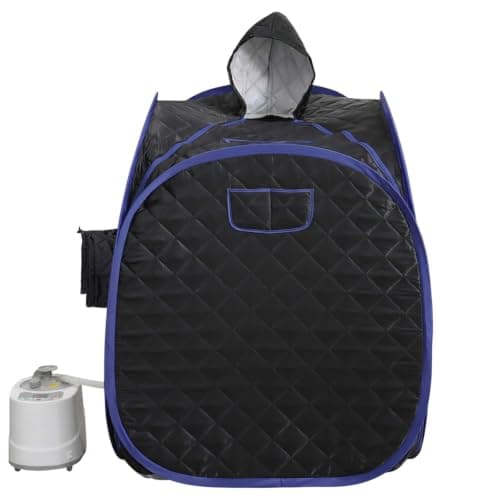 ZONEMEL Portable Steam Sauna, 900 W Publishes watts, maximum temperature, warm-up time, timer range and full dimensions - the most complete spec sheet in the category - and weighs nine pounds. | 900 W | Lightest to move | 6.8 | $72.99 - Amazon |
| 2 | 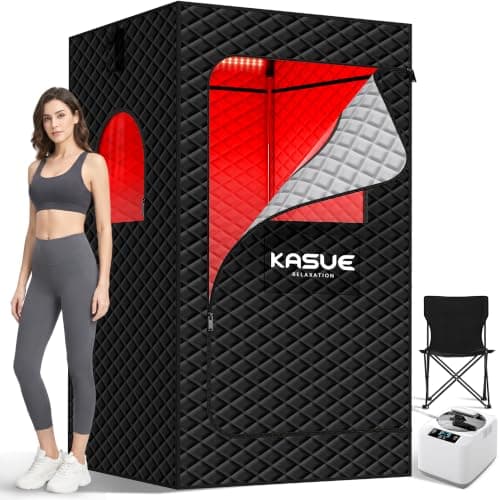 KASUE Infrared Sauna Tent with 3 L Steamer Five-layer insulated fabric, a 99-minute timer and a 30 x 30 in footprint - but no published wattage, which is the number you would want most. | Not published | Longest timer | 2.5 | $259.99 - Amazon |
| 3 | 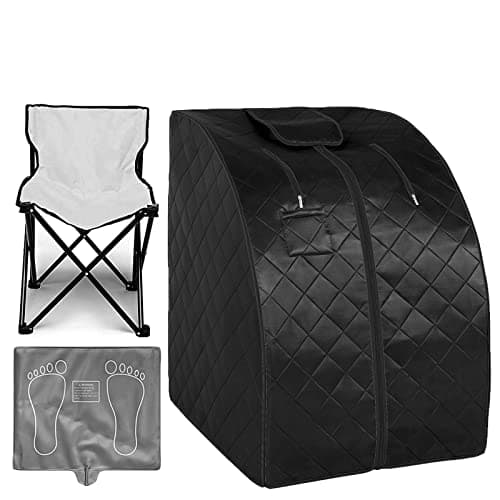 ZONEMEL Portable Infrared Sauna, 1 Person 1,050 W across three carbon panels plus a heated foot pad, with the wattage, the temperature ceiling and the timer all published - unusual for an infrared tent. | 1050 W | Best infrared for a standard outlet | 6.4 | $179.99 - Amazon |
The short answer
That is a narrower answer than most pages on this query will give you, and it is the one the published information supports. We have not left any of these outside for a winter to find out what happens, and we are not going to describe what we think would.
What we checked, and in what order
A balcony changes which specifications matter. Indoors the deciding numbers are moisture, circuit load and floor space, which is what the apartment guide works through. Outdoors three different things come first:
- Whether the seller says anything about outdoor use at all. Every feature bullet and title for all thirteen units, read for indoor, outdoor, weather, rain and waterproof language.
- What the waterproof claims actually cover - the inside of the shell or the outside of it. These are not the same promise and the listings are consistent about which one they are making.
- Rated watts against an outdoor outlet, which is a different and usually worse circuit than the one in your living room.
- Published weight, and the packed size - because a carry-out routine happens twice per session, every session, and that is what decides whether you keep doing it.
What we did not assess: how any of these actually hold temperature in wind, how the fabric ages in direct sun, or how long a seam lasts outdoors. Nobody publishes it and we have not measured it.
What the listings actually say about going outside
The eight silent listings are worth reading carefully rather than optimistically. Silence is not permission. It means the seller has made no claim you could hold them to if the fabric goes brittle after a season on a south-facing balcony, and on a product that plugs into a wall and gets you wet, that is the kind of gap worth noticing.
“Waterproof” here does not mean weatherproof
This is the misreading that sells balcony saunas, so it is worth being exact. Four of these listings use the word waterproof, and every one of them is describing the inside of the shell:
- KASUE: “5-Layer Waterproof Insulated Construction” which “helps reduce heat loss and keeps the inside space warm during use”.
- FniOk: “waterproof canvas, which has the advantages of better heat loss prevention, heat preservation, fast drying and easy cleaning”.
- Homedics: “waterproof interior locks in heat”.
- SOARFLY: “three-layer waterproof cotton fabric”.
Read those as a set and the pattern is unmistakable: waterproofing in this category is about holding steam and sweat in, and about wiping the thing dry afterwards. It is a cleaning and heat-retention spec. A shell that copes with thirty minutes of steam from the inside is making no claim whatsoever about a night of rain from the outside, and nobody here has extended it to one.
The outlet is a harder problem outdoors
A balcony outlet is an outdoor outlet, and under the National Electrical Code’s 2020 edition and later, outdoor outlets at dwellings are required to be GFCI protected - the code reference is in the sources below, and which edition your jurisdiction has adopted varies. A GFCI is a good thing to have between you and a resistive heater on a wet floor. It is also a device whose entire job is cutting power when it detects current going somewhere it should not, which on a damp balcony is a realistic way to end a session early.
Then there is the load. A standard 15 A branch circuit carries about 1,440 W continuously, and balcony outlets are frequently spurs off a circuit that already serves other rooms. Rated draw therefore decides more here than it does indoors:
And do not solve the distance problem with an extension lead. Our electrical page covers why the manufacturers are right about that: a high-draw resistive heater through a thin or long cord loses voltage along the cord and the cord becomes the warmest part of the system. A balcony is exactly the situation that tempts you into one, which is a reason to buy a unit that fits the outlet you already have rather than the biggest one you can find.
Weather is what actually ends a tent
Nobody publishes a material tolerance for any sauna in this category, so what follows is the constraint rather than a prediction. A fabric tent on a frame is a sail: it is tall, light and enclosed, which on an exposed balcony is the wrong combination to leave unattended. Standing water pooling in a folded shell is how mildew starts, and the same listings that tell you to leave both zippers open overnight to dry the inside are describing a drying routine that an outdoor tent never completes.
So the deciding specs are weight and pack-down
Once you accept it is a carry-out routine, the ranking falls out of two numbers: what it weighs and how small it gets. Published weights across the fabric units run from 9.2 lb to 26.9 lb, which is the difference between one hand and two trips.
The specification that would matter most is the one almost nobody gives: the folded size. Across the whole portable sauna category, no seller publishes the packed dimensions of the bundle - a gap we flag in the sauna tent roundup as well, because it is the figure that decides whether the thing goes in a closet or lives in a corner of the room looking like laundry. On a balcony routine it decides whether you carry it through a sliding door in one piece.
The three that suit a carry-out routine, and what is wrong with each
ZONEMEL steam 900, the one to carry. At 9.2 lb it is the lightest complete unit in the category, and at 900 W it is one of only two that run on any 15 A outlet without argument - which on a balcony spur is the spec that matters most. Against it: its published ceiling is 113 F, the lowest of any sauna we read, and it is a steam unit, so every session includes carrying water out and emptying it afterwards. Its 7.5 sq ft footprint is also not the smallest here.
KASUE infrared tent, the one for a cold balcony. Five-layer waterproof insulated fabric is the construction spec most likely to matter when the air around the tent is 40 F rather than 70 F, and it publishes a 99-minute timer and a 6.3 sq ft footprint at 15 lb. Against it, and it is a serious objection on this page specifically: the listing publishes no rated wattage and no maximum temperature. On a page about whether your balcony outlet can carry the thing, an unpublished wattage is the most relevant omission possible - you cannot check it against your circuit and we cannot compute what it costs to run.
ZONEMEL 1-person infrared, the one that leaves nothing to empty. Dry heat means no water carried out and no reservoir to tip over a railing, it has the smallest deployed footprint in the roundup at 6.0 sq ft, and it publishes watts, a 140 F ceiling and a timer. Against it: at 19.8 lb it is more than twice the ZONEMEL steam unit to carry, its 1,050 W crosses the line into wanting the outlet to itself, and its 60-minute timer is the shortest here. Its own listing also calls it an indoor sauna kit, which is the caveat this whole page is about.
One unit worth knowing about that is not a pick: the Smartmak tent at 2.2 lb is by far the lightest thing in the category and the smallest footprint at 5.7 sq ft, but it ships without a steamer, so it is a replacement shell rather than a sauna. If you already own a working generator it is the lightest way to get a tent onto a balcony.
What not to carry onto a balcony
The wooden cabin in our registry is the clearest no on this page, and for three reasons that are all published: it draws 1,800 W and wants a dedicated 20 A circuit, it does not fold and claims close to fourteen square feet permanently, and its listing does not publish an assembled weight at all. Its own title says Indoor. The full read on that cabin makes the case for it in a spare room, which is where it belongs.
Who should drop the balcony idea
If the appeal of a balcony is that the sauna could stay set up out there, the honest answer is that nothing in this category supports it and you should plan around a cupboard instead. If the appeal is that steam indoors worries you, a dry infrared unit solves that without going outside at all - the infrared versus steam comparison sets out what each does to the humidity of a room. And if the balcony is genuinely the only floor you have, buy the lightest low-wattage unit you can and accept that the routine includes bringing it back in every time.
Every pick, in full
Each write-up below shows the score broken into its six components, the specs the listing actually publishes, and the running-cost arithmetic where a wattage exists to compute it from.
#1 - Lightest to move
ZONEMEL Portable Steam Sauna, 900 W
Publishes watts, maximum temperature, warm-up time, timer range and full dimensions - the most complete spec sheet in the category - and weighs nine pounds.
| Small-space fit | 17 / 20 |
|---|---|
| Electrical fit | 20 / 20 |
| Cost to run | 20 / 20 |
| Key-number disclosure | 0 / 15 |
| Spec completeness | 11 / 15 |
| Warranty | 0 / 10 |
| Total | 68 / 100 |
| Rated watts | 900 Seller’s listing, read 2026-09-07 |
|---|---|
| Maximum temperature | 113 F maximum Seller’s listing, read 2026-09-07 |
| Dimensions | 33.5 x 32.3 x 41.7 in Seller’s listing, read 2026-09-07 |
| Weight | 9.2 lb Seller’s listing, read 2026-09-07 |
| Timer | 1-99 minutes, 9 heat levels Seller’s listing, read 2026-09-07 |
| EMF disclosure | Not the relevant number for this category |
| Material | Four layers of thickened pressed cotton on a stainless steel frame Seller’s listing, read 2026-09-07 |
| Warranty (months) | Not published Not published |
| Rated draw | 900 W (7.5 A at 120 V) |
|---|---|
| Energy per 30-minute session | 0.450 kWh |
| Maximum cost per session | 8.3 cents |
| Maximum per month, 4 sessions a week | $1.43 |
| Circuit | Runs on any 15 A outlet |
These are maximums, assuming continuous draw. A resistive heater pulls its rated power only while the element is energized; once it reaches setpoint it cycles, so the real figure is lower and depends on your room. Computed at 18.34 cents per kWh (June 2026). The method, and how to substitute your own rate.
Six of eight checklist items published, including the two that matter most for this site's purposes: 900 watts and a 113 F ceiling. That is 7.5 amps, well inside a standard outlet, and it costs about eight cents for a thirty-minute session at the national average rate.
The 113 F maximum is worth pausing on, because it is much lower than the 140 F figures quoted by infrared units in this roundup and that is not a defect. Steam at 113 F and 100 percent humidity is a harder environment to sit in than dry air at 140 F. Comparing the two numbers directly is the most common mistake buyers make in this category, and it is why our comparison of infrared and steam exists.
At 9.2 pounds it is the lightest full-size unit here by a clear margin, and the listing gives a real folding procedure rather than a claim of portability. If the sauna lives in a closet between sessions, weight is not a spec, it is the thing that decides whether you actually use it.
Buy it if
Someone in a small apartment who has to put the sauna away after every session.
Skip it if
You want dry infrared heat, or you want a higher temperature ceiling.
#2 - Longest timer
KASUE Infrared Sauna Tent with 3 L Steamer
Five-layer insulated fabric, a 99-minute timer and a 30 x 30 in footprint - but no published wattage, which is the number you would want most.
| Small-space fit | 17 / 20 |
|---|---|
| Electrical fit | 0 / 20 |
| Cost to run | 0 / 20 |
| Key-number disclosure | 0 / 15 |
| Spec completeness | 8 / 15 |
| Warranty | 0 / 10 |
| Total | 25 / 100 |
| Rated watts | Not published Not published |
|---|---|
| Maximum temperature | Not published Not published |
| Dimensions | 30 x 30 x 70 in Seller’s listing, read 2026-09-07 |
| Weight | 15 lb Seller’s listing, read 2026-09-07 |
| Timer | 99-minute timer, 9 temperature levels Seller’s listing, read 2026-09-07 |
| EMF disclosure | Not mentioned at all |
| Material | Five-layer waterproof insulated fabric Seller’s listing, read 2026-09-07 |
| Warranty (months) | Not published Not published |
No running cost can be computed. The listing does not publish a rated wattage, so there is no honest way to tell you what a session costs. We will not estimate one. How we compute running costs
Five-layer insulated fabric is a genuine construction difference in a category where three layers is standard, and insulation is what decides whether a tent holds temperature in a cold room or bleeds it out through the walls. In a garage in winter that is the spec that determines whether the sauna works at all.
The 30 by 30 inch footprint is among the smallest here, at about six and a third square feet, and fifteen pounds is light enough to move one-handed.
The wattage is not published, and neither is a maximum temperature, so two of the eight checklist items and both of the computed cost components have nothing to work on. That is what holds the score down rather than anything visible about the product.
Buy it if
Someone in a cold room who needs the insulation more than they need the spec sheet.
Skip it if
You want a running cost. Without a wattage nobody can compute one.
#3 - Best infrared for a standard outlet
ZONEMEL Portable Infrared Sauna, 1 Person
1,050 W across three carbon panels plus a heated foot pad, with the wattage, the temperature ceiling and the timer all published - unusual for an infrared tent.
| Small-space fit | 20 / 20 |
|---|---|
| Electrical fit | 15 / 20 |
| Cost to run | 20 / 20 |
| Key-number disclosure | 0 / 15 |
| Spec completeness | 9 / 15 |
| Warranty | 0 / 10 |
| Total | 64 / 100 |
| Rated watts | 1050 Seller’s listing, read 2026-09-07 |
|---|---|
| Maximum temperature | 140 F maximum Seller’s listing, read 2026-09-07 |
| Dimensions | 27.6 x 31.5 x 37.8 in Seller’s product title, read 2026-09-07 |
| Weight | 19.8 lb Seller’s listing, read 2026-09-07 |
| Timer | Up to 60 minutes Seller’s listing, read 2026-09-07 |
| EMF disclosure | Not mentioned at all |
| Material | Not published Not published |
| Warranty (months) | Not published Not published |
| Rated draw | 1050 W (8.8 A at 120 V) |
|---|---|
| Energy per 30-minute session | 0.525 kWh |
| Maximum cost per session | 9.6 cents |
| Maximum per month, 4 sessions a week | $1.67 |
| Circuit | Wants the outlet to itself |
These are maximums, assuming continuous draw. A resistive heater pulls its rated power only while the element is energized; once it reaches setpoint it cycles, so the real figure is lower and depends on your room. Computed at 18.34 cents per kWh (June 2026). The method, and how to substitute your own rate.
At 1,050 W this draws about 8.8 amps, which a standard 15 A outlet carries without complaint even with something else plugged in. It is the highest-powered infrared unit here that still sits comfortably under the 1,000 W line where we start recommending the outlet be left to itself, and a thirty-minute session works out to roughly ten cents at the national average rate.
The heated foot pad is the detail worth knowing about. Infrared tents heat what the panels face, and in a seated tent that means your back and sides get the heat while your feet sit on ambient floor. A separate foot element is the direct fix and not every unit in this price range includes one.
The footprint is the smallest of any sit-in sauna in this roundup: 27.6 by 31.5 inches deployed, about six square feet, which is roughly the area of a single armchair. That is what makes an infrared tent viable in a one-bedroom apartment at all.
Buy it if
Someone who wants dry infrared heat in the smallest deployed footprint that still fits an adult.
Skip it if
EMF disclosure matters to you. This listing does not mention it.
Questions people actually ask
Can you put a portable sauna on a balcony?
You can set one up on a balcony, use it and take it back inside. What you cannot do on the published information is leave one out there. Across the thirteen portable saunas we read, not one listing publishes an outdoor or weather rating, and five describe the product as indoor in the title or the feature bullets. Treat the balcony as a place you carry the sauna to, not a place it lives.
Are any portable saunas rated for outdoor use?
None of the ones we read. That is a disclosure finding rather than a physics finding - it means no seller in this category has told you their product tolerates rain, frost or sun, so nobody has promised it will. If a seller later publishes an outdoor rating with conditions attached, this page will change and the change will be dated.
Does the waterproof fabric mean a sauna tent can stay outside?
No, and this is the single most common misreading. Every waterproof claim in these listings is about the inside: five-layer waterproof insulated fabric that holds heat in and wipes clean after a sweat, or a waterproof interior that locks in heat. It is sweat and steam resistance from within, not a weather rating from without. A tent that handles 30 minutes of steam is making no claim at all about a week of rain.
What size sauna fits on an apartment balcony?
The smallest deployed footprints in our roundup are about 6.0 and 6.3 square feet, which is roughly the area of an armchair, and the tallest units stand about 70 inches. The harder constraint is usually the door you carry it through and the clear floor you need to stand up inside it, not the balcony slab. Published weights run from 9.2 lb to 26.9 lb for the fabric units.
Sources
- Electrical Safety Foundation International, GFCI requirements in the National Electrical Code (NEC 210.8) - NEC 210.8(F), introduced in the 2020 edition, requires GFCI protection for outdoor outlets at dwellings. Adoption and edition vary by jurisdiction. Retrieved 2026-10-10.