Small Spaces
Can you have a sauna in an apartment?
Yes, and nothing needs installing. The three constraints are your circuit, the moisture, and where it lives between sessions.
By Scooter M. · Published · Last updated
How we are paid: the buy links on this page are affiliate links. If you buy through one, we earn a commission from the retailer at no extra cost to you. It does not change what we rank or what we tell you to skip - the full FTC disclosure is here.
| # | Product | Rated watts | Best for | Score | Price |
|---|---|---|---|---|---|
| 1 | 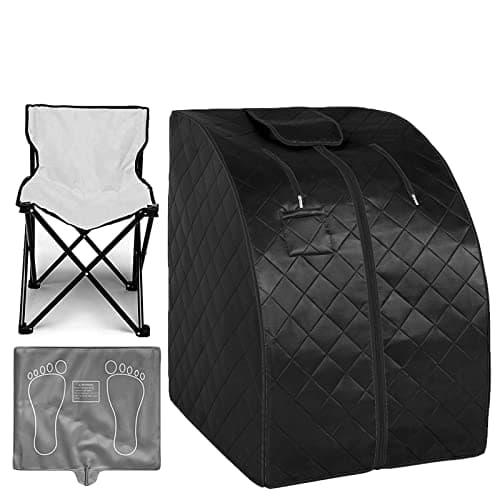 ZONEMEL Portable Infrared Sauna, 1 Person 1,050 W across three carbon panels plus a heated foot pad, with the wattage, the temperature ceiling and the timer all published - unusual for an infrared tent. | 1050 W | Best infrared for a standard outlet | 6.4 | $179.99 - Amazon |
| 2 | 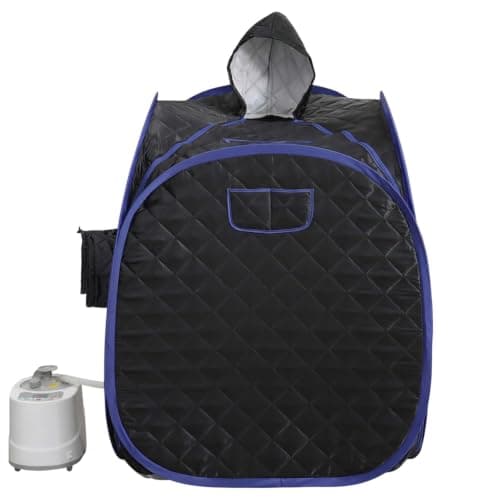 ZONEMEL Portable Steam Sauna, 900 W Publishes watts, maximum temperature, warm-up time, timer range and full dimensions - the most complete spec sheet in the category - and weighs nine pounds. | 900 W | Lightest to move | 6.8 | $72.99 - Amazon |
| 3 | 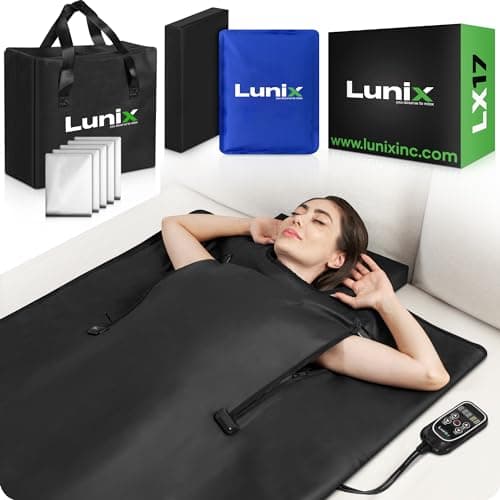 Lunix LX17 Far Infrared Sauna Blanket The most complete spec sheet in the category and the only published lifetime warranty, though the EMF claim is still a phrase rather than a figure. | Not published | Best documented | 4.0 | $299.97 - Amazon |
The direct answer
The three constraints, in order
1. Your circuit. This is the one that bites first and the one nobody checks. A standard US branch circuit is 15 amps, derated to 1440 W for a continuous load. The portable saunas in our roundup publish draws from 800 W to 1,600 W, and the largest of those is over the line on its own before you plug in a lamp.
In an older building where one circuit serves an entire room, an 800 to 1,050 W unit is the safe choice and a 1,600 W one is asking for a trip mid-session. The full treatment is in what your circuit can actually carry.
2. The moisture. A steam session puts two to four liters of water into your room. In a ventilated space that is nothing. In a small flat in winter, particularly one that already gets condensation on the windows, it is a real change to a room you sleep in. Infrared units produce none, and a sauna blanket produces none.
3. Where it lives. The deployed footprints in our roundup run from 5.7 to 12.5 square feet. That is the space it claims while standing. What matters as much is where it goes afterwards, and only one product on this site publishes its folded dimensions.
What fits what
The lease question, briefly
A plug-in appliance is not a modification, and almost no residential lease prohibits one. The things that would raise a legitimate question are water damage and electrical alteration, and a fabric tent creates neither if you ventilate it and do not run it off a daisy-chained extension lead.
What about a real sauna?
A cabin sauna in a rental is not realistic, and it is worth being clear why rather than just discouraging it. A wooden cabin unit like the one in our roundup claims close to fourteen square feet permanently, draws 1,800 W, does not fold, and does not publish an assembled weight at all. It is furniture with a plug. If you own the space it is a fine purchase; if you might move in a year it is not.
The gap between that and a fabric tent is smaller than the price difference suggests. The hottest tent publishes 140 F against the cabin’s 150 F, and both are well below a commercial Finnish sauna. What you are paying for is the cabin, not the heat.
The other half of the setup
If you are building toward contrast therapy rather than just heat, the apartment recovery setup guide covers what a complete hot-and-cold arrangement looks like in a one-bedroom flat, including the bathtub route that costs nothing in floor space. For the heat side specifically, ranked on moisture, circuit load and floor space, the indoor sauna ranking is here.
And if the room you were counting on is a balcony rather than a bedroom, the constraints change enough to need their own page: whether you can put a sauna on an apartment balcony works through what the listings say about outdoor use, which is less than most people assume. For the unit-by-unit decision once the room is settled, how to choose a portable infrared sauna works through type, footprint and circuit in order.
Every pick, in full
Each write-up below shows the score broken into its six components, the specs the listing actually publishes, and the running-cost arithmetic where a wattage exists to compute it from.
#1 - Best infrared for a standard outlet
ZONEMEL Portable Infrared Sauna, 1 Person
1,050 W across three carbon panels plus a heated foot pad, with the wattage, the temperature ceiling and the timer all published - unusual for an infrared tent.
| Small-space fit | 20 / 20 |
|---|---|
| Electrical fit | 15 / 20 |
| Cost to run | 20 / 20 |
| Key-number disclosure | 0 / 15 |
| Spec completeness | 9 / 15 |
| Warranty | 0 / 10 |
| Total | 64 / 100 |
| Rated watts | 1050 Seller’s listing, read 2026-09-07 |
|---|---|
| Maximum temperature | 140 F maximum Seller’s listing, read 2026-09-07 |
| Dimensions | 27.6 x 31.5 x 37.8 in Seller’s product title, read 2026-09-07 |
| Weight | 19.8 lb Seller’s listing, read 2026-09-07 |
| Timer | Up to 60 minutes Seller’s listing, read 2026-09-07 |
| EMF disclosure | Not mentioned at all |
| Material | Not published Not published |
| Warranty (months) | Not published Not published |
| Rated draw | 1050 W (8.8 A at 120 V) |
|---|---|
| Energy per 30-minute session | 0.525 kWh |
| Maximum cost per session | 9.6 cents |
| Maximum per month, 4 sessions a week | $1.67 |
| Circuit | Wants the outlet to itself |
These are maximums, assuming continuous draw. A resistive heater pulls its rated power only while the element is energized; once it reaches setpoint it cycles, so the real figure is lower and depends on your room. Computed at 18.34 cents per kWh (June 2026). The method, and how to substitute your own rate.
At 1,050 W this draws about 8.8 amps, which a standard 15 A outlet carries without complaint even with something else plugged in. It is the highest-powered infrared unit here that still sits comfortably under the 1,000 W line where we start recommending the outlet be left to itself, and a thirty-minute session works out to roughly ten cents at the national average rate.
The heated foot pad is the detail worth knowing about. Infrared tents heat what the panels face, and in a seated tent that means your back and sides get the heat while your feet sit on ambient floor. A separate foot element is the direct fix and not every unit in this price range includes one.
The footprint is the smallest of any sit-in sauna in this roundup: 27.6 by 31.5 inches deployed, about six square feet, which is roughly the area of a single armchair. That is what makes an infrared tent viable in a one-bedroom apartment at all.
Buy it if
Someone who wants dry infrared heat in the smallest deployed footprint that still fits an adult.
Skip it if
EMF disclosure matters to you. This listing does not mention it.
#2 - Lightest to move
ZONEMEL Portable Steam Sauna, 900 W
Publishes watts, maximum temperature, warm-up time, timer range and full dimensions - the most complete spec sheet in the category - and weighs nine pounds.
| Small-space fit | 17 / 20 |
|---|---|
| Electrical fit | 20 / 20 |
| Cost to run | 20 / 20 |
| Key-number disclosure | 0 / 15 |
| Spec completeness | 11 / 15 |
| Warranty | 0 / 10 |
| Total | 68 / 100 |
| Rated watts | 900 Seller’s listing, read 2026-09-07 |
|---|---|
| Maximum temperature | 113 F maximum Seller’s listing, read 2026-09-07 |
| Dimensions | 33.5 x 32.3 x 41.7 in Seller’s listing, read 2026-09-07 |
| Weight | 9.2 lb Seller’s listing, read 2026-09-07 |
| Timer | 1-99 minutes, 9 heat levels Seller’s listing, read 2026-09-07 |
| EMF disclosure | Not the relevant number for this category |
| Material | Four layers of thickened pressed cotton on a stainless steel frame Seller’s listing, read 2026-09-07 |
| Warranty (months) | Not published Not published |
| Rated draw | 900 W (7.5 A at 120 V) |
|---|---|
| Energy per 30-minute session | 0.450 kWh |
| Maximum cost per session | 8.3 cents |
| Maximum per month, 4 sessions a week | $1.43 |
| Circuit | Runs on any 15 A outlet |
These are maximums, assuming continuous draw. A resistive heater pulls its rated power only while the element is energized; once it reaches setpoint it cycles, so the real figure is lower and depends on your room. Computed at 18.34 cents per kWh (June 2026). The method, and how to substitute your own rate.
Six of eight checklist items published, including the two that matter most for this site's purposes: 900 watts and a 113 F ceiling. That is 7.5 amps, well inside a standard outlet, and it costs about eight cents for a thirty-minute session at the national average rate.
The 113 F maximum is worth pausing on, because it is much lower than the 140 F figures quoted by infrared units in this roundup and that is not a defect. Steam at 113 F and 100 percent humidity is a harder environment to sit in than dry air at 140 F. Comparing the two numbers directly is the most common mistake buyers make in this category, and it is why our comparison of infrared and steam exists.
At 9.2 pounds it is the lightest full-size unit here by a clear margin, and the listing gives a real folding procedure rather than a claim of portability. If the sauna lives in a closet between sessions, weight is not a spec, it is the thing that decides whether you actually use it.
Buy it if
Someone in a small apartment who has to put the sauna away after every session.
Skip it if
You want dry infrared heat, or you want a higher temperature ceiling.
#3 - Best documented
Lunix LX17 Far Infrared Sauna Blanket
The most complete spec sheet in the category and the only published lifetime warranty, though the EMF claim is still a phrase rather than a figure.
| Small-space fit | 14 / 20 |
|---|---|
| Electrical fit | 0 / 20 |
| Cost to run | 0 / 20 |
| Key-number disclosure | 5 / 15 |
| Spec completeness | 11 / 15 |
| Warranty | 10 / 10 |
| Total | 40 / 100 |
| Rated watts | Not published Not published |
|---|---|
| Maximum temperature | 77-176 F Seller’s listing, read 2026-09-07 |
| Dimensions | 75 x 37 in folded for use, 75 x 75 in opened flat Seller’s listing, read 2026-09-07 |
| Weight | 21.1 lb Seller’s listing, read 2026-09-07 |
| Timer | Up to 60 minutes Seller’s listing, read 2026-09-07 |
| EMF disclosure | Claim, no figure “Low EMF Far-Infrared Heat, 77-176 F” |
| Material | Five layers: waterproof fabric, cotton, carbon fiber heating, cotton, PU leather Seller’s listing, read 2026-09-07 |
| Warranty (months) | 120 Seller’s listing, read 2026-09-07 |
No running cost can be computed. The listing does not publish a rated wattage, so there is no honest way to tell you what a session costs. We will not estimate one. How we compute running costs
Six of the eight items on our spec checklist are published here, which is the highest count of any blanket we looked at. The dimensions are given twice - folded for use and opened flat - which is genuinely useful, because a blanket you have to lie inside is a different piece of furniture from a blanket you lay out on a bed, and most sellers publish only one of the two numbers.
The warranty is the outlier. A lifetime term, conditional on registering the product, is the longest published commitment in this roundup by a wide margin, and it is the sort of claim a seller does not make lightly on a heating appliance. It is worth reading as a statement about expected failure rate rather than as a promise you will ever need to use.
What is still missing is the number that matters most for cost: rated watts. Nobody in this category publishes it, and Lunix is no exception, so the electrical-fit and cost-to-run components of the score have nothing to work with. The EMF language is the same phrase everyone uses - 'Low EMF' with no measurement, no unit and no distance - which earns partial credit for saying something and no credit for saying anything checkable.
Buy it if
Someone who wants the most published information in the category and values a long warranty term over a brand name.
Skip it if
You want a measured EMF figure. There is no number here, only the phrase.
Questions people actually ask
Can you have a sauna in an apartment?
Yes. A portable sauna tent or a sauna blanket plugs into an ordinary outlet, needs no plumbing and no installation, and packs away afterwards. What you cannot do without a landlord and an electrician is install a built-in cabin sauna, which needs a dedicated circuit and often 240 V.
Do you need a permit for a portable sauna?
For a plug-in fabric tent or a blanket, no - it is an appliance, like a heater. A built-in sauna is a different matter and typically involves electrical work that requires permits and a landlord's consent. Nothing in our roundups requires either.
Will a portable sauna trip a breaker?
It can, if it shares a circuit with other loads. A standard 15 A US branch circuit carries about 1,440 W continuously, and the largest steam generator in our roundup draws 1,600 W on its own. Check what else is on that circuit before you buy the biggest unit you can find.
Does a portable sauna cause damp in an apartment?
A steam model releases two to four liters of water into the room per session, which in a small flat is a real change in humidity. Ventilate afterwards and do not set it against a cold exterior wall. An infrared unit and a sauna blanket produce no moisture at all, which is why they are the safer choice in a damp-prone building.