Cold Plunges
The best cold plunge under $1,000
The bracket is not the hard part. Sizing is: the cheapest big tub on this site cannot be held by any chiller you can buy inside the budget, and most under-$1,000 pairings are undersized.
By Scooter M. · Published · Last updated
How we are paid: the buy links on this page are affiliate links. If you buy through one, we earn a commission from the retailer at no extra cost to you. It does not change what we rank or what we tell you to skip - the full FTC disclosure is here.

| # | Product | Capacity | Best for | Score | Price |
|---|---|---|---|---|---|
| 1 | 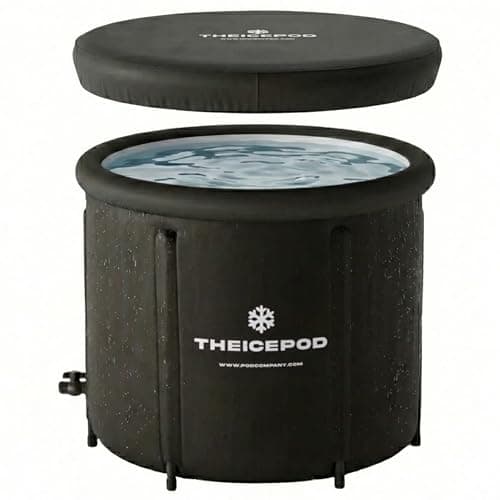 The Pod Company Standard Ice Bath Tub, 84 Gallon Eighty-four gallons with five-layer insulated walls and a built-in side drain, which is the smallest sensible volume for full immersion and the cheapest to keep cold. | 84 gal | Least water to chill | 6.1 | $59.99 - Amazon |
| 2 | 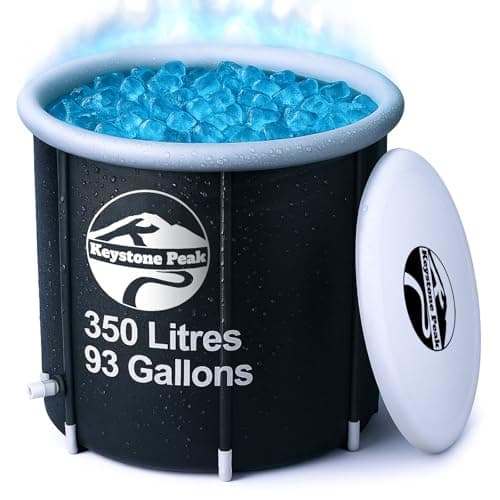 Keystone Peak Portable Cold Plunge Tub Three-layer insulation and a thermal inflatable lid with a five-year assurance behind it, though the capacity is published in liters and the assurance is not called a warranty. | 92 gal | Longest stated cover | 5.6 | $44.97 - Amazon |
| 3 | 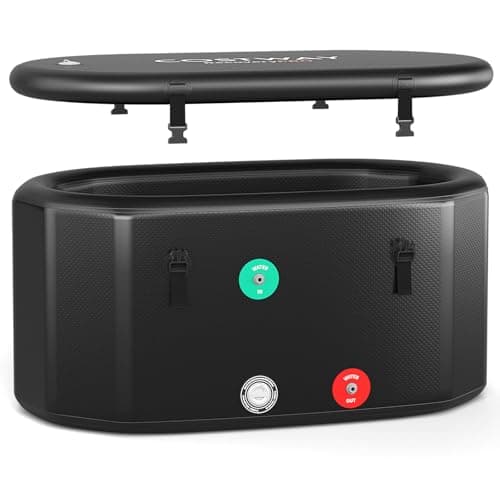 COSTWAY XL 129 Gal Oval Ice Bath Tub Publishes all seven layers of the wall by name, plus the inlet and outlet thread size, and its title and spec-table capacities agree. | 129 gal | Best documented construction | 7.1 | $209.99 - Amazon |
| 4 | 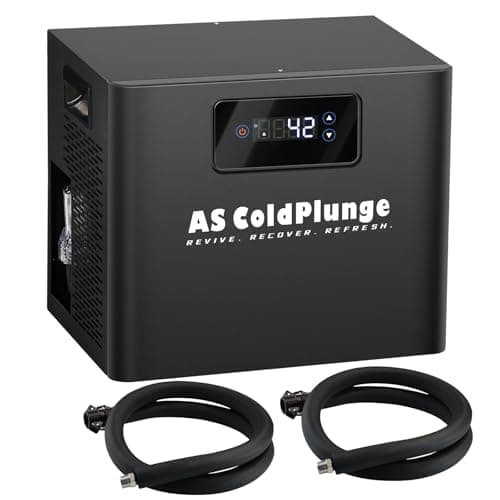 AS ColdPlunge 1/3 HP Cold Plunge Chiller 600 W, a 42 F floor, a reusable metal filter instead of cartridges, and a submersible pump in the box so it works with a bathtub that has no ports. | 79 gal | Best for a bathtub | 7.7 | $399.00 - Amazon |
| 5 | 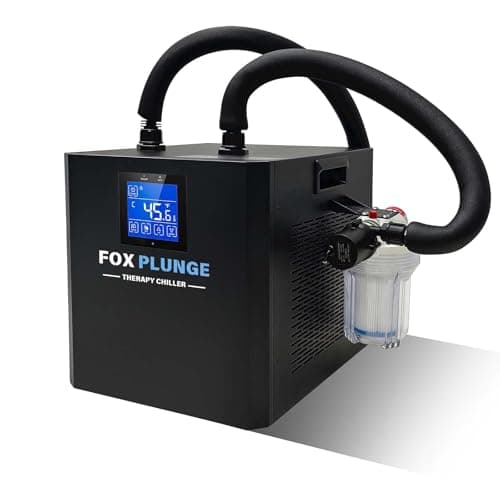 FOXPLUNGE Cold Plunge Chiller, 1/2 HP 1,200 W with a published 41 to 55 F range and a stated 30 to 40 dB noise level - the only chiller here that puts a number on how loud it is. | 105 gal | Published noise figure | 6.4 | $449.95 - Amazon |
How this page treats prices
What this page can do honestly is tell you which combinations work, because the hard constraint under $1,000 is not money. It is sizing.
The constraint nobody mentions
A complete plunge is a tub, a cold source and a lid. Inside this bracket you can buy all three several times over. But the chillers that sit comfortably in the budget publish gallon ratings of roughly 79 to 105 gallons, while the popular large tubs publish 129, 140 and 216 gallons. Pair a big tub with a budget chiller and the unit runs continuously without reaching setpoint - which, as the sizing guide sets out, costs more to run than the correct chiller would have.
The last row is the one that catches people. The cheapest large tub on this site publishes 216 gallons, and it is genuinely inexpensive - but the only chiller on the site that publishes a rating above 200 gallons costs enough to blow the bracket on its own. A big cheap tub is not a cheap cold plunge; it is a cheap tub and an expensive cooling problem.
What you actually give up at this price
- Running cost. Budget chillers tend to publish higher draws. Over three years the difference between a 600 W and a 1,200 W unit is larger than the price difference between most of them - the three-year arithmetic is here.
- Published warranty. Several tubs in this bracket publish no term at all.
- Insulation detail. The better-documented tubs name their wall layers; the cheapest name a thickness or nothing. A poorly insulated tub makes the chiller work harder, which shows up on the bill rather than the receipt.
What a complete setup has to include
Budget pages usually price a tub and stop. A plunge you will actually keep using has five parts, and four of them are cheap:
The reason this matters inside a budget is that the two cheap items - the cover and the treatment - are the ones people leave out, and both protect the expensive ones. An uncovered tub makes the chiller work harder every hour; untreated water means draining and refilling a hundred gallons far more often than you should have to.
The staged route: tub now, chiller later
If the bracket is tight, the sensible sequence is a well-insulated tub with a good cover plus ice, and a chiller added once the habit is established. It spreads the spend and it answers the only question that really matters first, which is whether you will keep doing this in February.
One condition attaches to that plan: buy the tub with real ports. A tub with published inlet and outlet fittings accepts a chiller later; a tub without them means your upgrade path is a drop-in head or a chiller that carries its own submersible pump. Both exist and both work, but you have narrowed the field at the point of upgrade rather than at the point of purchase. The from-parts build guide works through that choice in detail.
The ice route, honestly
If the bracket is tight, the cheapest working plunge is a tub, a lid and bags of ice - no chiller, no circuit, nothing to install. It is genuinely a good way to find out whether you will stick with cold exposure before spending on equipment. The catch is that ice is a recurring purchase and a recurring errand, and the crossover point depends on local ice prices, which vary too much for us to publish a national figure. Chiller versus ice gives you the formula to work out your own.
If you are assembling from parts rather than buying a matched pair, the from-parts build guide covers the vessel, circulation and cover decisions in full.
Where the cheap tubs actually differ
At the bottom of this bracket the tubs look interchangeable in photographs and are not. The differences that survive contact with daily use are all disclosure questions:
- Named wall layers. The best-documented tub in our data publishes all seven layers of its wall by name. The weakest publishes a thickness or nothing at all. A tub that will not describe its insulation is asking you to pay for the difference in electricity.
- Whether the capacity figures agree with themselves. Two listings we read publish one capacity in the title and another in the spec table, which matters when that number is what you size a chiller against.
- Named ports and thread sizes. The difference between a tub you can add a chiller to and one you cannot.
- A stated cover. Some include an insulated lid; some show one in the photographs and do not list it in the box.
None of those costs the seller anything to publish, which is why we treat the absence as information rather than an oversight. The inflatable roundup ranks the category on exactly these points.
What the next few hundred dollars would actually buy
It is worth knowing what is on the other side of the bracket, because for some buyers the honest advice is to wait rather than to compromise. Stepping above $1,000 mostly buys three things, in this order of importance:
- A lower published wattage. The efficient chillers - the ones publishing 190 W and 280 W rather than 600 W and 1,200 W - sit above this bracket, and over three years they cost several hundred dollars less to run. That is the single largest difference between a budget setup and a considered one, and it is invisible at the till.
- A published warranty term. More of the equipment above the bracket publishes one.
- A gallon rating that matches a larger tub, which is what lets you buy the big shell you probably wanted in the first place.
None of that makes an under-$1,000 setup a bad purchase. It makes it a specific one: a smaller tub, a higher running cost, and equipment that publishes less about itself. If you plunge four times a week for years, the running-cost gap will eventually exceed the price gap, and the three-year arithmetic shows exactly when. If you are still finding out whether this is a habit, paying less now and more per hour is a perfectly rational trade.
What we would buy under the bracket
An 84 to 92 gallon insulated tub with a clamped cover, plus a chiller whose published rating is at or above that figure, leaves headroom inside the budget for a filter and the first year of water treatment. It is smaller than the tub the same money could buy, and that is the point: the setup that is correctly sized will hold temperature, and the one that is not will run all day trying.
For value judged across the whole category rather than inside one bracket, see best cold plunge for the money.
Every pick, in full
Each write-up below shows the score broken into its six components, the specs the listing actually publishes, and the running-cost arithmetic where a wattage exists to compute it from.
#1 - Least water to chill
The Pod Company Standard Ice Bath Tub, 84 Gallon
Eighty-four gallons with five-layer insulated walls and a built-in side drain, which is the smallest sensible volume for full immersion and the cheapest to keep cold.
| Small-space fit | 8 / 20 |
|---|---|
| Electrical fit | 20 / 20 |
| Cost to run | 20 / 20 |
| Key-number disclosure | 5 / 15 |
| Spec completeness | 8 / 15 |
| Warranty | 0 / 10 |
| Total | 61 / 100 |
| Rated watts | Not published Not published |
|---|---|
| Water capacity | 84 Seller’s listing, read 2026-09-07 |
| Dimensions | Not published Not published |
| Weight | 7 lb Seller’s listing, read 2026-09-07 |
| Cooling floor | Claim, no figure “CHILLER COMPATIBLE (CONVERSION KIT SOLD SEPARATELY) - Cold plunge tub is compatible with water chillers using The Pod Company Conversion Kit” |
| Material | Five-layer insulated walls Seller’s listing, read 2026-09-07 |
| Warranty (months) | Not published Not published |
No electrical load. This draws no power of its own. The running cost of a plunge lives in the chiller, or in the bag of ice.
Volume is the variable nobody thinks about until the first electricity bill or the third bag of ice. Chilling 84 gallons takes roughly a third less energy than chilling 129, and about 60 percent less than 216, for the same temperature drop. If you plunge alone and you are under about six foot two, the extra volume in a bigger tub is water you are paying to keep cold for no benefit.
The side drain with a three-foot hose is the other quiet advantage. Emptying a full tub by tipping it is a two-person job and a wet floor; emptying it through a hose into a drain is not.
The catch is in capitals in the listing itself: chiller compatibility requires a conversion kit sold separately. That is more honest than the listings that imply ports are included, but it is a second purchase, and you should price it before deciding this is the cheap option.
Buy it if
A solo plunger who wants the smallest volume that still covers their shoulders.
Skip it if
You are tall, you plunge with someone else, or you want chiller ports without a second purchase.
#2 - Longest stated cover
Keystone Peak Portable Cold Plunge Tub
Three-layer insulation and a thermal inflatable lid with a five-year assurance behind it, though the capacity is published in liters and the assurance is not called a warranty.
| Small-space fit | 8 / 20 |
|---|---|
| Electrical fit | 20 / 20 |
| Cost to run | 20 / 20 |
| Key-number disclosure | 0 / 15 |
| Spec completeness | 8 / 15 |
| Warranty | 0 / 10 |
| Total | 56 / 100 |
| Rated watts | Not published Not published |
|---|---|
| Water capacity | 92 Seller’s listing, read 2026-09-07 |
| Dimensions | Packs to 9.84 x 4.72 x 25.2 in Seller’s listing, read 2026-09-07 |
| Weight | 3 kg Seller’s listing, read 2026-09-07 |
| Cooling floor | Not mentioned at all |
| Material | Three-layer insulation, leak-proof build Seller’s listing, read 2026-09-07 |
| Warranty (months) | Not published Not published |
No electrical load. This draws no power of its own. The running cost of a plunge lives in the chiller, or in the bag of ice.
Three hundred and fifty liters is about 92 US gallons, which puts this between the Pod Company Standard and the COSTWAY on volume. We convert it here because the listing does not, and a buyer comparing this against tubs quoted in gallons will otherwise be comparing two different units without noticing.
The five-year assurance is the longest coverage claim on any tub here. It is worth reading the word carefully: an 'assurance' backed by a support team is not the same undertaking as a warranty with terms, and we score warranty only where a term is published as one. Treat it as a signal of confidence rather than a contract.
There are no chiller ports mentioned anywhere in the listing, which for a tub at this price is the honest limitation. This is an ice tub. If you expect to add a chiller within the year, buy something with ports and save yourself the second purchase.
Buy it if
Someone who wants an ice-only tub with the longest stated support and no chiller ambitions.
Skip it if
You plan to add a chiller. There are no ports.
#3 - Best documented construction
COSTWAY XL 129 Gal Oval Ice Bath Tub
Publishes all seven layers of the wall by name, plus the inlet and outlet thread size, and its title and spec-table capacities agree.
| Small-space fit | 17 / 20 |
|---|---|
| Electrical fit | 20 / 20 |
| Cost to run | 20 / 20 |
| Key-number disclosure | 5 / 15 |
| Spec completeness | 9 / 15 |
| Warranty | 0 / 10 |
| Total | 71 / 100 |
| Rated watts | Not published Not published |
|---|---|
| Water capacity | 129 Seller’s listing, read 2026-09-07 |
| Dimensions | 51 x 29.5 x 29 in Seller’s listing, read 2026-09-07 |
| Weight | Not published Not published |
| Cooling floor | Claim, no figure “designed with a 0.5 inch female inlet and 0.5 inch water outlet that can be connected to a water chiller” |
| Material | Seven layers: PVC, mesh fabric, drop-stitch, mesh fabric, EPE foam, PVC, waterproof coating Seller’s listing, read 2026-09-07 |
| Warranty (months) | Not published Not published |
No electrical load. This draws no power of its own. The running cost of a plunge lives in the chiller, or in the bag of ice.
Naming all seven layers in order is the most detailed construction disclosure in this roundup, and the layer that matters is the EPE foam. Foam is insulation; drop-stitch is structure. A tub with drop-stitch and no foam layer is rigid but not especially insulating, and plenty of listings here describe drop-stitch walls in a way that invites you to assume otherwise.
The ports are specified as half-inch female inlet and half-inch outlet, which matches the standard most chillers ship with. Between that and the foam layer this is a tub built for a chiller from the start rather than one that merely tolerates the idea.
At 51 by 29.5 inches it is one of the more compact full-immersion tubs here - about ten and a half square feet - and it folds into a backpack rather than a duffel. If the plunge has to disappear when guests come over, that matters more than the extra twenty gallons a larger tub buys you.
Buy it if
A buyer who wants insulation, not just rigidity, and wants to read the layer stack before deciding.
Skip it if
You are over about six feet two. The published length is 51 inches.
#4 - Best for a bathtub
AS ColdPlunge 1/3 HP Cold Plunge Chiller
600 W, a 42 F floor, a reusable metal filter instead of cartridges, and a submersible pump in the box so it works with a bathtub that has no ports.
| Small-space fit | 12 / 20 |
|---|---|
| Electrical fit | 20 / 20 |
| Cost to run | 16 / 20 |
| Key-number disclosure | 12 / 15 |
| Spec completeness | 11 / 15 |
| Warranty | 6 / 10 |
| Total | 77 / 100 |
| Rated watts | 600 Seller’s listing, read 2026-09-07 |
|---|---|
| Water capacity | 79 Seller’s listing, read 2026-09-07 |
| Dimensions | 11.8 x 14.9 x 12.6 in Seller’s listing, read 2026-09-07 |
| Weight | 35 lb Seller’s listing, read 2026-09-07 |
| Cooling floor | 42 Fno cooling rate published Seller’s listing, read 2026-09-07 |
| Material | Not published Not published |
| Warranty (months) | 12 Seller’s listing, read 2026-09-07 |
| Rated draw | 600 W |
|---|---|
| Cost per hour at full draw | 11.0 cents |
| Upper bound, running continuously | $80.29 per month |
A chiller cycles. It draws its rated power while the compressor runs and almost nothing while it does not, and how often it runs depends on ambient temperature, insulation, lid use and setpoint. We do not measure duty cycle, so we publish the two figures that need no assumption and no figure in between. Computed at 18.34 cents per kWh (June 2026). The method.
The submersible pump is what makes this the bathtub answer. A chiller normally needs a tub with inlet and outlet ports; a bathtub has neither. Dropping a pump into the water and running two hoses over the rim is inelegant and it works, and it is the cheapest route to a cold plunge for anyone who cannot give up floor space for a tub at all.
Six hundred watts is eleven cents an hour at full draw, comfortably mid-range here. The 79-gallon rating is a good match for a standard bathtub, which holds somewhere between 40 and 80 gallons at plunge depth.
The reusable metal mesh filter rather than disposable cartridges is a genuine running-cost detail that gets ignored because it is not electricity. Cartridge filters are a recurring purchase; a rinsable metal screen is not, and over a year that difference is larger than the difference in power draw between two chillers.
An availability note, because we said we would keep it current: this listing went to "Currently unavailable" on 2026-09-09 and we routed its buy link to a search rather than to a product nobody could add to a cart. Re-checked on 2026-09-12, it is back in stock with a buy-box offer, so the link points at the listing again.
Buy it if
Anyone plunging in an existing bathtub rather than buying a tub.
Skip it if
Your tub is over 79 gallons.
#5 - Published noise figure
FOXPLUNGE Cold Plunge Chiller, 1/2 HP
1,200 W with a published 41 to 55 F range and a stated 30 to 40 dB noise level - the only chiller here that puts a number on how loud it is.
| Small-space fit | 12 / 20 |
|---|---|
| Electrical fit | 15 / 20 |
| Cost to run | 8 / 20 |
| Key-number disclosure | 12 / 15 |
| Spec completeness | 11 / 15 |
| Warranty | 6 / 10 |
| Total | 64 / 100 |
| Rated watts | 1200 Seller’s listing, read 2026-09-07 |
|---|---|
| Water capacity | 105 Seller’s listing, read 2026-09-07 |
| Dimensions | 13 x 13 x 14.5 in Seller’s listing, read 2026-09-07 |
| Weight | 53 lb Seller’s listing, read 2026-09-07 |
| Cooling floor | 41-55 Fno cooling rate published Seller’s listing, read 2026-09-07 |
| Material | Not published Not published |
| Warranty (months) | 12 Seller’s listing, read 2026-09-07 |
| Rated draw | 1200 W |
|---|---|
| Cost per hour at full draw | 22.0 cents |
| Upper bound, running continuously | $160.57 per month |
A chiller cycles. It draws its rated power while the compressor runs and almost nothing while it does not, and how often it runs depends on ambient temperature, insulation, lid use and setpoint. We do not measure duty cycle, so we publish the two figures that need no assumption and no figure in between. Computed at 18.34 cents per kWh (June 2026). The method.
Every chiller listing in this category says 'quiet' and exactly one publishes a figure. Thirty to forty decibels is genuinely quiet - roughly a library, well under a household refrigerator - and whether or not the figure is generous, publishing a number you can be held to is a different act from printing an adjective.
This matters more than it sounds in a small space. A chiller sitting next to a balcony door in a one-bedroom apartment runs for hours, often overnight, and a unit that turns out to be as loud as a window air conditioner is one you stop using.
The published range of 41 to 55 F is a range rather than a floor, which is a slightly weaker claim than the single-figure floors elsewhere. At 1,200 W and a 105-gallon rating it is otherwise a conventional half-horse unit: twenty-two cents an hour at full draw, same as the PlungeFit.
Buy it if
Anyone putting a chiller in or next to a room they sleep in.
Skip it if
You want a firm floor temperature rather than a range.
Questions people actually ask
Can you get a good cold plunge under $1,000?
Yes, comfortably, if you buy the tub and the chiller separately and size them to each other. The binding constraint is not the budget - several tubs and several chillers sit well inside it - it is that the affordable chillers publish gallon ratings of about 79 to 105 gallons, so the tub has to be chosen to match rather than the other way round.
What do you give up on a cold plunge under $1,000?
Three things, usually: a published warranty term, a low running cost, and insulation. The chillers in this bracket tend to publish higher wattages than the efficient units above it, which costs more every hour they run, and the cheapest tubs publish the least about their wall construction.
Is an ice-only setup cheaper than a chiller under $1,000?
To start, always - a tub and bags of ice is the cheapest entry there is. Over time it depends entirely on local ice prices and how often you plunge, which is why we publish the break-even formula rather than a national figure you cannot check.
What size tub fits an under-$1,000 chiller?
Around 80 to 105 published gallons, because that is what the chillers in this bracket are rated for. A 129-gallon tub paired with a 105-gallon chiller will run continuously in warm weather and may never reach setpoint, which costs more to run than buying the correct size would have.