Guides
When to cold plunge
Four timing scenarios, and the one where the published evidence actually points in a direction.
By Scooter M. · Published · Last updated
How we are paid: the buy links on this page are affiliate links. If you buy through one, we earn a commission from the retailer at no extra cost to you. It does not change what we rank or what we tell you to skip - the full FTC disclosure is here.

| # | Product | Rated draw | Best for | Score | Price |
|---|---|---|---|---|---|
| 1 | 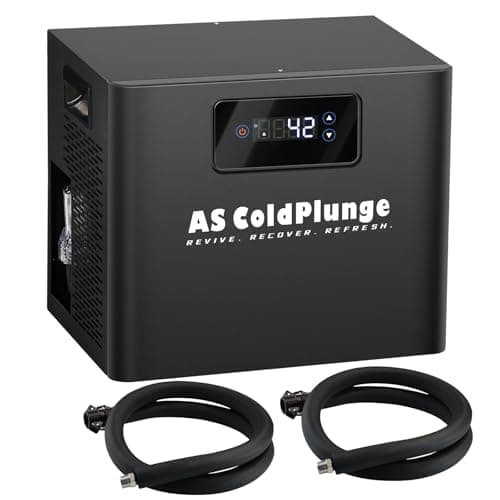 AS ColdPlunge 1/3 HP Cold Plunge Chiller 600 W, a 42 F floor, a reusable metal filter instead of cartridges, and a submersible pump in the box so it works with a bathtub that has no ports. | 600 W | Best for a bathtub | 7.7 | $399.00 - Amazon |
| 2 | 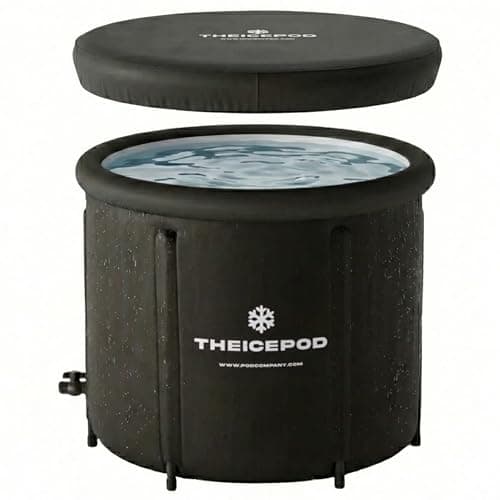 The Pod Company Standard Ice Bath Tub, 84 Gallon Eighty-four gallons with five-layer insulated walls and a built-in side drain, which is the smallest sensible volume for full immersion and cheap to keep cold as a result. | Not published | Smallest full-depth soak | 5.9 | $53.99 - Amazon |
The four scenarios
- Morning: for the alertness effect, which is immediate and can last hours.
- After endurance work: reasonable, and where the soreness evidence is strongest.
- After lifting: leave several hours, or move it to a rest day.
- Before bed: too activating for some people, fine for others. Test it.
The one that actually matters
Most timing advice in this space is preference dressed as protocol. The exception is resistance training, where there is a reasonably well-established finding that cold immersion immediately after lifting appears to blunt some of the adaptive signaling that the training session is meant to produce.
The mechanism proposed is that part of the adaptive response to resistance training runs through inflammatory and metabolic signaling in the hours afterwards, and cooling the tissue interferes with it. Whether that translates to a meaningful long-term difference in outcomes is less settled than the acute finding.
Morning, and the alertness effect
The most reliable and least disputed thing about cold immersion is that it makes you feel awake, and the effect lasts well beyond the session. If that is what you are after, morning is obviously the time.
It is also the easiest slot to keep. The 2025 health and wellbeing review found improvements in reported sleep quality and a reduction in stress at 12 hours post-immersion - the 12-hour timepoint being the only one where the stress finding was significant, which is itself an argument for putting the session in the morning if evening calm is what you want.
After endurance work
This is where the recovery evidence is most directly applicable. The dosing meta-analysis we cite ranked 10 to 15 minutes at 11 to 15 C best for soreness after exercise-induced muscle damage, and 10 to 15 minutes at 5 to 10 C best for biochemical markers and neuromuscular function.
Note the durations again: ten to fifteen minutes, not ninety seconds. If you are plunging for recovery specifically rather than for the feeling, the published protocols are longer than what most people do - the temperature guide has the detail.
Evening and pre-sleep
Genuinely unsettled. Some people find a cold plunge two hours before bed helps them sleep; others find the alertness makes it impossible. There is no clear published answer for evening timing specifically, so anyone giving you a confident rule is extrapolating.
Test it on yourself over two weeks and keep a note. That is not a cop-out, it is the only method available for a question the literature has not answered.
How often
Three to four times a week is the common pattern and it is what every running-cost figure on this site assumes. There is no established optimum frequency for home use in the published work - most trials studied a single immersion, which the 2025 review’s own authors flag as preventing conclusions about long-term effects. If you are plunging most days, the equipment consequences of that frequency are in the best cold plunge for daily training use.
If you are combining cold with heat, the ordering and round structure are in the contrast therapy guide.
Every pick, in full
Each write-up below shows the score broken into its six components, the specs the listing actually publishes, and the running-cost arithmetic where a wattage exists to compute it from.
#1 - Best for a bathtub
AS ColdPlunge 1/3 HP Cold Plunge Chiller
600 W, a 42 F floor, a reusable metal filter instead of cartridges, and a submersible pump in the box so it works with a bathtub that has no ports.
| Small-space fit | 12 / 20 |
|---|---|
| Electrical fit | 20 / 20 |
| Cost to run | 16 / 20 |
| Key-number disclosure | 12 / 15 |
| Spec completeness | 11 / 15 |
| Warranty | 6 / 10 |
| Total | 77 / 100 |
| Rated watts | 600 Seller’s listing, read 2026-09-07 |
|---|---|
| Water capacity | 79 Seller’s listing, read 2026-09-07 |
| Dimensions | 11.8 x 14.9 x 12.6 in Seller’s listing, read 2026-09-07 |
| Weight | 35 lb Seller’s listing, read 2026-09-07 |
| Cooling floor | 42 Fno cooling rate published Seller’s listing, read 2026-09-07 |
| Material | Not published Not published |
| Warranty (months) | 12 Seller’s listing, read 2026-09-07 |
| Rated draw | 600 W |
|---|---|
| Cost per hour at full draw | 11.0 cents |
| Upper bound, running continuously | $80.29 per month |
A chiller cycles. It draws its rated power while the compressor runs and almost nothing while it does not, and how often it runs depends on ambient temperature, insulation, lid use and setpoint. We do not measure duty cycle, so we publish the two figures that need no assumption and no figure in between. Computed at 18.34 cents per kWh (June 2026). The method.
The submersible pump is what makes this the bathtub answer. A chiller normally needs a tub with inlet and outlet ports; a bathtub has neither. Dropping a pump into the water and running two hoses over the rim is inelegant and it works, and it is the cheapest route to a cold plunge for anyone who cannot give up floor space for a tub at all.
Six hundred watts is eleven cents an hour at full draw, comfortably mid-range here. The 79-gallon rating is a good match for a standard bathtub, which holds somewhere between 40 and 80 gallons at plunge depth.
The reusable metal mesh filter rather than disposable cartridges is a genuine running-cost detail that gets ignored because it is not electricity. Cartridge filters are a recurring purchase; a rinsable metal screen is not, and over a year that difference is larger than the difference in power draw between two chillers.
An availability note, because we said we would keep it current: this listing went to "Currently unavailable" on 2026-09-09 and we routed its buy link to a search rather than to a product nobody could add to a cart. Re-checked on 2026-09-12, it is back in stock with a buy-box offer, so the link points at the listing again.
Buy it if
Anyone plunging in an existing bathtub rather than buying a tub.
Skip it if
Your tub is over 79 gallons.
#2 - Smallest full-depth soak
The Pod Company Standard Ice Bath Tub, 84 Gallon
Eighty-four gallons with five-layer insulated walls and a built-in side drain, which is the smallest sensible volume for full immersion and cheap to keep cold as a result.
| Small-space fit | 8 / 20 |
|---|---|
| Electrical fit | 20 / 20 |
| Cost to run | 20 / 20 |
| Key-number disclosure | 5 / 15 |
| Spec completeness | 6 / 15 |
| Warranty | 0 / 10 |
| Total | 59 / 100 |
| Rated watts | Not published Not published |
|---|---|
| Water capacity | 84 Seller’s listing, read 2026-10-10 |
| Dimensions | Not published Not published |
| Weight | Not published Not published |
| Cooling floor | Claim, no figure “CHILLER COMPATIBLE (CONVERSION KIT SOLD SEPARATELY) - Cold plunge tub is compatible with water chillers using The Pod Company Conversion Kit” |
| Material | Five-layer insulated walls Seller’s listing, read 2026-10-10 |
| Warranty (months) | Not published Not published |
No electrical load. This draws no power of its own. The running cost of a plunge lives in the chiller, or in the bag of ice.
Volume is the variable nobody thinks about until the first electricity bill or the third bag of ice. Chilling 84 gallons takes roughly a third less energy than chilling 129, and about 60 percent less than 216, for the same temperature drop. If you plunge alone and you are under about six foot two, the extra volume in a bigger tub is water you are paying to keep cold for no benefit.
The side drain with a three-foot hose is the other quiet advantage. Emptying a full tub by tipping it is a two-person job and a wet floor; emptying it through a hose into a drain is not.
The catch is in capitals in the listing itself: chiller compatibility requires a conversion kit sold separately. That is more honest than the listings that imply ports are included, but it is a second purchase, and you should price it before deciding this is the cheap option.
Buy it if
A solo plunger who wants the smallest volume that still covers their shoulders.
Skip it if
You are tall, you plunge with someone else, or you want chiller ports without a second purchase.
Questions people actually ask
When is the best time to cold plunge?
Morning if you want the alertness effect, and any time at least several hours away from resistance training if you are training for strength or size. The one timing question with real evidence behind it is that cold immersion immediately after resistance training appears to blunt some of the adaptive response to that training.
Should you cold plunge before or after a workout?
After, if the goal is reducing soreness. Not immediately after resistance training, if the goal is strength or hypertrophy - leave several hours, or plunge on rest days. Before a workout is generally unhelpful, since being cold does not prepare muscles for load.
Can you cold plunge at night?
You can, and many people find it too activating close to bedtime because the alertness effect can last for hours. Others report it helps them sleep. There is no clear published answer for evening timing specifically, so this is one to test on yourself rather than take a rule on.
Does cold plunging after lifting ruin gains?
Ruin is too strong, but the concern is real and reasonably well established: cold immersion immediately after resistance training appears to attenuate some of the signaling that drives adaptation. The practical response is not to give up plunging, it is to separate it from your lifting sessions by several hours or move it to rest days.
Sources
- Wang H, Wang L, Pan Y. Impact of different doses of cold water immersion (duration and temperature variations) on recovery from acute exercise-induced muscle damage: a network meta-analysis. Frontiers in Physiology, 2025 - Ranked 10-15 min at 11-15 C best for soreness, and 10-15 min at 5-10 C best for biochemical markers and neuromuscular function.
- Cain T, Brinsley J, Bennett H, Nelson M, Maher C, Singh B. Effects of cold-water immersion on health and wellbeing: A systematic review and meta-analysis. PLOS ONE, 29 January 2025 - 11 randomized controlled trials, 3,177 participants. Reports increased inflammation immediately post-immersion, reduced stress at 12 hours, and no significant immunity change.