Cold Plunges
The best cold plunge for daily training use
Five listings here are titled "for athletes" and the phrase predicts nothing about the spec sheet. What high-frequency use really demands is depth, a repeatable temperature and water you are not draining every week.
By Scooter M. · Published · Last updated
How we are paid: the buy links on this page are affiliate links. If you buy through one, we earn a commission from the retailer at no extra cost to you. It does not change what we rank or what we tell you to skip - the full FTC disclosure is here.

| # | Product | Capacity | Best for | Score | Price |
|---|---|---|---|---|---|
| 1 | 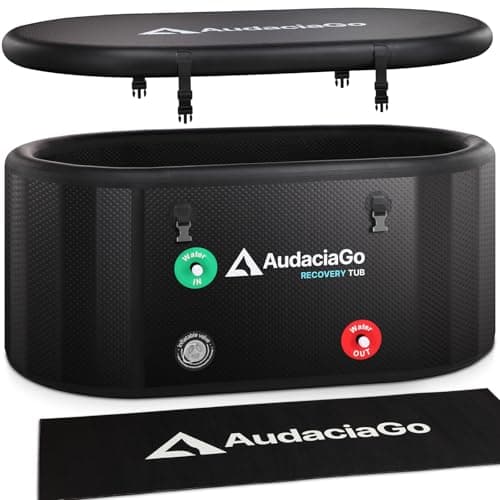 AudaciaGo XXL Ice Bath Tub, Chiller-Compatible A full 59 in oval with an insulated clamped lid - and a listing that publishes 216 gallons in the title and 140 gallons in the spec table. | 140 gal | Tallest fit | 7.0 | $345.95 - Amazon |
| 2 | 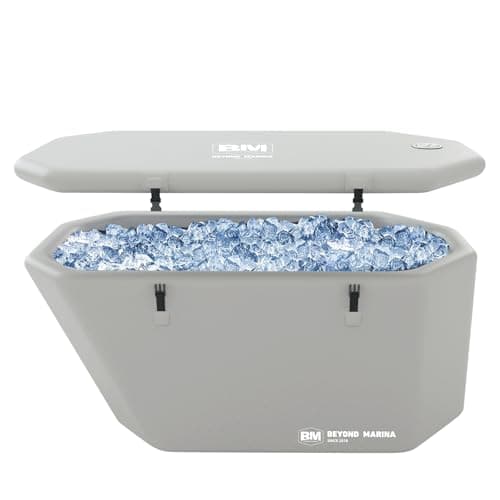 BEYOND MARINA Slanted-Edge Inflatable Cold Plunge Tub, 155 Gallon One of only three tubs here that names a port thread standard, and the only one that specifies NPT rather than G1/2 - plus a published user height and weight limit, in a 61 in shell you can put your legs out in. | 155 gal | Named port thread size | 6.8 | $399.99 - Amazon |
| 3 | 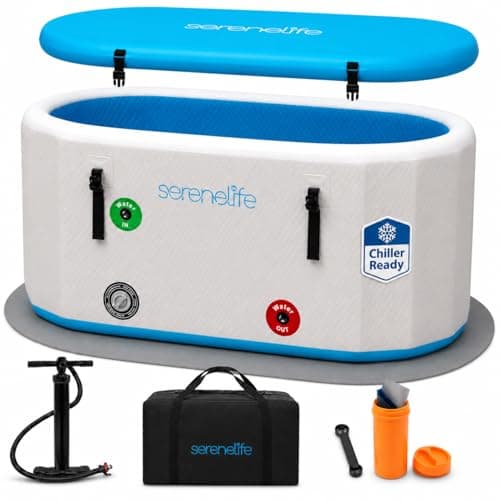 SereneLife XXL 216 Gallon Cold Plunge Tub The only tub here that publishes an interior dimension as well as an exterior one, with the port standard named three ways and a 3.15 in clamp-on insulated lid - and two external dimension sets on the same listing that do not agree. | 216 gal | Published interior size | 6.8 | $339.99 - Amazon |
| 4 | 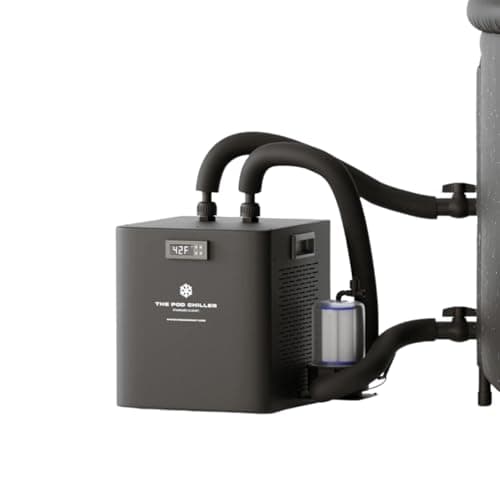 The Pod Company Standard Water Chiller, 1/3 HP 280 watts, a published 41 F floor and a 20-micron filter. It is less than half the draw of every other chiller here, and the listing volunteers the comparison. | Not published | Cheapest to run | 7.2 | $569.00 - Amazon |
| 5 | 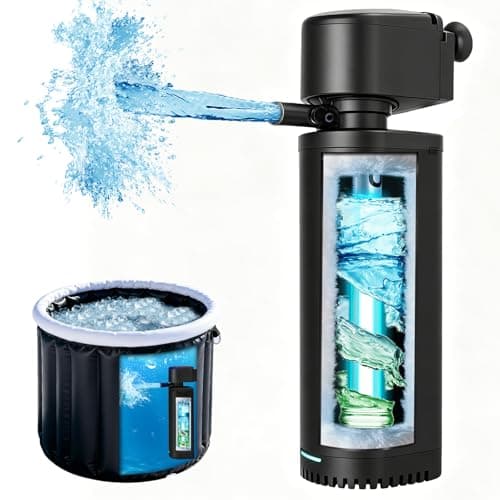 TARARIUM 500 GPH Cold Plunge Filter with UV Sanitation A 500 GPH submersible pump and filter with a UV stage, rated for tubs from 100 to 1,000 gallons, for anyone running ice rather than a chiller. | 1000 gal | Filtration without a chiller | 1.0 | $58.99 - Amazon |
The short version
The phrase on the box that means nothing
Start here, because it is the first thing you will see while shopping. Five of the tubs we track use “for athletes” in the title or the opening feature bullet. Across those five, the number of items they publish from our eight-item checklist runs from 3 to 6. Across the tubs that never use the phrase, it runs from 3 to 6.
The phrase predicts nothing. It is a search term that sells to a self-image, and it appears on a $45 inflatable and a $1,100 rotomolded tub alike. What does vary between these products, and what this page ranks on, is four things daily use actually exposes.
How we judged these, before any ranking
- Immersion depth. Published wall height, because shoulders under the water is the difference between a full-body plunge and a cold footbath.
- A temperature you can repeat. Ports named on the listing and a volume inside a published chiller rating, so the setpoint is a setting rather than a guess.
- Turnover. Whether the water can be filtered and treated rather than drained, because daily use fouls water fast.
- The lid. A clamped insulated lid, which does more for holding temperature between daily sessions than wall thickness does.
Nothing in that list is about recovery physiology, and nothing on this page claims cold water does anything to your body. What the research actually found - including the inflammation result that contradicts the usual claim - is in cold plunge benefits, and the timing question is in when to cold plunge.
Depth before length
The useful pattern here is that the longest tub is the shallowest. BEYOND MARINA gives you 61 inches to put your legs out in and publishes the lowest wall of the group at 24.8 inches. the AudaciaGo is two inches shorter and nearly five inches deeper, and the COSTWAY is ten inches shorter at nearly the same depth. If you are tall you want both, and the published limits are collected here; if you are average height and plunging for full-body immersion, take the depth.
Daily use is what makes a chiller worth it
Not the money - the repeatability. With ice, your temperature is a function of your tap temperature, your bag count and how long the lid was off. With a chiller it is a number you set. If you are following any kind of protocol, the temperature has to be the controlled variable rather than the random one, which is the argument our temperature page makes with the one published study that ranked temperature and duration combinations directly.
The running cost at daily use is small and computable. The cheapest unit we track publishes 280 W, which is 5.1 cents an hour at full draw and about $9.37 a month running six hours a day at the current US residential rate; the dearest at 1,200 W is 22.0 cents an hour. The whole table is here, and the ice break-even is here - at three or more sessions a week, the chiller usually wins inside a year.
Turnover: the problem nobody budgets for
A tub used once a week and drained is a different object from a tub used six times a week and kept. Daily use puts body oils, sweat and skin cells into standing water at a temperature that slows bacterial growth without stopping it, and the failure mode is cloudy water, then a smell, then draining a hundred gallons and losing a week.
Two pieces of equipment solve it, and only one of them comes free. Every chiller we track includes some filtration - what differs is whether you rinse a metal screen or buy cartridges, which over three years is a bigger difference than the electricity. An ice-only setup has the same fouling and none of the hardware, which is why a standalone 500 GPH filter with a UV stage and a dosed weekly treatment belong in the budget. The routine, in order of what matters.
The lid, which is the cheapest upgrade in the category
Most of the heat coming back into a plunge arrives through the open water surface rather than through the walls. For a daily user that single fact decides whether tomorrow is a top-up or a fresh start - with a clamped insulated lid, a chiller cycles less and an ice setup needs fewer bags on day two.
Three tubs here publish an insulated or thermal lid rather than a cover: the AudaciaGo, the BEYOND MARINA and the Keystone Peak. A lid that rests on the rim is not the same product as one that clamps, and the listings that distinguish the two are the ones worth paying for.
Two people, if the household trains together
Sharing a tub does not halve anything. You chill the whole volume whether one person or two uses it, and the only published two-person claims in this category are a 51.6-inch oval designed for two at opposite ends and a 129-gallon tub stating a two-person seating capacity. The two-person comparison works through what the listings actually publish, including the figure none of them gives you.
What we cannot tell you
How any of these hold up over a year of daily use. No seller publishes a service life, a cycle count or a warranty term on any tub in this group, we have not owned them, and we are not going to invent a durability verdict. What we can tell you is which ones publish a wall height, a user limit, a port thread and a lid type - and that the ones selling hardest to athletes are not the ones publishing most.
What we would buy for daily use
- AudaciaGo XXL - the pick. Deep at a published 29.5 inches, insulated clamped lid, ports, and a table capacity of 140 gallons that four chillers publish a rating for. Honest downside: the listing says 216 gallons in the title and 140 in the spec table, so you cannot be certain which volume you are sizing a chiller to.
- BEYOND MARINA 155 - buy it if fit is your binding constraint. It is the only tub here publishing both a height limit (6 ft 7 in) and a weight limit (300 lb), and it names its port thread as 1/2 in NPT. Honest downside: the shallowest wall of the group at 24.8 inches, so you get length at the cost of depth.
- SereneLife XXL 216 - the only tub here that publishes an interior dimension, so you can check your seated length against 51.1 inches rather than guessing from the outside, plus a 3.15 in clamp-on insulated lid. Honest downside: its wall is the second shallowest in this group at 26.3 inches, its two published external dimension sets disagree, and 216 gallons is beyond every published chiller rating except one that publishes no wattage.
- The Pod Company 1/3 HP chiller - 280 W, the cheapest to run on this site and the least heat added to the room it stands in. Honest downside: it publishes no gallon rating, so matching it to a tub is horsepower judgment rather than arithmetic.
- The 500 GPH filter with a UV stage - only if you are running ice. If you buy a chiller, you already have filtration and this is a duplicate purchase. Honest downside: no wattage published, so we cannot cost it, and the filter cotton is a recurring purchase every couple of weeks.
Every pick, in full
Each write-up below shows the score broken into its six components, the specs the listing actually publishes, and the running-cost arithmetic where a wattage exists to compute it from.
#1 - Tallest fit
AudaciaGo XXL Ice Bath Tub, Chiller-Compatible
A full 59 in oval with an insulated clamped lid - and a listing that publishes 216 gallons in the title and 140 gallons in the spec table.
| Small-space fit | 14 / 20 |
|---|---|
| Electrical fit | 20 / 20 |
| Cost to run | 20 / 20 |
| Key-number disclosure | 5 / 15 |
| Spec completeness | 11 / 15 |
| Warranty | 0 / 10 |
| Total | 70 / 100 |
| Rated watts | Not published Not published |
|---|---|
| Water capacity | 140 Seller’s listing, read 2026-09-07 |
| Dimensions | 59.04 x 31.5 x 29.52 in Seller’s listing, read 2026-09-07 |
| Weight | 35 lb Seller’s listing, read 2026-09-07 |
| Cooling floor | Claim, no figure “you can easily connect to a water chiller through inlet and outlet ports (chiller not included)” |
| Material | Reinforced fiberglass and PVC with tear-resistant polyester outer Seller’s listing, read 2026-09-07 |
| Warranty (months) | Not published Not published |
No electrical load. This draws no power of its own. The running cost of a plunge lives in the chiller, or in the bag of ice.
Start with the contradiction, because it changes how you should read everything else on the listing. The title says 216 gallons. The spec table on the same page says 140 gallons. Those are not roundings of each other. We report both because both are published, and we are not going to pick the flattering one on the seller's behalf.
It matters practically, not just as a point of principle: capacity is what sizes your chiller. A 1/3 HP unit rated for 79 gallons is a reasonable match for 140 and badly undersized for 216, and buying the wrong one is a few hundred dollars you do not get back. If you buy this tub, fill it once with a measured hose and find out.
Setting that aside, the physical specification is strong - a 59 inch oval, the same external size as the SereneLife, with a clamped insulated lid and a fiberglass-reinforced wall. The lid clamps rather than resting, which is the difference between a cover that keeps cold in and one that keeps leaves out.
Buy it if
A taller plunger who wants a clamped insulated lid and is willing to measure the fill themselves.
Skip it if
You want to size a chiller from the listing. Two published capacities cannot both be right.
#2 - Named port thread size
BEYOND MARINA Slanted-Edge Inflatable Cold Plunge Tub, 155 Gallon
One of only three tubs here that names a port thread standard, and the only one that specifies NPT rather than G1/2 - plus a published user height and weight limit, in a 61 in shell you can put your legs out in.
| Small-space fit | 14 / 20 |
|---|---|
| Electrical fit | 20 / 20 |
| Cost to run | 20 / 20 |
| Key-number disclosure | 5 / 15 |
| Spec completeness | 9 / 15 |
| Warranty | 0 / 10 |
| Total | 68 / 100 |
| Rated watts | Not published Not published |
|---|---|
| Water capacity | 155 Seller’s listing, read 2026-10-04 |
| Dimensions | 61 x 31.5 x 24.8 in Seller’s listing, read 2026-10-04 |
| Weight | Not published Not published |
| Cooling floor | Claim, no figure “Features 1/2 in NPT ports, The BM proprietary anti-rotation design for secure installation and removal, ensuring reliable connection with water chillers, ports tested and optimized to eliminate common leakage issues” |
| Material | Military-grade double-layer drop-stitch, puncture-, leak- and UV-resistant Seller’s listing, read 2026-10-04 |
| Warranty (months) | Not published Not published |
No electrical load. This draws no power of its own. The running cost of a plunge lives in the chiller, or in the bag of ice.
The port thread is the detail worth buying this for, and it comes with a catch worth understanding. It publishes 1/2 in NPT. Two other tubs here name a thread as well - one states G1/2, one states 0.5 inch - and NPT and G1/2 are not the same standard: NPT is tapered, G1/2 is parallel, and screwing one into the other gives you a joint that may start weeping under pressure rather than a seal. So the useful thing here is not just that a thread is named, it is that you can check it against your chiller's fittings before you order instead of after. Most of this category says 'chiller compatible' and leaves you to find out.
It is also one of only two tubs here that publishes a user height and a weight limit together: up to 6 ft 7 in and 300 lb. For a category where almost nothing is said about who fits, two numbers on one line is unusually useful, and the slanted-edge shape is the reason the height figure is believable - you put your legs out in front of you instead of folding them.
The honest gap is depth. At 24.8 in this is one of the shallower walls here, where the tub it replaced published 30 in, and depth is what decides whether your shoulders go under without effort. You are trading about five inches of immersion for two feet of length, a named port thread and a UV-resistant shell. No weight and no warranty term are published - five of eight checklist items.
Buy it if
Someone who wants to confirm their chiller's fittings will screw in, and who would rather stretch out than sit deep.
Skip it if
Shoulder-deep immersion is the point. At 24.8 in there are deeper walls here, and the deepest is nearly 30.
#3 - Published interior size
SereneLife XXL 216 Gallon Cold Plunge Tub
The only tub here that publishes an interior dimension as well as an exterior one, with the port standard named three ways and a 3.15 in clamp-on insulated lid - and two external dimension sets on the same listing that do not agree.
| Small-space fit | 14 / 20 |
|---|---|
| Electrical fit | 20 / 20 |
| Cost to run | 20 / 20 |
| Key-number disclosure | 5 / 15 |
| Spec completeness | 9 / 15 |
| Warranty | 0 / 10 |
| Total | 68 / 100 |
| Rated watts | Not published Not published |
|---|---|
| Water capacity | 216 Seller’s product title, read 2026-10-25 |
| Dimensions | 59 x 32.2 x 26.3 in outer and 51.1 x 26 x 24.4 in inner per the description; 53.15 x 31.5 x 24.02 in in the spec table Seller’s listing, read 2026-10-25 |
| Weight | Not published Not published |
| Cooling floor | Claim, no figure “Inlet and outlet ports work with common 20 mm G1/2 DN15 1/2 in chiller tubes, so you can connect a compatible water chiller system or use ice directly” |
| Material | Double-wall drop-stitch PVC, reinforced sidewalls, dual-layer inner sealing Seller’s listing, read 2026-10-25 |
| Warranty (months) | Not published Not published |
No electrical load. This draws no power of its own. The running cost of a plunge lives in the chiller, or in the bag of ice.
The disclosure that earns this its place is the interior dimension: 51.1 by 26 by 24.4 inches, published alongside the exterior. Almost nothing in this category gives you that, and it is the figure that actually decides whether you fit - the gap between a 59-inch outside and a 51-inch inside is eight inches of wall you cannot sit in. If you are tall, measure your seated length against the inner figure rather than the headline one.
Two more things it publishes that matter more than they look. The port standard is named three ways - 20 mm, G1/2, DN15, half-inch - which is what lets you buy a fitting that seals before the chiller arrives. And the lid is specified as a 3.15 inch clamp-on: both the thickness and the fact that it clamps rather than rests, which is the single cheapest thing that reduces your ice bill, because most heat comes back in through the open water surface.
The gaps are real. The external dimensions appear twice and disagree - 59 by 32.2 by 26.3 inches in the description against 53.15 by 31.5 by 24.02 in the specification table - which is the same pattern we keep finding, and we print both rather than choosing the flattering one. No empty weight, no warranty term and no material temperature tolerance are published; on that last point it is now in company, because no tub on this site publishes a cold rating at all.
Buy it if
Someone buying the largest tub on this site who wants an interior dimension and a named port standard before ordering.
Skip it if
You need the external dimensions to agree with themselves, or a published weight. Neither is available here.
#4 - Cheapest to run
The Pod Company Standard Water Chiller, 1/3 HP
280 watts, a published 41 F floor and a 20-micron filter. It is less than half the draw of every other chiller here, and the listing volunteers the comparison.
| Small-space fit | 12 / 20 |
|---|---|
| Electrical fit | 20 / 20 |
| Cost to run | 20 / 20 |
| Key-number disclosure | 12 / 15 |
| Spec completeness | 8 / 15 |
| Warranty | 0 / 10 |
| Total | 72 / 100 |
| Rated watts | 280 Seller’s listing, read 2026-09-07 |
|---|---|
| Water capacity | Not published Not published |
| Dimensions | 13 x 13 x 21 in Seller’s listing, read 2026-09-07 |
| Weight | 40 lb Seller’s listing, read 2026-09-07 |
| Cooling floor | 41 Fno cooling rate published Seller’s listing, read 2026-09-07 |
| Material | Not published Not published |
| Warranty (months) | Not published Not published |
| Rated draw | 280 W |
|---|---|
| Cost per hour at full draw | 5.1 cents |
| Upper bound, running continuously | $37.47 per month |
A chiller cycles. It draws its rated power while the compressor runs and almost nothing while it does not, and how often it runs depends on ambient temperature, insulation, lid use and setpoint. We do not measure duty cycle, so we publish the two figures that need no assumption and no figure in between. Computed at 18.34 cents per kWh (June 2026). The method.
Two hundred and eighty watts is the number that decides this category. At the current US residential average it costs about five cents an hour at full draw, and even running continuously for a month - which no chiller does - the absolute ceiling is around thirty-eight dollars. The 1,200 W units in this roundup are four times that.
The listing's own comparison is a good one: about the same as a home freezer. That is a useful mental model, because a chiller works the same way and cycles the same way. It draws its rated power while the compressor is running and almost nothing while it is not, and how often it runs depends on your lid discipline, your room temperature and how well your tub is insulated.
The published floor is 41 F, which is warmer than the 37 to 39 F claimed by the bigger units. For most people that is irrelevant - the commonly recommended starting band is 50 to 59 F and experienced plungers usually settle around 45 to 50 F - but if you specifically want to get below 40, this will not do it.
Buy it if
Anyone whose plunge is a daily habit rather than an occasional event, where running cost compounds.
Skip it if
You want water below 41 F. This unit does not claim to go there.
#5 - Filtration without a chiller
TARARIUM 500 GPH Cold Plunge Filter with UV Sanitation
A 500 GPH submersible pump and filter with a UV stage, rated for tubs from 100 to 1,000 gallons, for anyone running ice rather than a chiller.
| Small-space fit | 8 / 20 |
|---|---|
| Electrical fit | 0 / 20 |
| Cost to run | 0 / 20 |
| Key-number disclosure | 0 / 15 |
| Spec completeness | 2 / 15 |
| Warranty | 0 / 10 |
| Total | 10 / 100 |
| Rated watts | Not published Not published |
|---|---|
| Maximum temperature | Not published Not published |
| Dimensions | Not published Not published |
| Weight | Not published Not published |
| Timer | Not published Not published |
| Cooling floor | Not the relevant number for this category |
| Material | Not published Not published |
| Warranty (months) | Not published Not published |
No running cost can be computed. The listing does not publish a rated wattage, so there is no honest way to tell you what a session costs. We will not estimate one. How we compute running costs
Chillers come with filtration built in. Ice does not, which leaves ice-only plungers with the same water quality problem and none of the equipment, and it is why a standalone filter belongs in this category rather than being an afterthought.
Five hundred gallons per hour turns over a 100-gallon tub five times an hour, which is well above what a plunge needs, and the listing describes a UV stage alongside the membrane filter - ultraviolet handles the biological load that a mechanical filter cannot touch. Running it for an hour after each session is enough to keep water clear for weeks.
The listing also recommends replacing the filter cotton every two weeks, which is the recurring cost to budget for, and notes an adjustable air valve for oxygenation. The wattage is not published, so we cannot give you a running cost - but a submersible pump in this class is a small load, tens of watts rather than hundreds, and it runs for an hour rather than continuously.
Buy it if
An ice-only plunger whose water is going cloudy between refills.
Skip it if
Your chiller already includes filtration. Most in this roundup do.
Questions people actually ask
What is the best cold plunge for athletes?
For daily use after training, the AudaciaGo XXL: a 59-inch oval with a published 29.5-inch wall so you sit shoulder-deep, an insulated clamped lid, chiller ports, and a 140-gallon spec-table capacity that sits inside the published rating of four of the chillers we track. Its honest flaw is that the same listing says 216 gallons in the title and 140 in the spec table. If you want published fit limits instead, the BEYOND MARINA states 6 ft 7 in and 300 lb.
Does "ice bath tub for athletes" mean anything on a listing?
No. Five of the tubs we track put that phrase in the title or the opening bullet, and across those five the published spec count runs from 3 to 6 of our eight checklist items - exactly the same range as the tubs that never use the phrase. It is a search term, not a specification. Judge the depth, the ports, the lid and the published limits instead.
What size cold plunge do athletes need?
Deep before long. Length gets your legs in; wall height gets your shoulders under, which is what full-body immersion means in practice. Published wall heights across these tubs run from about 24.8 to 29.9 inches, and the deepest ones are not the longest ones. On volume, stay at or under about 150 gallons if a chiller is in the plan, because that is where the published chiller ratings run out.
Do you need a chiller if you plunge every day?
For a repeatable temperature, effectively yes. Ice gives you a different temperature every session depending on your tap and how many bags you bought, which makes progression guesswork. A chiller holds a setpoint, and at 280 W the cheapest unit we track costs about 5.1 cents an hour at full draw. For daily use it also wins on errands, which is what actually ends ice habits.
How often do you have to change cold plunge water with daily use?
Far less often with filtration than without. A plunge used daily takes body oils, sweat and skin cells into standing water that is cold enough to slow bacteria and not cold enough to stop them. A chiller includes filtration; an ice setup has the same problem and none of the equipment, which is why a standalone filter and a dosed treatment belong in a daily-use budget.
Is cold plunging after training good for recovery?
That is a question about evidence rather than equipment, and we do not make health claims. The systematic reviews are summarized with their own caveats on our cold plunge benefits page, including the finding that cuts against the usual claim, and the timing evidence is on our when-to-cold-plunge page. This page is only about which equipment survives daily use.