Cold Plunges
LIT Method cold plunge: the published specs, and the two that disagree
LIT publishes more than any brand-direct plunge we have covered - including a filled weight almost nobody states. It also publishes an input power and an amperage that cannot both be right at 110 V.
By Scooter M. · Published · Last updated
How we are paid: the buy links on this page are affiliate links. If you buy through one, we earn a commission from the retailer at no extra cost to you. It does not change what we rank or what we tell you to skip - the full FTC disclosure is here.
| # | Product | Capacity | Best for | Score | Price |
|---|---|---|---|---|---|
| 1 | 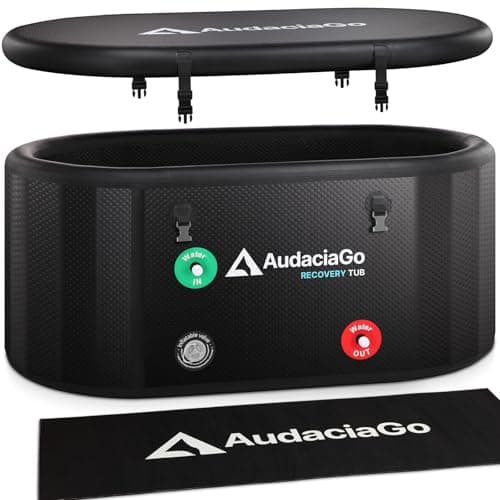 AudaciaGo XXL Ice Bath Tub, Chiller-Compatible A full 59 in oval with an insulated clamped lid - and a listing that publishes 216 gallons in the title and 140 gallons in the spec table. | 140 gal | Tallest fit | 7.0 | $345.95 - Amazon |
| 2 | 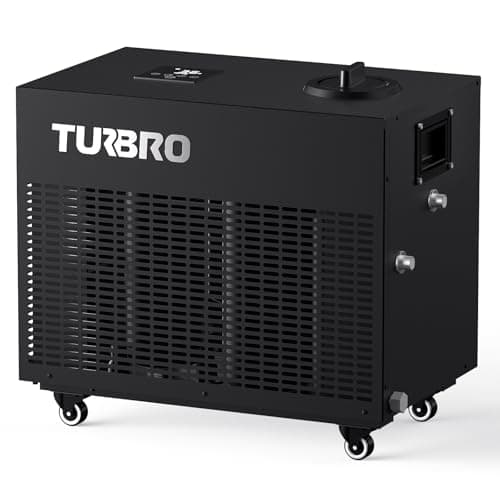 TURBRO FrostCore F85, 1 HP Cold Plunge Chiller The only chiller here that publishes a rated power, a BTU figure, a supply voltage, a temperature range and a cooling time - and it names its filtration in microns. | 132 gal | Most complete spec sheet | 5.9 | $1,234.05 - Amazon |
| 3 | 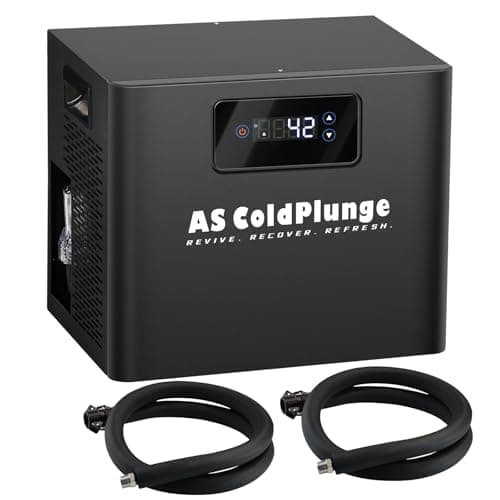 AS ColdPlunge 1/3 HP Cold Plunge Chiller 600 W, a 42 F floor, a reusable metal filter instead of cartridges, and a submersible pump in the box so it works with a bathtub that has no ports. | 79 gal | Best for a bathtub | 7.7 | $399.00 - Amazon |
Read this first
This is the fifth brand-direct plunge we have read closely, and it publishes more than any of the other four. That is worth saying plainly before any criticism: where Fire publishes no wattage and Titan publishes a running cost with no method behind it, LIT publishes an input power, a cooling capacity, a flow rate, a filled weight and an insulation thickness. On a disclosure standard, that is the strongest sheet in the set.
What LIT publishes for the Stealth Luxe
Several of those deserve credit. A cooling capacity in watts is the figure that lets you size a chiller by arithmetic rather than by horsepower badge, and converting it gives about 9,212 BTU/h - directly comparable to the one Amazon chiller that publishes BTU, which we cover in the TURBRO review. A named insulation thickness and a named liner alloy are both unusual. And a published flow rate is almost unheard of in this category.
The two electrical figures that do not reconcile
We are not going to guess which is right, and we are not suggesting either is dishonest - the likeliest explanation is that the two figures describe different things, perhaps a steady-state draw against a peak, or the chiller against the whole unit. But as published they are simply inconsistent, and the buyer cannot tell which number to plan a circuit around.
It matters practically. At 1,150 W the unit draws about 10.5 amps, which fits inside the roughly 12 amp continuous limit of a standard 15 A circuit but leaves little headroom for anything else on it. At 5.5 amps there is plenty of room. Those are different answers to “can I plug this in where I want it?”, and the brand’s claim that no dedicated circuit is required rests on the smaller one. What a branch circuit can actually carry sets out the limits. Ask the brand which figure is the continuous draw before you decide where it goes.
The filled weight, read carefully
“175lb weight empty, 1300lbs with water” is a genuinely useful disclosure, and we have criticized enough sellers for omitting it to say so. It also needs one correction the buyer should make themselves.
Water weighs 8.34 lb per US gallon, so the published 156 gallons is about 1,301 lb of water on its own. Add the 175 lb empty tub and the real loaded figure is closer to 1,475 lb. The published 1,300 lb appears to be the water rather than the total, and on a deck or a balcony that 175 lb difference is exactly the sort of margin that matters. The balcony guide covers the limits that actually apply, and the two-person tubs page works through the same arithmetic for shared tubs.
The sanitation claim, and the figure that would make it checkable
LIT publishes three named stages - UVC LED sterilization, an automated ozone dispenser and a 50-micron filter - and the claim that they “kill 99% of bacteria without harmful chemicals”. Three named stages is more than any chiller listing we have read publishes; the closest is the one Amazon unit that names a 40-micron screen, a 20-micron cartridge and an ozone generator, compared in chillers with filters.
What is missing is the number that would let anyone check the 99 percent. Ultraviolet disinfection is a dose: it depends on the intensity of the lamp and how long the water spends in front of it, which is why the industry figure is expressed in millijoules per square centimeter. LIT publishes the flow rate - 16 to 22 liters a minute, about 300 gallons an hour - which is half of what you would need, and publishes no dose, no contact time, no organism and no test standard. “99% of bacteria” without those is a marketing sentence rather than a specification, and it is the same gap we describe for EMF claims in what EMF numbers mean: a figure with its conditions is checkable, a percentage on its own is not.
None of that means the sanitation does not work. It means the claim cannot be verified from what is published, which on this site is a different thing and is always recorded as such.
What running one costs, taking the published wattage at face value
At 1,150 W and the current US residential average of 18.34 cents per kWh:
That is the cold side only. This unit heats to 107 F as well, and no separate heater wattage is published, so the cost of using it as a hot tub cannot be computed from what is on the page. If you intend to alternate hot and cold, treat the figures above as a floor rather than a total. What a chiller costs over three years puts the cold-side number in context against the Amazon units.
What we deliberately will not tell you
- Whether it is better than the alternatives. We have used none of them.
- Build quality, noise or reliability. Not observable from a website. No decibel figure is published.
- An owner rating. We reproduce ratings nowhere on this site.
- A current price. The lineup runs from an inflatable entry model in the high hundreds to XL tubs in the mid six thousands, with the standalone 1 HP chiller and heater sold separately in the high three thousands. Those are brand-direct prices we cannot refresh daily the way our live layer refreshes Amazon, so check the brand’s site before relying on any of them.
If you want something you can buy through us
Nothing on Amazon reproduces a 316 stainless tub with three sanitation stages and a heater for a fraction of the price, and we are not going to pretend otherwise. What the three picks below do is cover the same jobs separately. The AudaciaGo XXL is the tub: 140 published gallons, chiller-compatible, and the closest thing here to the LIT’s volume. The TURBRO FrostCore is the sanitation-and-disclosure analog - the one Amazon chiller that names an ozone generator alongside 40 and 20 micron stages and publishes a BTU figure you can size with. The AS ColdPlunge is the cheaper route at 600 W, with a submersible pump in the box for a tub with no ports.
Check the chiller’s published gallon rating against the tub before pairing them - undersizing is the expensive mistake. The other brand-direct pages are LifeTrend, which also publishes a wattage, Fire, Titan and Vital.
Every pick, in full
Each write-up below shows the score broken into its six components, the specs the listing actually publishes, and the running-cost arithmetic where a wattage exists to compute it from.
#1 - Tallest fit
AudaciaGo XXL Ice Bath Tub, Chiller-Compatible
A full 59 in oval with an insulated clamped lid - and a listing that publishes 216 gallons in the title and 140 gallons in the spec table.
| Small-space fit | 14 / 20 |
|---|---|
| Electrical fit | 20 / 20 |
| Cost to run | 20 / 20 |
| Key-number disclosure | 5 / 15 |
| Spec completeness | 11 / 15 |
| Warranty | 0 / 10 |
| Total | 70 / 100 |
| Rated watts | Not published Not published |
|---|---|
| Water capacity | 140 Seller’s listing, read 2026-09-07 |
| Dimensions | 59.04 x 31.5 x 29.52 in Seller’s listing, read 2026-09-07 |
| Weight | 35 lb Seller’s listing, read 2026-09-07 |
| Cooling floor | Claim, no figure “you can easily connect to a water chiller through inlet and outlet ports (chiller not included)” |
| Material | Reinforced fiberglass and PVC with tear-resistant polyester outer Seller’s listing, read 2026-09-07 |
| Warranty (months) | Not published Not published |
No electrical load. This draws no power of its own. The running cost of a plunge lives in the chiller, or in the bag of ice.
Start with the contradiction, because it changes how you should read everything else on the listing. The title says 216 gallons. The spec table on the same page says 140 gallons. Those are not roundings of each other. We report both because both are published, and we are not going to pick the flattering one on the seller's behalf.
It matters practically, not just as a point of principle: capacity is what sizes your chiller. A 1/3 HP unit rated for 79 gallons is a reasonable match for 140 and badly undersized for 216, and buying the wrong one is a few hundred dollars you do not get back. If you buy this tub, fill it once with a measured hose and find out.
Setting that aside, the physical specification is strong - a 59 inch oval, the same external size as the VEVOR, with a clamped insulated lid and a fiberglass-reinforced wall. The lid clamps rather than resting, which is the difference between a cover that keeps cold in and one that keeps leaves out.
Buy it if
A taller plunger who wants a clamped insulated lid and is willing to measure the fill themselves.
Skip it if
You want to size a chiller from the listing. Two published capacities cannot both be right.
#2 - Most complete spec sheet
TURBRO FrostCore F85, 1 HP Cold Plunge Chiller
The only chiller here that publishes a rated power, a BTU figure, a supply voltage, a temperature range and a cooling time - and it names its filtration in microns.
| Small-space fit | 12 / 20 |
|---|---|
| Electrical fit | 15 / 20 |
| Cost to run | 8 / 20 |
| Key-number disclosure | 15 / 15 |
| Spec completeness | 9 / 15 |
| Warranty | 0 / 10 |
| Total | 59 / 100 |
| Rated watts | 1030 Seller’s listing, read 2026-09-07 |
|---|---|
| Water capacity | 132 Seller’s listing, read 2026-09-07 |
| Dimensions | 21 x 24 in Seller’s listing, read 2026-09-07 |
| Weight | Not published Not published |
| Cooling floor | 36-86 F, 110 F to 36 F in about 5-6 hours Seller’s listing, read 2026-09-07 |
| Material | Not published Not published |
| Warranty (months) | Not published Not published |
| Rated draw | 1030 W |
|---|---|
| Cost per hour at full draw | 18.9 cents |
| Upper bound, running continuously | $137.82 per month |
A chiller cycles. It draws its rated power while the compressor runs and almost nothing while it does not, and how often it runs depends on ambient temperature, insulation, lid use and setpoint. We do not measure duty cycle, so we publish the two figures that need no assumption and no figure in between. Computed at 18.34 cents per kWh (June 2026). The method.
This is what a complete chiller spec sheet looks like: 1,030 W rated power, 9,553 BTU/h maximum cooling capacity, AC 110 to 120 V at 60 Hz, a 36 to 86 F range, and a stated cooling time with the starting temperature named. Every one of those is checkable, and together they let you predict what the unit will do in your room rather than hope.
The BTU figure is the one nobody else publishes and the one that actually lets you size a chiller properly. Horsepower is a compressor rating, not a cooling rating, and the relationship between the two varies by design. BTU per hour is the heat actually removed, which is the number that matters when you are deciding whether it can hold 132 gallons at 40 F in a warm garage.
At 1,030 W it is nineteen cents an hour at full draw - lower than both 1,200 W half-horse units here despite being a full horsepower, which is either better efficiency or a difference in how the figures were derived. The three-stage filtration is named by micron rating rather than described, and the ozone generator is a real sanitation method rather than a marketing word.
Buy it if
Someone who wants to size a chiller by arithmetic instead of by horsepower.
Skip it if
You want the smallest footprint. At 21 by 24 inches this is the largest unit here.
#3 - Best for a bathtub
AS ColdPlunge 1/3 HP Cold Plunge Chiller
600 W, a 42 F floor, a reusable metal filter instead of cartridges, and a submersible pump in the box so it works with a bathtub that has no ports.
| Small-space fit | 12 / 20 |
|---|---|
| Electrical fit | 20 / 20 |
| Cost to run | 16 / 20 |
| Key-number disclosure | 12 / 15 |
| Spec completeness | 11 / 15 |
| Warranty | 6 / 10 |
| Total | 77 / 100 |
| Rated watts | 600 Seller’s listing, read 2026-09-07 |
|---|---|
| Water capacity | 79 Seller’s listing, read 2026-09-07 |
| Dimensions | 11.8 x 14.9 x 12.6 in Seller’s listing, read 2026-09-07 |
| Weight | 35 lb Seller’s listing, read 2026-09-07 |
| Cooling floor | 42 Fno cooling rate published Seller’s listing, read 2026-09-07 |
| Material | Not published Not published |
| Warranty (months) | 12 Seller’s listing, read 2026-09-07 |
| Rated draw | 600 W |
|---|---|
| Cost per hour at full draw | 11.0 cents |
| Upper bound, running continuously | $80.29 per month |
A chiller cycles. It draws its rated power while the compressor runs and almost nothing while it does not, and how often it runs depends on ambient temperature, insulation, lid use and setpoint. We do not measure duty cycle, so we publish the two figures that need no assumption and no figure in between. Computed at 18.34 cents per kWh (June 2026). The method.
The submersible pump is what makes this the bathtub answer. A chiller normally needs a tub with inlet and outlet ports; a bathtub has neither. Dropping a pump into the water and running two hoses over the rim is inelegant and it works, and it is the cheapest route to a cold plunge for anyone who cannot give up floor space for a tub at all.
Six hundred watts is eleven cents an hour at full draw, comfortably mid-range here. The 79-gallon rating is a good match for a standard bathtub, which holds somewhere between 40 and 80 gallons at plunge depth.
The reusable metal mesh filter rather than disposable cartridges is a genuine running-cost detail that gets ignored because it is not electricity. Cartridge filters are a recurring purchase; a rinsable metal screen is not, and over a year that difference is larger than the difference in power draw between two chillers.
An availability note, because we said we would keep it current: this listing went to "Currently unavailable" on 2026-09-09 and we routed its buy link to a search rather than to a product nobody could add to a cart. Re-checked on 2026-09-12, it is back in stock with a buy-box offer, so the link points at the listing again.
Buy it if
Anyone plunging in an existing bathtub rather than buying a tub.
Skip it if
Your tub is over 79 gallons.
Questions people actually ask
Is the LIT Method cold plunge sold on Amazon?
No. Searching Amazon for the brand on 22 September 2026 returned no results at all - not unrelated products, nothing. LIT Method sells through its own site, so we hold no affiliate relationship with it and earn nothing whether you buy one or not.
How cold does the LIT Method cold plunge get?
The Stealth Luxe publishes a range of 37 F to 107 F, so it heats as well as chills. The 37 F floor is close to the coldest figure published by any chiller in our own roundup, which is 36 F, and the heating side is what separates it from a cold-only tub.
What does a LIT Method cold plunge cost to run?
Its own spec sheet publishes 1,150 W input power, which at the US residential average of 18.34 cents per kWh is about 21 cents an hour at full draw - roughly $38 a month at six hours a day. That is a ceiling rather than a prediction, because a chiller cycles once it holds temperature. Note that the same page also publishes 5.5 amps, and the two figures do not reconcile at 110 V.
Does the LIT Method plunge need a dedicated circuit?
The brand says no - it describes filling with a hose and plugging into a standard 110 V outlet. Taking the published 1,150 W at face value, that is about 10.5 amps, which is inside the roughly 12 amp continuous limit of a 15 A circuit but leaves little room for anything else on it.
How much does a LIT Method cold plunge weigh when full?
The brand publishes 175 lb empty and 1,300 lb with water, which is unusual - almost no seller publishes a filled figure at all. Read it carefully though: 156 gallons of water weighs about 1,301 lb on its own, so the published number appears to be the water rather than the total. Budget for roughly 1,475 lb including the tub.
Sources
- LIT Method - Stealth Luxe Cold Plunge product page - Input power, amperage, pump, cooling capacity, flow rate, capacity, dimensions, weights, insulation, filtration, warranty and returns as published. Read 2026-09-22.
- LIT Method - cold plunge collection - Model lineup and listed prices, from the inflatable entry model to the XL tubs and the standalone 1 HP chiller/heater. Read 2026-09-22.