Portable Saunas
Premium infrared saunas, judged on what the seller will tell you
At this end of the market a higher price buys you a cabinet, a second seat and a hotter ceiling. What it does not buy you, on any listing here, is a straight answer about EMF.
By Scooter M. · Published · Last updated
How we are paid: the buy links on this page are affiliate links. If you buy through one, we earn a commission from the retailer at no extra cost to you. It does not change what we rank or what we tell you to skip - the full FTC disclosure is here.

| # | Product | Rated watts | Best for | Score | Price |
|---|---|---|---|---|---|
| 1 | 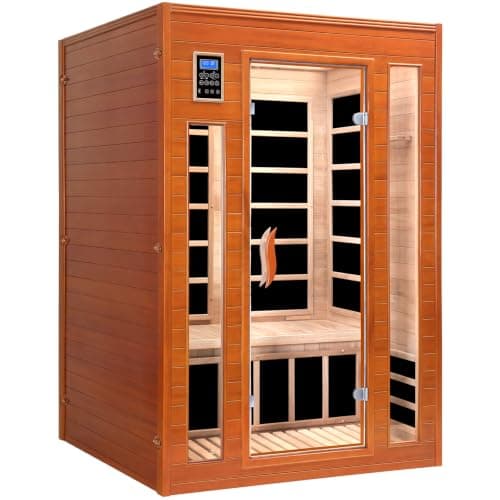 X-Vcak 2 Person Infrared Sauna Cabin A hemlock cabin with 1,800 W across eight panels, a 150 F ceiling and a 99-minute timer - the highest published draw in this category, and a permanent installation in everything but name. | 1800 W | Best if you own the room | 4.3 | $2,199.99 - Amazon |
| 2 | 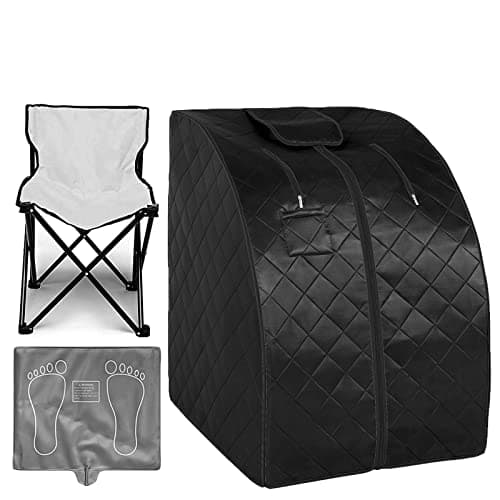 ZONEMEL Portable Infrared Sauna, 1 Person 1,050 W across three carbon panels plus a heated foot pad, with the wattage, the temperature ceiling and the timer all published - unusual for an infrared tent. | 1050 W | Best infrared for a standard outlet | 6.4 | $179.99 - Amazon |
| 3 | 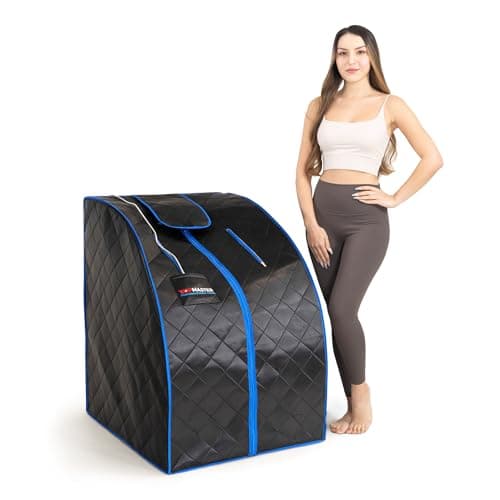 TopMaster Foldable Infrared Sauna Same 1,050 W and 140 F ceiling as the ZONEMEL infrared, with a heated foot pad, folding chair and cushion in the box. | 1050 W | Best kit for the money | 6.4 | $159.99 - Amazon |
| 4 | 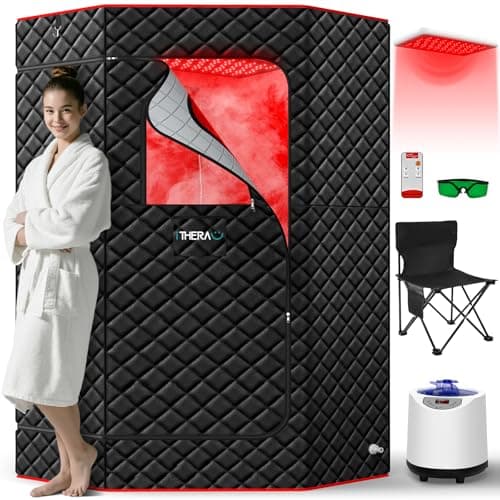 I-THERA-U XL Infrared Sauna Box with Red Light Lamp A pentagonal 45 x 35 in box with a 1,200 W steamer, a 324-LED red-light panel and a 90-minute timer, in 450D oxford rather than the usual thin polyester. | 1200 W | Most interior room | 6.1 | $159.99 - Amazon |
| 5 | 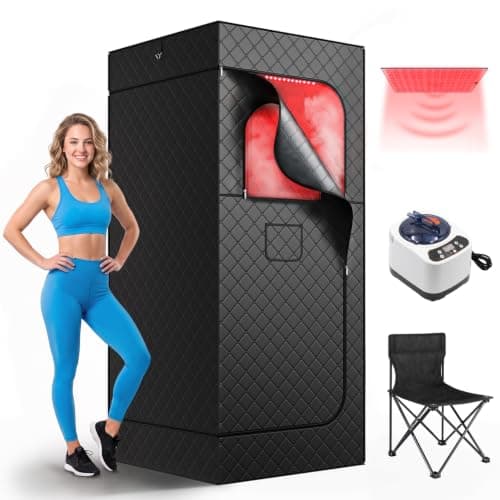 SOARFLY Infrared Steam Sauna with 660 nm and 850 nm Light Panel A 1,200 W steam tent with a genuine 660 nm and 850 nm panel rather than a colored LED strip, and the only sauna here that publishes a user height limit. | 1200 W | Best red-light combination | 6.1 | $119.99 - Amazon |
The premium tier is one product, and it is not the best documented
That is the finding this page exists for, and it is worth stating plainly before any ranking. If you arrived searching for a premium infrared sauna you are probably expecting a list of four-thousand-dollar cabinets. On the marketplace this site covers, that tier is not purchasable: there is exactly one wooden two-person cabin at about two thousand dollars, and then a cluster of fabric units between roughly one hundred and sixty and one hundred and eighty. There is no middle.
So the useful question is not which premium sauna wins a field of premium saunas. It is what the one genuine step up actually gets you, what it quietly costs beyond its price, and whether the money changes the thing a careful buyer in this category most wants - a seller willing to put numbers on claims.
1. Is it actually infrared?
This is the first filter and it removes more of the field than price does. Several units sold as infrared saunas are steam tents with a red-light panel bolted to the inside wall. That is not a criticism of the product - a 1,200 W steamer with a genuine 660 nm and 850 nm panel is a reasonable thing to own - but it is a different appliance from a dry infrared cabin, and it behaves differently in a room you live in.
If you want dry heat - and if your home has any history of condensation, you do - the field narrows to three before you have compared a single other specification. The full comparison of infrared against steam works through why saturated steam at 113 F loads your body harder than dry air at 140 F, which is the reason the published maxima across these two groups are not comparable numbers.
2. EMF: a figure, or a phrase
Buyers at this end of the market ask about EMF more than about anything else, and this category answers with remarkable consistency: it does not. The two-thousand-dollar cabin prints Low EMF in its product title and attaches no milligauss figure, no measurement distance and no test standard to it anywhere in the listing. The infrared tents at a tenth of the price say nothing about EMF at all.
This is the single clearest case on the site of price failing to predict disclosure, and it is why we rank on what gets published rather than on what gets charged.
3. The circuit, which is part of the price
At 1,800 W the cabin draws a flat 15 amps at 120 V. That is the entire nameplate rating of a standard 15 A breaker, and well past the 1,440 W such a circuit is derated to for a load that runs continuously. The listing still describes an ordinary three-prong plug, so it will fit a wall outlet that the circuit behind it should not be asked to run for an hour.
Budget a dedicated 20 A circuit as part of this purchase. That is an electrician, not an accessory, and it is the cost most comparisons of premium saunas leave out entirely. The procedure for finding out what your circuit already carries takes about ten minutes with a lamp and the breaker panel, and it is worth doing before you order rather than after.
The 1,050 W infrared tents draw about 8.8 amps and sit comfortably inside a shared circuit. For a renter that difference is not a detail - it is the whole decision, and it is the reason the cheaper unit is sometimes the correct premium purchase.
4. What the extra space costs you
Fourteen square feet claimed permanently is furniture, not an appliance. Six square feet that folds into a cupboard is the reason this category exists for apartment dwellers at all. The cabin also publishes no assembled weight, which for a hemlock-and-glass box of that size is the one figure you would most want before choosing which floor it stands on.
If you rent, the cabin is the option that needs a landlord conversation and a plan for moving day. The lease, moisture and circuit questions for an apartment are covered separately, because they change the answer rather than just qualifying it.
5. Spectrum: wavelengths or colors
Where a listing includes red-light therapy, the test is whether it publishes wavelengths. Two units here do, and they are not the expensive one. The I-THERA-U XL specifies 108 LEDs at 660 nm and 216 at 850 nm; the SOARFLY publishes 660 nm and 850 nm as well. Those are real figures you can check against the published literature.
The cabin offers a 7-color therapy light, which is a mood feature described in colors rather than a therapeutic claim described in nanometers. Both can be worth having. Only one of them is a specification. Which portable saunas publish real wavelengths separates the two properly.
6. The tier we cannot price
The brands that dominate advertising for premium infrared saunas sell direct rather than through retail, generally from about four thousand dollars upward. We do not list them and we do not quote their prices, because every price on this site comes from a live pricing layer against a real listing, and a direct-sales quote cannot be verified that way. Naming a number we cannot check would be the one thing this site is built not to do.
If you are considering that tier, the questions worth asking are the ones this page has already shown the retail market failing: ask for an EMF figure in milligauss with the measurement distance, ask for the wavelengths in nanometers rather than the word spectrum, ask what the warranty covers when a single heating panel fails rather than the headline years, and ask for the assembled weight. A seller charging four thousand dollars should answer all four without hesitating. If they will not, the premium is brand, not disclosure.
What running one costs
At 18.34 cents per kWh, a thirty-minute session costs about 17 cents in the 1,800 W cabin and about 10 cents in a 1,050 W tent. Four sessions a week is under a dollar a month at either end.
Electricity is therefore not a reason to choose between these, and anyone presenting a premium sauna as an efficiency upgrade is selling you a rounding error. The real recurring cost of the cabin is the floor it occupies and the circuit it needs. The per-product running costs are published here.
How these are ranked
On the same six-component disclosure score used across this site - small-space fit, electrical fit, cost to run, key-number disclosure, spec completeness and warranty - with the premium considerations above deciding the order among products that score closely. It measures what a seller publishes, not how a product performs, because we have not used any of them. Every weight is published.
The cabin leads this page because the question is what a premium buyer should buy, and it is the only genuinely premium unit purchasable here. It does not lead the site’s value ranking, where its price and its thinner spec sheet put it well down the table, and it gets a full read in our X-Vcak cabin review. If two of you intend to use it at once, the floor and circuit arithmetic is worked through on the two-person page.
Every pick, in full
Each write-up below shows the score broken into its six components, the specs the listing actually publishes, and the running-cost arithmetic where a wattage exists to compute it from.
#1 - Best if you own the room
X-Vcak 2 Person Infrared Sauna Cabin
A hemlock cabin with 1,800 W across eight panels, a 150 F ceiling and a 99-minute timer - the highest published draw in this category, and a permanent installation in everything but name.
| Small-space fit | 6 / 20 |
|---|---|
| Electrical fit | 8 / 20 |
| Cost to run | 16 / 20 |
| Key-number disclosure | 5 / 15 |
| Spec completeness | 8 / 15 |
| Warranty | 0 / 10 |
| Total | 43 / 100 |
| Rated watts | 1800 Seller’s listing, read 2026-10-06 |
|---|---|
| Maximum temperature | 66-150 F Seller’s listing, read 2026-10-06 |
| Dimensions | 47 x 42 x 73 in Seller’s listing, read 2026-10-06 |
| Weight | Not published Not published |
| Timer | 1-99 minutes Seller’s listing, read 2026-10-06 |
| EMF disclosure | Claim, no figure “7-Color Therapy Light for Home, Indoor, Gym, Low EMF” |
| Material | Wood cabin with tempered glass door Seller’s listing, read 2026-10-06 |
| Warranty (months) | Not published Not published |
| Rated draw | 1800 W (15 A at 120 V) |
|---|---|
| Energy per 30-minute session | 0.900 kWh |
| Maximum cost per session | 16.5 cents |
| Maximum per month, 4 sessions a week | $2.86 |
| Circuit | Wants a dedicated 20 A circuit |
These are maximums, assuming continuous draw. A resistive heater pulls its rated power only while the element is energized; once it reaches setpoint it cycles, so the real figure is lower and depends on your room. Computed at 18.34 cents per kWh (June 2026). The method, and how to substitute your own rate.
At 1,800 W this draws a flat 15 amps at 120 V - the entire nameplate rating of a standard 15 A breaker, and well past the 1,440 W such a circuit is derated to for a load that runs continuously. The listing still describes an ordinary three-prong plug with leakage protection rather than a hardwired connection, so the plug will fit a wall outlet that the circuit behind it should not be asked to run. Budget a dedicated 20 A circuit as part of the purchase.
The reason a cabin appears in a portable sauna roundup at all is that it ships flat and assembles without tools. That is where the portability ends. At 47 by 42 inches deployed it claims close to fourteen square feet of floor permanently and it does not fold. This listing does not publish an assembled weight, which for a hemlock-and-glass box this size is the one figure worth having before you choose which floor it stands on. If you rent, this is the option that needs a landlord conversation and a plan for moving day.
What you get for the space is the highest temperature ceiling in this category at 150 F, eight heating panels rather than three, and an actual wooden cabin rather than fabric on a frame. Running it for thirty minutes costs about seventeen cents at the national average rate, so the cabin costs you floor area and circuit capacity rather than electricity. The title prints “Low EMF” and attaches no figure to it anywhere in the listing, which on our rubric is a phrase, not data.
Buy it if
Someone with a spare room, a spare 20 A circuit and no plan to move soon.
Skip it if
You rent, you share a circuit, or you need the room back after every session.
#2 - Best infrared for a standard outlet
ZONEMEL Portable Infrared Sauna, 1 Person
1,050 W across three carbon panels plus a heated foot pad, with the wattage, the temperature ceiling and the timer all published - unusual for an infrared tent.
| Small-space fit | 20 / 20 |
|---|---|
| Electrical fit | 15 / 20 |
| Cost to run | 20 / 20 |
| Key-number disclosure | 0 / 15 |
| Spec completeness | 9 / 15 |
| Warranty | 0 / 10 |
| Total | 64 / 100 |
| Rated watts | 1050 Seller’s listing, read 2026-09-07 |
|---|---|
| Maximum temperature | 140 F maximum Seller’s listing, read 2026-09-07 |
| Dimensions | 27.6 x 31.5 x 37.8 in Seller’s product title, read 2026-09-07 |
| Weight | 19.8 lb Seller’s listing, read 2026-09-07 |
| Timer | Up to 60 minutes Seller’s listing, read 2026-09-07 |
| EMF disclosure | Not mentioned at all |
| Material | Not published Not published |
| Warranty (months) | Not published Not published |
| Rated draw | 1050 W (8.8 A at 120 V) |
|---|---|
| Energy per 30-minute session | 0.525 kWh |
| Maximum cost per session | 9.6 cents |
| Maximum per month, 4 sessions a week | $1.67 |
| Circuit | Wants the outlet to itself |
These are maximums, assuming continuous draw. A resistive heater pulls its rated power only while the element is energized; once it reaches setpoint it cycles, so the real figure is lower and depends on your room. Computed at 18.34 cents per kWh (June 2026). The method, and how to substitute your own rate.
At 1,050 W this draws about 8.8 amps, which a standard 15 A outlet carries without complaint even with something else plugged in. It is the highest-powered infrared unit here that still sits comfortably under the 1,000 W line where we start recommending the outlet be left to itself, and a thirty-minute session works out to roughly ten cents at the national average rate.
The heated foot pad is the detail worth knowing about. Infrared tents heat what the panels face, and in a seated tent that means your back and sides get the heat while your feet sit on ambient floor. A separate foot element is the direct fix and not every unit in this price range includes one.
The footprint is the smallest of any sit-in sauna in this roundup: 27.6 by 31.5 inches deployed, about six square feet, which is roughly the area of a single armchair. That is what makes an infrared tent viable in a one-bedroom apartment at all.
Buy it if
Someone who wants dry infrared heat in the smallest deployed footprint that still fits an adult.
Skip it if
EMF disclosure matters to you. This listing does not mention it.
#3 - Best kit for the money
TopMaster Foldable Infrared Sauna
Same 1,050 W and 140 F ceiling as the ZONEMEL infrared, with a heated foot pad, folding chair and cushion in the box.
| Small-space fit | 20 / 20 |
|---|---|
| Electrical fit | 15 / 20 |
| Cost to run | 20 / 20 |
| Key-number disclosure | 0 / 15 |
| Spec completeness | 9 / 15 |
| Warranty | 0 / 10 |
| Total | 64 / 100 |
| Rated watts | 1050 Seller’s listing, read 2026-09-07 |
|---|---|
| Maximum temperature | Up to 140 F Seller’s listing, read 2026-09-07 |
| Dimensions | 27.6 x 31.5 x 37.8 in Seller’s listing, read 2026-09-07 |
| Weight | 20 lb Seller’s listing, read 2026-09-07 |
| Timer | Up to 60 minutes Seller’s listing, read 2026-09-07 |
| EMF disclosure | Not mentioned at all |
| Material | Not published Not published |
| Warranty (months) | Not published Not published |
| Rated draw | 1050 W (8.8 A at 120 V) |
|---|---|
| Energy per 30-minute session | 0.525 kWh |
| Maximum cost per session | 9.6 cents |
| Maximum per month, 4 sessions a week | $1.67 |
| Circuit | Wants the outlet to itself |
These are maximums, assuming continuous draw. A resistive heater pulls its rated power only while the element is energized; once it reaches setpoint it cycles, so the real figure is lower and depends on your room. Computed at 18.34 cents per kWh (June 2026). The method, and how to substitute your own rate.
The published specification here is close to identical to the ZONEMEL infrared unit - same wattage, same ceiling, same dimensions, same timer - which happens often in this category because a lot of these tents come off the same production lines with different fabric and different names on the box.
We are not going to pretend we can tell you which one is better built, because that would require using both and we have used neither. What we can tell you is that the published specs are the same, so if the prices differ the cheaper one is the rational buy, and if the kit contents differ the more complete kit is.
This one includes the folding chair, heated foot pad and a sponge cushion. A cushion sounds like a throwaway inclusion until you have sat on a bare folding chair inside a hot tent for thirty minutes.
Buy it if
A buyer comparing near-identical infrared tents who wants the fuller accessory kit.
Skip it if
You would rather buy from a seller who says something about EMF.
#4 - Most interior room
I-THERA-U XL Infrared Sauna Box with Red Light Lamp
A pentagonal 45 x 35 in box with a 1,200 W steamer, a 324-LED red-light panel and a 90-minute timer, in 450D oxford rather than the usual thin polyester.
| Small-space fit | 17 / 20 |
|---|---|
| Electrical fit | 15 / 20 |
| Cost to run | 20 / 20 |
| Key-number disclosure | 0 / 15 |
| Spec completeness | 9 / 15 |
| Warranty | 0 / 10 |
| Total | 61 / 100 |
| Rated watts | 1200 Seller’s product title, read 2026-09-07 |
|---|---|
| Maximum temperature | Not published Not published |
| Dimensions | 45 x 35 x 73 in Seller’s listing, read 2026-09-07 |
| Weight | 20.1 lb Seller’s listing, read 2026-09-07 |
| Timer | 90-minute timer, 15 heat levels Seller’s product title, read 2026-09-07 |
| EMF disclosure | Not mentioned at all |
| Material | 450D oxford fabric on thickened stainless steel piping Seller’s listing, read 2026-09-07 |
| Warranty (months) | Not published Not published |
| Rated draw | 1200 W (10 A at 120 V) |
|---|---|
| Energy per 30-minute session | 0.600 kWh |
| Maximum cost per session | 11.0 cents |
| Maximum per month, 4 sessions a week | $1.91 |
| Circuit | Wants the outlet to itself |
These are maximums, assuming continuous draw. A resistive heater pulls its rated power only while the element is energized; once it reaches setpoint it cycles, so the real figure is lower and depends on your room. Computed at 18.34 cents per kWh (June 2026). The method, and how to substitute your own rate.
The fabric weight is published, which is unusual and useful. 450D oxford is a real specification - denier is a measure of yarn thickness - and it is the difference between a tent that holds its shape through a year of humid sessions and one that softens and sags. Most listings in this category say 'durable material' and stop.
The red-light panel is specified as 108 LEDs at 660 nm and 216 at 850 nm. Again, actual wavelengths and actual counts, which is more than the seven-color strips get you.
At 45 by 35 inches this has the largest deployed footprint of any tent here - about eleven square feet, roughly a small armchair plus its clearance - and that is the cost of the extra interior room. In a studio apartment that is a real amount of floor to give up while it is standing, though it does fold away.
Buy it if
Anyone who has felt cramped in a standard sauna tent and has the floor space to fix it.
Skip it if
Floor space is your binding constraint. There are six-square-foot options here.
#5 - Best red-light combination
SOARFLY Infrared Steam Sauna with 660 nm and 850 nm Light Panel
A 1,200 W steam tent with a genuine 660 nm and 850 nm panel rather than a colored LED strip, and the only sauna here that publishes a user height limit.
| Small-space fit | 17 / 20 |
|---|---|
| Electrical fit | 15 / 20 |
| Cost to run | 20 / 20 |
| Key-number disclosure | 0 / 15 |
| Spec completeness | 9 / 15 |
| Warranty | 0 / 10 |
| Total | 61 / 100 |
| Rated watts | 1200 Seller’s listing, read 2026-10-03 |
|---|---|
| Maximum temperature | 130 F maximum Seller’s listing, read 2026-10-03 |
| Dimensions | 32 x 32 x 71 in Seller’s product title, read 2026-10-03 |
| Weight | Not published Not published |
| Timer | 99-minute timer, 9 temperature settings Seller’s product title, read 2026-10-03 |
| EMF disclosure | Not mentioned at all |
| Material | Three-layer waterproof cotton Seller’s listing, read 2026-10-03 |
| Warranty (months) | Not published Not published |
| Rated draw | 1200 W (10 A at 120 V) |
|---|---|
| Energy per 30-minute session | 0.600 kWh |
| Maximum cost per session | 11.0 cents |
| Maximum per month, 4 sessions a week | $1.91 |
| Circuit | Wants the outlet to itself |
These are maximums, assuming continuous draw. A resistive heater pulls its rated power only while the element is energized; once it reaches setpoint it cycles, so the real figure is lower and depends on your room. Computed at 18.34 cents per kWh (June 2026). The method, and how to substitute your own rate.
Most sauna tents advertising light therapy ship a seven-color LED strip, which is mood lighting. This one publishes actual wavelengths - 660 nm visible red and 850 nm near-infrared - which are the two figures the red-light literature is written around. Publishing the wavelength is the minimum bar for the claim to mean anything, and it is a bar most of this category does not clear. It does not publish a 470 nm blue figure, so do not buy it for blue light.
It is also the only portable sauna on this site that publishes a user height limit: it states that the interior accommodates users up to 6 ft 7 in. Thirteen sellers publish external dimensions and twelve of them stop there, leaving a tall buyer to guess. One sentence from one seller is not a trend, but it is the figure that decides the purchase and this is the one listing that gives it.
The steamer is published at 1,200 W with a stated maximum of 1,300 W. At the rated figure that is 10.0 amps - over the 1,000 W line where we start telling people to give the sauna its own outlet, and comfortably under the 1,440 W continuous limit of a 15 A circuit. Thirty minutes costs about eleven cents at the national average rate. No weight and no warranty term are published.
Buy it if
Someone who wants heat and red light in one purchase and wants the wavelengths published.
Skip it if
You want dry heat. This is a steam unit with a light panel, not an infrared cabin.
Questions people actually ask
What is the best premium infrared sauna for a home?
Of the units purchasable through this site, the only one in a genuinely premium class is a two-person hemlock cabin with eight heating panels, 1,800 W and a 150 F ceiling. It is the best pick if you own the room and can give it a dedicated 20 A circuit. It is also the one unit here that prints the phrase Low EMF without attaching a number to it, so you are paying for construction and capacity rather than for better disclosure.
Are premium infrared saunas worth the money?
For what they add physically, often yes: a rigid cabin holds heat better than fabric on a frame, two seats are two seats, and a 150 F ceiling is genuinely higher than the 140 F the tents reach. For what they add in documented performance, the honest answer on these listings is no. The most expensive unit here publishes four of our eight checklist items and the $180 tents publish five.
What is the difference between a premium infrared sauna and a cheap one?
Enclosure, capacity and ceiling temperature, in that order. A premium unit is a wooden cabin with a tempered glass door rather than coated fabric on steel piping, seats two adults rather than one, and runs hotter because it has more panels and more power. What does not reliably change is the quality of the specification sheet, the EMF disclosure or the warranty.
Do premium infrared saunas have lower EMF?
Nothing on these listings establishes that. The most expensive sauna here puts Low EMF in its product title and publishes no milligauss figure, no measurement distance and no test standard anywhere in the listing. The cheaper infrared tents say nothing about EMF at all. A phrase with no number behind it is not a lower reading than silence - it is the same absence of data with marketing attached.
How much does a premium home sauna cost?
On the marketplace this site covers, the step up from a portable tent to a two-person wooden cabin is roughly $180 to $2,000, and the cabin needs a dedicated 20 A circuit that is not in the purchase price. The cabinet brands that advertise most heavily in this category sell direct rather than through retail, usually from about $4,000 upward, and we do not quote their prices because we cannot verify them through the live pricing this site runs on.
Is a two-person infrared sauna better than a one-person?
Only if two of you will actually use it at once. A two-person cabin claims about fourteen square feet of floor permanently against roughly six for the smallest one-person tent, and draws 1,800 W against 1,050 W. If the second seat goes unused you have paid for floor area and circuit capacity rather than for heat.
Sources
- U.S. Energy Information Administration, Electric Power Monthly, Table 5.6.A - Average Price of Electricity to Ultimate Customers by End-Use Sector - U.S. Total, Residential: 18.34 cents per kWh, June 2026. Used for every session cost on this page. Retrieved 2026-09-07.